由我们的艺术家按需定制,为您提供您所选尺寸及画框的布面手工油画。 ( 切换至版画销售渠道 切换至数字图像销售渠道)
从与原作比例一致的预设尺寸中进行选择。

您可以输入自定义尺寸,以适配特定的画框或空间。如果所选尺寸与原图比例不符,我们将通过裁剪作品或添加手绘元素来扩展画面。数字样稿将在制作开始前发送给您确认。
请注意,屏幕预览无法准确反映实际的裁剪或扩展效果,只有样稿才能真实呈现最终的构图。
虽然我们提供定制尺寸服务,但为了保留原作比例,建议您从预设列表中选择尺寸。

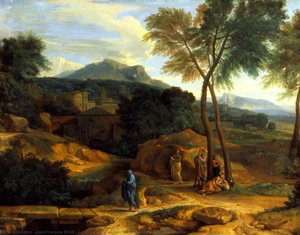
Landscape with Bridge
复制品尺寸

Antonio Diziani (1737-1797) stands as a significant figure in eighteenth-century Venetian painting, particularly celebrated for his masterful depictions of Venice and its surrounding landscapes. Born into a rich artistic lineage, he was the son of Gaspare Diziani, a respected Rococo artist whose influence provided Antonio with an early predisposition toward visual storytelling. While history often places him in the shadow of titans like Canaletto, Diziani carved out a distinctive niche within the Venetian art scene, producing works that offered a unique blend of meticulous observation and imaginative embellishment.
His artistic journey was shaped by the shifting stylistic currents of Europe, moving from the ornate flourishes of the Rococo toward the structured elegance of Neoclassicism. This evolution is deeply embedded in his technique and composition. Under the tutelage of masters such as Francesco Zuccarelli and Giuseppe Zais, Diziani learned to balance classical grandeur with a certain Venetian charm. His education allowed him to master the art of the vedute—panoramic views that served not merely as topographical records but as atmospheric windows into the soul of the city.
Diziani’s fame rests primarily on his prolific output of landscapes and vistas. Unlike the rigorous, almost photographic realism practiced by Canaletto, Diziani’s canvases often embraced subtle distortions and idealized perspectives. He sought to convey a sense of emotion and atmosphere that elevated his work beyond mere documentation. In his hands, the architectural landmarks of Venice—such as the Doge's Palace and Piazza San Marco—became stages for light and shadow, where the play of sun on stone could evoke a profound sense of nostalgia or tranquility.
His versatility was evident across various mediums, ranging from detailed etchings to sweeping oil paintings. A notable example of his ability to blend narrative with landscape can be seen in works like "Hunting Capriccio," where he transports the viewer to a serene riverbank. In such pieces, he demonstrates a mastery of several key elements:
The significance of Diziani’s contribution to the Venetian school was formally recognized in 1774 when he was elected a member of the Accademia di Belle Arti in Venice. This prestigious appointment solidified his status among the elite artists of his era and reflected his mastery of both the painting and sculpture disciplines. His work captured a pivotal moment in history, documenting the grandeur of the Venetian Republic before its eventual decline, preserving the pageantry of events like the Feast of Corpus Christi for future generations.
Ultimately, Antonio Diziani remains an essential figure for understanding the transition of Italian art during the late eighteenth century. His ability to bridge the gap between the decorative whimsy of the Rococo and the intellectual rigor of Neoclassicism ensures his place in the canon of great landscape painters. Through his eyes, we do not just see the architecture of Venice; we feel the pulse of a city caught in a beautiful, fleeting moment of historical splendor.

1737 - 1797 , Italy


 效果预览
效果预览
 分享
分享 分享
分享
 详情
详情

 下载
下载
 相似作品
相似作品 X射线
X射线 幻灯片播放
幻灯片播放 统计数据
统计数据 展开详情
展开详情






































 玻璃选项仅适用于110厘米以下的尺寸。