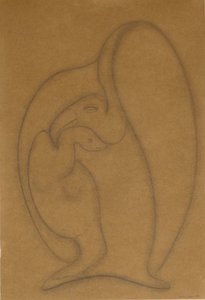
Oil On CanvasWallArtSurrealist Movement
 1984Modern
 147.0 x 70.0 cm
 塞拉尔维斯基金会
购买高分辨率增强版数字图像,其品质远超在线预览。
每一份文件都由我们的内部专家使用先进工具与专业的后期润色技术精心打造。我们确保每一张图像都具备卓越的清晰度、精准的色彩还原度以及细腻的细节表现。
最终文件将在 72 小时内通过电子邮件交付,并针对专业、编辑及印刷用途进行了优化。其品质与顶级设计工作室、出版社和画廊所信赖的标准完全一致。
选择 WahooArt.com,您获得的不仅仅是一张图像——您收到的是经过专业级增强、精雕细琢的数字艺术作品,并享有满意保证。以下是您的订单中自动包含的所有内容:

您的高分辨率数字图像文件将在下单后 72 小时内通过电子邮件发送给您 —— 即可立即使用。

您的艺术品经过专业优化,结合先进的 AI 技术与人工修饰,确保呈现极致的细节、清晰度与色彩准确度。

不小心删除了文件或找不到了?没关系——我们将随时为您免费重发。

即刻拥有您的艺术作品,无需支付任何关税、税费或运费——数字下载始终免税。

我们通过专业工具与色彩管理技术,确保您的数字图像尽可能真实地还原原作色彩。

如果您对所购买的数字图像不满意,我们将在100天内为您进行修改或退还100%的款项——无需任何解释。

如果不满意?在收到数字文件后的100天内,我们为您提供全额退款——无需任何理由。

购买 3 张图片可享 10% 折扣 - 购买 5 张可享 15% 折扣 - 购买 10+ 张可享 20% 折扣。非常适合创意项目、画廊和机构使用。

In the quiet, mist-shrouded landscapes of Angra do Heroísmo, within the volcanic embrace of the Azores, a vision was born that would eventually reshape the contours of Portuguese modernism. António da Costa (1914–1990) did not merely paint; he orchestrated a profound dialogue between the tangible world and the boundless reaches of the subconscious. As a pioneer of the Surrealist movement in Portugal, his life was a continuous exploration of the liminal spaces where reality dissolves into dream. His journey, which began in the Atlantic islands, would eventually lead him to the intellectual heart of Paris, carrying with him a unique aesthetic that blended the rugged mysticism of his homeland with the radical avant-garde currents of mid-century Europe.
Costa’s artistic evolution was marked by periods of intense creative fervor and profound silences. After enrolling at the Lisbon School of Fine Arts in 1935, he quickly emerged as a vital voice in a burgeoning movement. By 1940, his name was inextricably linked with other Surrealist luminaries like António Pedro, as they sought to liberate art from the suffocating constraints of rationalism and traditional aesthetics. This early period was defined by a striking visual language—a synthesis of Cubist structure, Futurist energy, and Expressionist emotion. His canvases during these years were often populated by distorted figures and symbolic landscapes that echoed the unsettling beauty of the irrational, heavily influenced by the revolutionary spirit of masters like Salvador Dalí and Pablo Picasso.
The trajectory of Costa’s career was profoundly altered in 1947 when a French government grant transported him to Paris. This move proved to be both a professional triumph and a personal metamorphosis. While he initially engaged with the Parisian art scene, a period of withdrawal followed in the early 1950s, during which he transitioned from the brush to the pen. For nearly two decades, Costa lived as an observer rather than a creator, serving as a sophisticated reporter for the Brazilian newspaper O Estado de S. Paulo. This era of intellectual wandering allowed him to absorb the pulse of international art criticism, honing a sharp, analytical mind that would later inform his return to the easel.
When he finally returned to painting in 1971, settling in Janville, the Surrealist enigmas of his youth had matured into something far more serene and mystical. The frantic energy of his early work gave way to a style that drew deeply from Azorean religious traditions and folk iconography. These later works were characterized by:
The legacy of António da Costa extends far beyond the borders of the canvas. He was a polymath whose influence permeated the very fabric of Portuguese culture through his poetry, his art criticism, and his public contributions to urban design. From decorating the Cais do Sodré metro station in Lisbon to creating relief sculptures for the Azorean Parliament, his work sought to infuse the everyday environment with a sense of poetic transcendence. He was an artist who understood that the true power of Surrealism lay not just in shock, but in the ability to reveal the hidden magic within the mundane.
Today, when we look upon works such as A chuva de oiro or his hauntingly beautiful Melancholia, we see more than just oil on canvas; we witness a lifelong quest to map the human soul. His ability to navigate the tension between the fragmented geometry of modernism and the organic, spiritual rhythms of his Atlantic roots remains his greatest achievement. António da Costa remains a towering figure in the history of 20th-century art, a dreamer who taught us that even in the most desolate landscapes, there is a vibrant, golden light waiting to be discovered.

1914 - 1990 , Portugal


 效果预览
效果预览
 购买印刷品
购买印刷品 分享
分享 分享
分享
 详情
详情

 下载
下载
 相似作品
相似作品 X射线
X射线 幻灯片播放
幻灯片播放 展开详情
展开详情