Oil On CanvasWallArtBaroque Rococo
 1700Early Modern
 149.0 x 159.0 cm
 匈牙利美术博物馆
购买高分辨率增强版数字图像,其品质远超在线预览。
每一份文件都由我们的内部专家使用先进工具与专业的后期润色技术精心打造。我们确保每一张图像都具备卓越的清晰度、精准的色彩还原度以及细腻的细节表现。
最终文件将在 72 小时内通过电子邮件交付,并针对专业、编辑及印刷用途进行了优化。其品质与顶级设计工作室、出版社和画廊所信赖的标准完全一致。
选择 WahooArt.com,您获得的不仅仅是一张图像——您收到的是经过专业级增强、精雕细琢的数字艺术作品,并享有满意保证。以下是您的订单中自动包含的所有内容:

您的高分辨率数字图像文件将在下单后 72 小时内通过电子邮件发送给您 —— 即可立即使用。

您的艺术品经过专业优化,结合先进的 AI 技术与人工修饰,确保呈现极致的细节、清晰度与色彩准确度。

不小心删除了文件或找不到了?没关系——我们将随时为您免费重发。

即刻拥有您的艺术作品,无需支付任何关税、税费或运费——数字下载始终免税。

我们通过专业工具与色彩管理技术,确保您的数字图像尽可能真实地还原原作色彩。

如果您对所购数字图像不满意,我们将在100天内为您进行修改或提供100%的全额退款——无需任何理由。

不满意?在收到数字文件后的100天内,您可以申请全额退款——无需任何理由。

购买 3 张图片可享 10% 折扣 - 购买 5 张可享 15% 折扣 - 购买 10+ 张可享 20% 折扣。非常适合创意项目、画廊和机构使用。
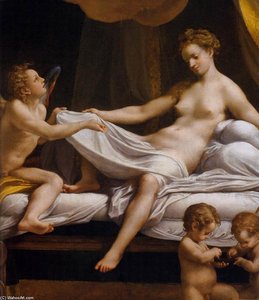
In the grand tradition of Venetian Baroque, Antonio Bellucci’s Danaë emerges as a breathtaking spectacle of divine intervention and mythic intimacy. Painted around 1700, this monumental canvas captures the precise moment when the boundaries between the mortal and the divine dissolve. The scene depicts the legendary Danaë, Queen of Argos, ensconced within her tower, receiving the clandestine visit of Zeus. Rather than a thunderous storm, the god descends as a shimmering, ethereal golden rain, a celestial element that permeates the composition with a sense of miraculous fertility. This is not merely a mythological retelling; it is a profound meditation on the intersection of earthly vulnerability and heavenly grace, rendered with a theatricality that defines the height of the Venetian spirit.
The painting’s emotional resonance lies in its delicate balance between the regal and the tender. As Danaë reclines upon a bed draped in sumptuous, heavy fabrics, she is not alone in her solitude. The presence of celestial beings—angels hovering with protective intent—softens the erotic tension of the myth with a layer of spiritual sanctity. One angel leans inward, offering a silent reassurance, while another gazes toward the heavens, bridging the gap between the terrestrial chamber and the infinite sky. For the discerning collector or interior designer, this work offers more than just visual splendor; it provides a narrative depth that invites contemplation, making it a commanding centerpiece for any space dedicated to classical elegance.
Bellucci’s technical prowess is on full display through his sophisticated use of color and light, characteristic of the transition from the dramatic Baroque to the more luminous Rococo. The palette is dominated by a rich, royal symphony of deep crimsons and radiant golds. These hues are not merely decorative; they serve a symbolic purpose, with the reds echoing the passion and royal lineage of Danaë, while the golds represent the divine essence of Zeus. Through the meticulous application of glazing techniques, Bellucci achieves a luminous, pearlescent quality on the skin of his subjects, creating surfaces that seem to glow from within.
The tactile richness of the piece is equally captivating. A close inspection reveals the artist's ability to manipulate paint to simulate a variety of textures—from the heavy, lustrous weight of silk drapery to the ephemeral, weightless quality of the golden shower. Bellucci employs strategic diagonal lines within the composition to guide the viewer’s eye in a rhythmic dance across the canvas, ensuring that every detail, from the folds of the bedding to the soft features of the attending angels, contributes to a unified sense of movement. This masterful interplay of light and shadow—chiaroscuro—creates a three-dimensional depth that breathes life into the mythological figures, offering an immersive experience that remains as captivating today as it was at the turn of the 18th century.
Antonio Bellucci stands as a luminous figure within the Venetian artistic tradition, a master whose brush captured the transition from the dramatic intensity of the Baroque to the airy elegance of the Rococo. Born in 1654 in Pieve di Soligo, Italy, Bellucci’s early training under Domenico Difnico in Sebénico provided him with a rigorous foundation in classical principles. However, it was his arrival in Venice that truly ignited his creative spirit. By 1675, he was already making significant contributions to the city's sacred spaces, most notably through his monumental frescoes for San Pietro di Castello. In these works, depicting Saint Lorenzo Giustiniani’s fervent prayers during the plague of 1447, Bellucci demonstrated an extraordinary ability to weave together religious devotion and human emotion, creating a sense of divine drama that resonated deeply with the Venetian public.
His talent was not confined to the spiritual realm; Bellucci possessed a versatile mastery over various genres, from the intimate tenderness of nativity scenes for the church of Ascension to the sweeping narratives of classical mythology. A defining characteristic of his development was his collaborative spirit. He worked in close harmony with the landscape painter Antonio Tempesta, where Bellucci’s skill in rendering human figures breathed life and narrative complexity into Tempesta's expansive vistas. This synergy between figure and landscape became a hallmark of his maturing style, blending movement and grace with structural depth.
As his reputation grew, Bellucci’s ambitions carried him far beyond the borders of the Venetian Republic, leading him to the heart of European power. His periods in Vienna during the late seventeenth and early eighteenth centuries marked a pinnacle in his career, as he secured the prestigious patronage of the Habsburg court. Under the gaze of Emperor Charles VI, Bellucci undertook monumental projects that showcased his technical prowess on an imperial scale. The four altarpieces he created for Klosterneuburg serve as enduring testaments to his ability to command large-scale religious compositions with both majesty and clarity.
The zenith of his architectural painting is perhaps best exemplified by the breathtaking ceiling frescoes at Palais Liechtenstein. In depicting the Triumph of Hercules, Bellucci utilized the grand manner to create an immersive experience, where mythological heroism meets the sophisticated aesthetics of the burgeoning Rococo era. This ability to synthesize classical grandeur with a lighter, more decorative touch allowed him to navigate the changing tastes of the European aristocracy with ease.
Beyond his individual achievements, Bellucci’s historical significance is cemented by his role as a mentor and an influential force in the lineage of Italian art. Through his instruction of talented students such as Antonio Balestra and potentially Jacopo Amigoni, he ensured that the sophisticated techniques of the Venetian school would endure and evolve. His legacy remains etched in the ceilings of palaces and the altars of cathedrals, representing a period of unparalleled artistic splendor where light, movement, and myth converged to celebrate the human and the divine.

1654 - 1726 , Italy


 效果预览
效果预览
 切换至版画销售渠道
 分享
分享 分享
分享
 详情
详情 指南
指南

 下载
下载
 相似作品
相似作品 X射线
X射线 幻灯片播放
幻灯片播放 统计数据
统计数据 展开详情
展开详情