
 Oil On CanvasWallArtNeoclassicism
 1757Early Modern
 61.0 x 47.0 cm
 阿什莫利博物馆
由我们的艺术家按需定制,为您提供您所选尺寸及画框的布面手工油画。 ( 切换至版画销售渠道 切换至数字图像销售渠道)





























您可以从与原作比例一致的预设尺寸中进行选择。

请输入您需要的宽度和高度,以适配您的画框或墙面。由于作品为手工绘制,若您选择不同的尺寸比例,艺术家可能会在画面边缘多画一些或稍作裁剪 —— 由您决定。在开始绘画之前,我们会为您发送一份数字效果图供您确认。本页面上展示的图片并非最终实物 —— 只有效果图才能反映真实结果。
William Fermor
复刻品尺寸说明
In the delicate transition between the exuberant flourishes of the Rococo and the disciplined clarity of Neoclassicism, Anton Raphael Mengs’s 1757 masterpiece, “William Fermor,” emerges as a profound testament to artistic evolution. This striking oil on canvas does more than merely capture the likeness of a Scottish-born officer in the Imperial Russian Army; it serves as a window into an era where the intellectual rigor of the Enlightenment began to reshape the visual language of Europe. As one gazes upon the portrait, there is an immediate sense of dignified resolve, a quality that transcends the sitter's individual identity to touch upon universal ideals of nobility and strength.
The technical execution of the piece reveals Mengs’s unparalleled mastery over light and form. Utilizing a sophisticated application of chiaroscuro, the artist orchestrates a dramatic interplay between shadow and illumination to sculpt Fermor’s features with sculptural precision. The subtle textures of the background wall act as a quiet stage, ensuring that the viewer's focus remains anchored on the subject's commanding presence. Every brushstroke contributes to a sense of tactile reality, from the crispness of the white cravat to the heavy, luxurious weight of the crimson coat, inviting the observer to appreciate the meticulous craftsmanship that defines this pivotal work of the mid-18th century.
Beyond its surface beauty, “William Fermor” is rich with symbolic layers that would have been deeply legible to a contemporary audience. The sitter’s attire—a vibrant crimson coat embellished with gleaming gold buttons—is far from a mere fashion statement; it is a deliberate reference to royal heraldry, signaling prestige, authority, and a high social standing. This sartorial grandeur is balanced by the refined elegance of his powdered wig and cravat, elements that evoke the idealized dignity of Roman antiquity. Through these details, Mengs aligns Fermor with the classical virtues of gravitas and decorum, echoing the influential aesthetic theories of Johann Joachim Winckelmann.
The composition itself functions as a visual anchor for the Neoclassical movement. By placing Fermor against a restrained, subtly textured backdrop, Mengs avoids the distracting ornamentation typical of the preceding Rococo style, opting instead for a clarity that mirrors the stability and order sought during the Seven Years’ War era. This deliberate simplicity allows the emotional weight of the portrait to resonate more deeply, making it an ideal centerpiece for those who appreciate art that communicates power through restraint rather than excess.
For the discerning collector or interior designer, a high-quality reproduction of “William Fermor” offers much more than a decorative element; it provides a profound connection to art history. The painting’s palette of deep reds, brilliant golds, and soft neutrals possesses a timeless versatility, capable of anchoring a room with a sense of historical weight and intellectual sophistication. Whether placed in a formal study, a grand library, or a contemporary living space, the portrait introduces an atmosphere of stately composure and refined taste.
Owning a piece that embodies the bridge between two great eras allows for a continuous dialogue with the past. The artwork’s ability to evoke both the warmth of human character and the cold precision of classical ideals makes it a captivating subject for contemplation. It remains an evocative choice for those seeking to surround themselves with art that inspires respect, commands attention, and celebrates the enduring beauty of the human spirit captured through the lens of classical perfection.
安东·拉斐尔·门克斯 的《William Fermor》 描绘了 military uniform, portraiture, classical art, rome, royal family,呈现出 Elegant 的意境。其主题与氛围共同构成了这件作品的精髓。
总体而言,"William Fermor" 的亮度记录为 deep_shadow。感知亮度描述了作品呈现出的明暗程度。
安东·拉斐尔·门克斯 的《William Fermor》 所属的艺术流派为 Neoclassicism。这一分类将该作品置于相关艺术家及艺术作品的语境之中。


1728 - 1779 , 捷克共和国

Explore the profound elegance of Neoclassical art. Discover the principles of order, symmetry, and virtue through the works of masters like David and Mengs. Immerse yourself in a journey of classical grace and timeless aesthetic perfection.
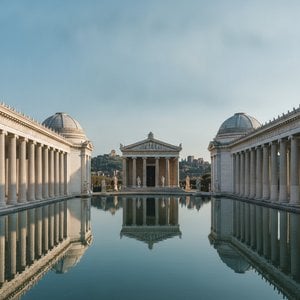
Discover the profound elegance of Neoclassicism. Explore how the pursuit of order, symmetry, and Greco-Roman ideals created a timeless aesthetic for collectors seeking grandeur and intellectual depth in fine art and architecture.


 实景预览
实景预览
 发送
发送 分享
分享
 详情
详情 指南
指南

 下载图片
下载图片
 相似作品
相似作品 X射线
X射线 幻灯片播放
幻灯片播放 统计数据
统计数据 阅读全文
阅读全文









 玻璃选项仅适用于110厘米以下的尺寸。


