
 Oil On CanvasWallArtHague School
 1880
1880 368.0 x 505.0 cm
 托莱多艺术博物馆
由我们的艺术家按需定制,为您提供您所选尺寸及画框的布面手工油画。 ( 切换至版画销售渠道 切换至数字图像销售渠道)





























从与原作比例一致的预设尺寸中进行选择。

您可以输入自定义尺寸,以适配特定的画框或空间。如果所选尺寸与原图比例不符,我们将通过裁剪作品或添加手绘元素来扩展画面。数字样稿将在制作开始前发送给您确认。
请注意,屏幕预览无法准确反映实际的裁剪或扩展效果,只有样稿才能真实呈现最终的构图。
虽然我们提供定制尺寸服务,但为了保留原作比例,建议您从预设列表中选择尺寸。

A Dutch Road
复制品尺寸
Led by Anton Mauve, the group of Dutch painters known as the Hague School distinguished itself by its exceptional rendering of moody atmosphere and light. As a Dutch critic wrote of the Hague School in 1875, “The artists try, by preference, to render mood; and they give precedence to tone above color… They have revealed the poetry of gray in a hitherto unprecedented manner.” Like the Barbizon painters (see 1933.37), they preferred to work out-of-doors and remained true to the tonality of the Dutch countryside, affected by the moist climate. Mauve's A Dutch Road reveals his characteristic “poetry of gray” and his debt to the great Dutch seventeenth-century masters of landscape (see 1978.68) and the French Realist artist Jean-François Millet (1814-1875).
This monumental canvas, measuring 368 x 505 cm, captures a quintessential scene from rural Holland – a solitary road winding its way into the distance beneath an overcast sky. Painted around 1880, “A Dutch Road” exemplifies Mauve’s unwavering commitment to capturing the essence of nature and conveying profound emotional resonance. The artwork depicts a bleak and somber winter landscape. It’s an oil painting with a realistic style, showcasing a muddy road receding into the distance, flanked by bare trees under a heavy, overcast sky. A lone figure on horseback is the central subject, walking away from the viewer.
The composition prioritizes horizontal lines – the road, the tree trunks – creating a sense of vastness and isolation that speaks to the melancholic spirit of the era. Lines are loose and expressive, suggesting brushstrokes rather than precise detail. Shapes are largely geometric – the road, trees, and sky – but softened by the texture of the paint. The technique is characteristic of oil painting, utilizing layering and blending to achieve the desired effects. Thick impasto—heavy application of pigment—dominates particularly in the wet ground and tree branches, adding a tactile quality to the image that invites contemplation.
Beyond its technical brilliance, “A Dutch Road” resonates with deeper symbolic meanings. The desolate landscape embodies themes of solitude and travel, reflecting Mauve’s own fascination with the human condition amidst the grandeur of nature. The figure on horseback, walking away from the viewer, symbolizes departure—perhaps a journey into introspection or a farewell to earthly concerns. The muted color palette – predominantly grays, browns, and whites – reinforces the pervasive gloom but simultaneously highlights the subtle beauty of the winter scene.
“A Dutch Road” stands as a cornerstone of the Hague School’s artistic legacy. Influenced by Impressionism and rooted in the Barbizon tradition, Mauve sought to depict nature with uncompromising honesty and sensitivity. He aimed to capture not merely what he saw but how it felt—the quiet contemplation evoked by the stillness of winter light. This painting exemplifies the school's belief that art should strive for emotional truthfulness, mirroring the profound connection between humanity and its environment.
The Toledo Museum of Art houses a stunning reproduction of “A Dutch Road,” allowing viewers to experience Mauve’s masterful technique and evocative vision firsthand. For more details about this artwork and its provenance, please visit Toledo Museum of Art.


1838 - 1888 , 荷兰
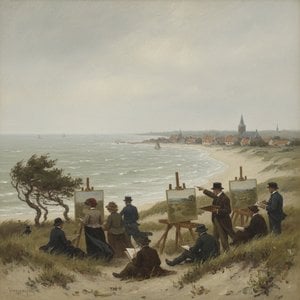
Explore the ethereal beauty of the Hague School art movement. Discover how masters like Jan Weissenbruch captured the atmospheric grey light of the Dutch landscape through unparalleled technique and emotive, misty compositions.

Explore the breathtaking mastery of Dutch Golden Age landscapes. From Italianate light to atmospheric realism, discover the techniques of 17th-century masters and learn how to bring these timeless, museum-quality masterpieces into your home through expert oil reproductions.


 效果预览
效果预览
 分享
分享 分享
分享
 详情
详情 指南
指南

 下载
下载
 相似作品
相似作品 X射线
X射线 幻灯片播放
幻灯片播放 统计数据
统计数据 展开详情
展开详情









 玻璃选项仅适用于110厘米以下的尺寸。


