
博物馆级艺术微喷或帆布版画,制作高效,并提供多种饰面选择。 ( 购买手绘画作 切换至数字图像销售渠道)
从与原作比例一致的预设尺寸中进行选择。

您可以输入自定义尺寸,以适配特定的画框或空间。如果您选择的尺寸与原图比例不符,我们将对作品进行裁剪,或通过镜像填充/纯色填充边缘的方式来扩展图像。在开始制作之前,我们会向您发送一份数字效果图供您确认。
请注意,屏幕上的预览并不能反映实际的裁剪或扩展效果。只有效果图才能准确展示最终的构图。
虽然我们提供定制尺寸,但为了保持原图比例,我们建议您从预设列表中选择尺寸。

Tall Tree & The Eye
复制品尺寸
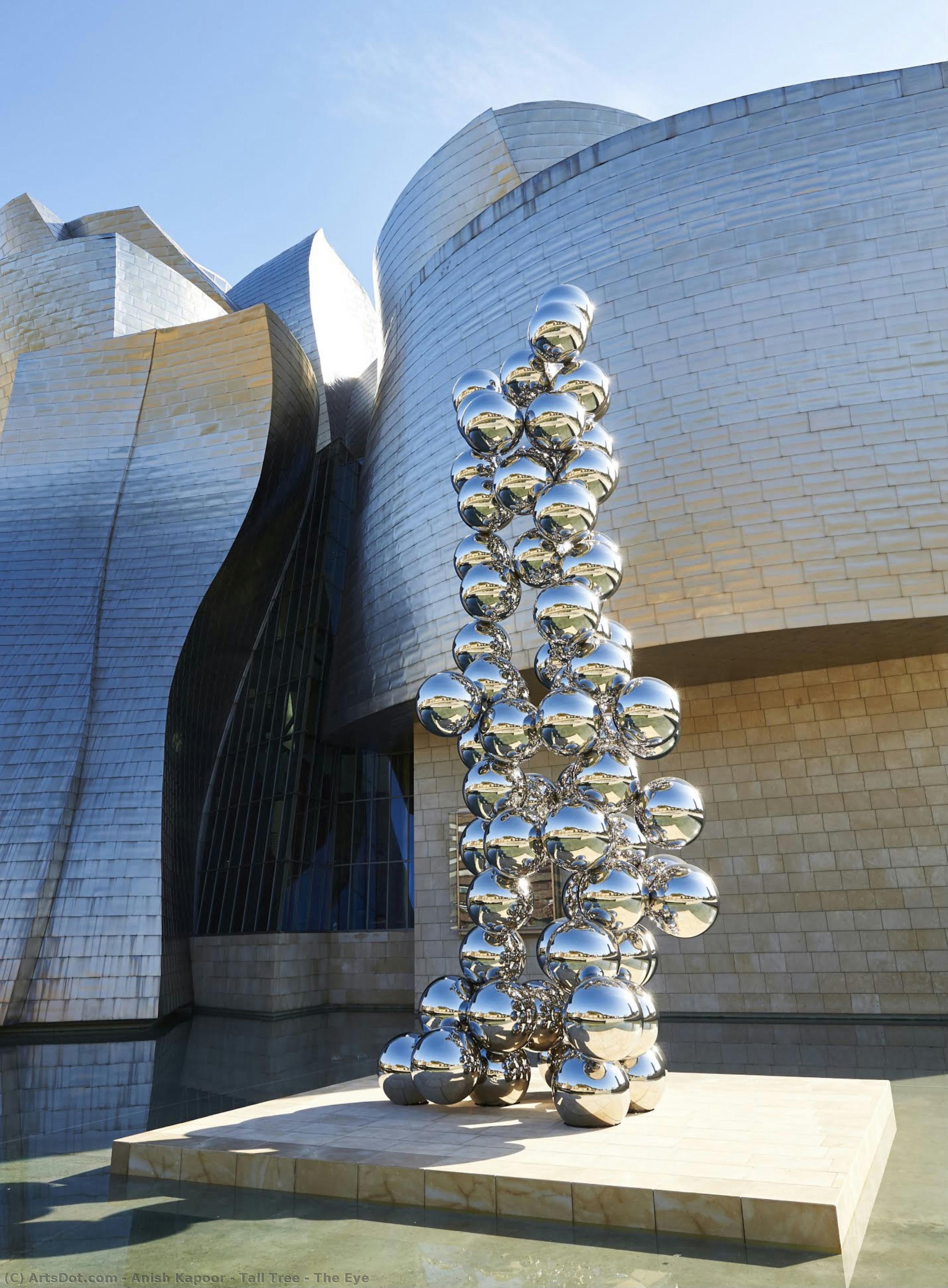
Anish Kapoor's *Tall Tree & The Eye*, a monumental sculpture unveiled in 2009 at the Guggenheim Museum Bilbao, isn’t merely a collection of spheres; it’s an orchestrated illusion, a carefully constructed dialogue between the viewer and their own perception. Born in Mumbai to a Jewish mother and Hindu father – a lineage deeply intertwined with cultural exchange – Kapoor's work consistently grapples with fundamental questions about objecthood, space, and the very nature of seeing. This piece builds upon his earlier explorations of void and non-matter, pushing the boundaries of how we experience form and its relationship to our surroundings. The sculpture’s genesis lies in a desire to move beyond representational art, seeking instead to create experiences that challenge and transform the viewer's understanding of reality.
Image: *Tall Tree & The Eye* by Anish Kapoor
Kapoor’s masterful manipulation of reflective surfaces is the sculpture's defining characteristic. Seventy-three meticulously crafted spheres, ranging in size from approximately 60cm to over a meter in diameter, are anchored around three distinct axes – a subtle triangulation that subtly guides the viewer’s eye and creates an almost hypnotic effect. Constructed primarily from stainless steel and carbon steel, each sphere is polished to a mirror sheen, reflecting not just the surrounding environment but also the viewer themselves. This mirroring isn't simply decorative; it generates a complex interplay of reflections, creating a sense of infinite depth and dissolving the boundaries between sculpture and space. The arrangement deliberately avoids direct contact between spheres, allowing for a breathtaking visual effect – an illusion of floating, weightless forms suspended in mid-air.
The Guggenheim Museum Bilbao provided the perfect stage for *Tall Tree & The Eye*. Located within the city's revitalized waterfront district, the museum itself is a striking architectural statement by Frank Gehry. Kapoor’s sculpture responds to this context in several ways. Firstly, its reflective surfaces amplify and distort the building’s titanium cladding, creating an ongoing conversation between the two works. Secondly, the sculpture’s placement within the museum's vast interior spaces encourages viewers to contemplate their own position within the artwork – a deliberate engagement with the viewer as an active participant in the experience. The choice of Bilbao, a city undergoing significant cultural and economic transformation, further underscores the work’s themes of perception, reflection, and the shifting nature of reality.
Beyond its technical brilliance, *Tall Tree & The Eye* is rich in symbolic meaning. The “tree” element evokes notions of growth, aspiration, and connection to the natural world – a deliberate contrast to the cold, industrial material of the spheres. The "eye" represents awareness, observation, and the act of seeing itself. Kapoor’s work consistently invites introspection; by reflecting our own image back at us, it forces us to confront our perceptions and biases. The sculpture isn't simply about what we see *out there*; it’s profoundly about what we see *within ourselves*. The dynamic interplay of reflections creates a sense of disorientation and uncertainty, prompting viewers to question the solidity of their own experience.
Anish Kapoor's *Tall Tree & The Eye* stands as a testament to his ongoing exploration of form, space, and perception. Building upon his earlier work with voids and non-matter, this monumental sculpture represents a culmination of decades of artistic inquiry. It is an invitation to lose oneself in the illusion of reflection, to question the nature of reality, and ultimately, to engage in a profound dialogue with one’s own gaze. Reproductions capture only a fraction of the immersive experience, but they offer a powerful reminder of Kapoor's ability to transform the ordinary into the extraordinary.


1954 - , India

Master the nuances of three-dimensional art with our expert guide. Explore sculptural history, from Phidias to Neoclassicism, and learn to evaluate materiality, form, and technique like a true connoisseur. Elevate your collection with profound insights into the world of sculpture.

Transform cherished photos into breathtaking 3D sculptures and marble busts with WahooArt AI. Experience the pinnacle of luxury art commissions, blending cutting-edge technology with classical mastery to create timeless, museum-quality heirlooms for your private collection.

Discover the enduring allure of bronze sculptures at WahooArt.com. From classical lost-wax casting to modern metal masterpieces, explore museum-quality artworks designed to elevate luxury interiors. Expert curation, authenticity guaranteed, and worldwide shipping for discerning collectors.

 分享
分享 分享
分享
 详情
详情 指南
指南

 下载
下载
 相似作品
相似作品 幻灯片播放
幻灯片播放 统计数据
统计数据


 展开详情
展开详情






































 玻璃选项仅适用于110厘米以下的尺寸。


