x


 OilWallArtBaroque Classicism
 58.0 x 77.0 cm
 冬宫博物馆 (Hermitage Museum)




























从与原作比例一致的预设尺寸中进行选择。

您可以输入自定义尺寸,以适配特定的画框或空间。如果您选择的尺寸与原图比例不符,我们将对作品进行裁剪,或通过镜像填充/纯色填充边缘的方式来扩展图像。在开始制作之前,我们会向您发送一份数字效果图供您确认。
请注意,屏幕上的预览并不能反映实际的裁剪或扩展效果。只有效果图才能准确展示最终的构图。
虽然我们提供定制尺寸,但为了保持原图比例,我们建议您从预设列表中选择尺寸。

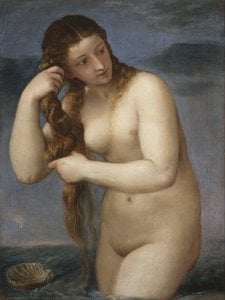
Venus at Rest
复制品尺寸
Andrea Sacchi’s “Venus at Rest” isn't merely a painting; it’s an invitation to step into a realm of classical grace and contemplative beauty. Completed in the mid-17th century, during the height of the Baroque period in Rome, this oil on canvas transports us to a world where mythology intertwines with idealized serenity. The work, now housed within the esteemed Hermitage Museum in St. Petersburg, Russia, is a testament to Sacchi’s mastery of capturing not just form but also an atmosphere of profound peace.

Sacchi’s style is a fascinating blend of classical ideals and Baroque dynamism, yet he consciously steers clear of the overwhelming theatricality often associated with his era. He draws heavily from the influence of Raphael, particularly in the careful balance of composition and the subtle modeling of forms. The painting eschews dramatic diagonals or bombastic gestures, instead favoring a carefully orchestrated arrangement where Venus, seated upon her golden throne, becomes the focal point of quiet contemplation. Notice how the figures—cherubs engaged in playful activities—are not presented as active participants but rather as gentle observers, contributing to the overall sense of tranquility.
The use of light and shadow is exquisitely controlled, creating a diffused glow that softens the forms and imbues the scene with an ethereal quality. Sacchi’s meticulous attention to detail – from the delicate folds of Venus's drapery to the intricate foliage surrounding her—demonstrates his exceptional technical skill. Interestingly, Sacchi’s approach aligns him with a group of artists who were pushing back against the excesses of the Baroque, advocating for a more restrained and harmonious style.
“Venus at Rest” is rich in symbolic meaning. Venus herself embodies the ideals of feminine beauty, love, and fertility – qualities celebrated throughout classical mythology. The golden throne symbolizes her divine status and authority, while the cherubs surrounding her represent innocence and joy. The lush foliage—a carefully rendered depiction of plants from various regions—suggests abundance and prosperity. Even the mountainous landscape in the background hints at a connection to the natural world, grounding Venus’s idealized beauty within a tangible reality.
Beyond its immediate visual appeal, the painting speaks to broader themes of harmony, balance, and the pursuit of inner peace. It's a meditation on the power of stillness and the appreciation of simple pleasures – a concept particularly resonant in a world often characterized by chaos and distraction.
Andrea Sacchi’s “Venus at Rest” stands as a significant work within the context of 17th-century Roman art. His commitment to classical restraint influenced subsequent generations of artists, including Carlo Maratta, who carried on his style and techniques. The painting's influence can also be seen in the works of other Baroque masters like Pieter Wouwerman and Jan Weenix, whose dynamic compositions and meticulous attention to detail share a common thread with Sacchi’s approach. Today, reproductions of “Venus at Rest” continue to captivate art lovers worldwide, offering a glimpse into the enduring beauty and timeless appeal of this Baroque masterpiece.


1599 - 1661 , 意大利

Elevate your collection with the dramatic grandeur of Baroque oil masterpieces. WahooArt offers exquisite, hand-painted reproductions of the Great Masters, featuring authentic chiaroscuro and premium textures. Discover bespoke artistry and expert consultation for elite collectors worldwide.


第一时间获取最新的艺术新闻、独家优惠及装饰灵感。
向我们介绍您的项目需求,我们的艺术专家将为您提供 3 个个性化的艺术品推荐。
由我们的专家为您精选 3 款心仪之作 —— 完全免费!


 效果预览
效果预览
 购买手绘画作
 分享
分享 分享
分享
 详情
详情

 下载
下载
 相似作品
相似作品 X射线
X射线 幻灯片播放
幻灯片播放 展开详情
展开详情









 玻璃选项仅适用于110厘米以下的尺寸。