
由我们的艺术家按需定制,为您提供您所选尺寸及画框的布面手工油画。 ( 切换至版画销售渠道 切换至数字图像销售渠道)
从与原作比例一致的预设尺寸中进行选择。

您可以输入自定义尺寸,以适配特定的画框或空间。如果所选尺寸与原图比例不符,我们将通过裁剪作品或添加手绘元素来扩展画面。数字样稿将在制作开始前发送给您确认。
请注意,屏幕预览无法准确反映实际的裁剪或扩展效果,只有样稿才能真实呈现最终的构图。
虽然我们提供定制尺寸服务,但为了保留原作比例,建议您从预设列表中选择尺寸。

St Mark
复制品尺寸
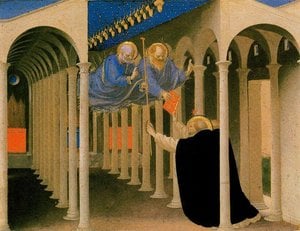
In the heart of the Early Renaissance, amidst the salt-misted air of Venice, Andrea del Castagno breathed life into a vision of spiritual fortitude that continues to captivate the modern soul. His 1442 fresco, St Mark, is far more than a mere religious depiction; it is a profound meditation on the human journey toward the divine. As the patron saint of Venice, Mark is presented not as a distant icon, but as a palpable, commanding presence seated upon a boat, his gaze directed upward in a moment of celestial connection. The scene unfolds with a sense of movement and purpose, as pilgrims navigate the waters, their very existence a metaphor for the Christian quest for salvation and the arduous pilgrimage toward Jerusalem.
To behold this work is to witness the transformative power of naturalism. Heavily influenced by the revolutionary techniques of Masaccio, Castagno moved away from the ethereal, flattened aesthetics of the Gothic era to embrace a rugged, anatomical realism. Every muscle, every fold of fabric, and every gesture is rendered with an unprecedented precision that lends the figures a sculptural weight. This mastery of form is paired with an innovative use of perspective, creating a spatial depth that draws the viewer into the boat alongside the saint. The artist’s command over the fresco technique—applying pigment to wet plaster—has preserved a luminous vibrancy in the blues and reds, ensuring that the emotional intensity of the scene remains as striking today as it was in the fifteenth century.
Every element within Castagno’s composition serves a higher narrative purpose, weaving a complex tapestry of meaning for the observant viewer. The book held aloft by Saint Mark is not merely an object of study but a potent symbol of divine revelation and the enduring power of sacred knowledge. As the figures surround him, their presence underscores the communal nature of faith, suggesting that the path to holiness is one traveled by many. This interplay between the individual saint and the collective group of pilgrims creates a rhythmic tension between solitude and community, much like the historical tensions Venice faced regarding papal authority and humanist progress.
For the collector or the interior designer, a reproduction of St Mark offers more than just aesthetic beauty; it brings a sense of historical gravity and intellectual depth to a space. The painting’s ability to evoke solemn reverence through its masterful use of light and shadow makes it an ideal centerpiece for environments that value contemplation and classical elegance. It is a piece that invites conversation, bridging the gap between the turbulent politics of the 1440s and the contemporary desire for art that possesses both physical presence and spiritual resonance. To display this work is to invite a fragment of the Renaissance spirit—a testament to resilience, faith, and the eternal human search for meaning—into the modern home.


1419 - 1457 , 意大利

Discover the timeless art of fresco painting. Explore the profound history, technical mastery of buon fresco, and the enduring legacy of Renaissance masters like Michelangelo in this expert guide to painting on wet plaster.

Explore the profound mastery of fresco painting, from the technical alchemy of buon fresco to the legendary narratives of Renaissance masters like Ghirlandaio. Discover how this timeless medium shaped art history and continues to inspire architectural grandeur today.


 分享
分享 分享
分享
 详情
详情 指南
指南

 下载
下载
 相似作品
相似作品 幻灯片播放
幻灯片播放 统计数据
统计数据


 展开详情
展开详情






































 玻璃选项仅适用于110厘米以下的尺寸。


![Legend Of St Francis - [24] - Canonization Of St Francis — 乔托, Gothic](/media/artworks/images-thumb/81/9b/819b5f0656848eb5cb3fcd40fd5756aa.jpg)


