
博物馆级艺术微喷或帆布版画,制作高效,并提供多种饰面选择。 ( 订购此收藏品的纯手工复刻画作 切换至数字图像销售渠道)





























您可以从与原作比例一致的预设尺寸中进行选择。

您可以输入自定义尺寸,以适配特定的画框或空间。如果您选择的尺寸与原图比例不符,我们将对作品进行裁剪,或通过镜像填充/纯色填充边缘的方式来扩展图像。在开始制作之前,我们会向您发送一份数字效果图供您确认。
请注意,屏幕上的预览并不能反映实际的裁剪或扩展效果。只有效果图才能准确展示最终的构图。
虽然我们提供定制尺寸,但为了保持原图比例,我们建议您从预设列表中选择尺寸。

Bateaux par grand vent
复刻品尺寸说明
In the annals of the Dutch Golden Age, few images capture the raw, unbridled power of the natural world as poignantly as Allaert van Everdingen’s Bateaux par Grand Vent. Executed around 1657, this masterpiece serves as a profound window into the maritime soul of the seventeenth-century Netherlands. The painting does not merely depict a seascape; it orchestrates a visceral encounter with the elements. As the viewer gazes upon the turbulent North Sea, they are immediately thrust into a world where the boundary between the heavens and the ocean dissolves into a chaotic dance of wind and wave. The central sailboat, caught in the throes of a desperate struggle against colossal, cresting swells, acts as a poignant focal point—a visual metaphor for the human condition when confronted by the overwhelming and unpredictable forces of fate.
The brilliance of Everdingen lies in his ability to marry technical precision with deep emotional resonance. Through the sophisticated use of atmospheric perspective, the artist creates an expansive sense of depth that pulls the observer into the heart of the storm. Distant vessels appear as ghostly, muted silhouettes against the horizon, their forms softened by the salt spray and heavy mist, while the foreground elements possess a tactile, rugged presence. This manipulation of light and shadow—the interplay of murky indigos, somber grays, and earthy browns—builds a sense of mounting tension. The lighting is intentionally diffused and overcast, eschewing bright highlights for a moody, low-key luminosity that reinforces the painting's themes of peril and resilience.
To behold Bateaux par Grand Vent is to appreciate the meticulous craftsmanship characteristic of the Dutch marine tradition. Everdingen utilized oil on canvas with a masterful command of layering, applying thin, translucent glazes to achieve a luminous quality that seems to glow from within the dark pigments. This technique allows for a remarkable variation in texture; one can almost feel the heavy, churning weight of the seawater and the frantic billowing of the wind-sweed sails. The artist employs strong diagonal lines within the waves to instill a sense of instability and motion, ensuring that the composition never feels static, but rather caught in a singular, breathless moment of maritime crisis.
For the discerning collector or interior designer, this artwork offers more than mere decoration; it provides a commanding presence. The subdued, cool color palette makes it an exceptionally versatile piece for sophisticated environments, capable of anchoring a room with its somber elegance and historical weight. Whether placed in a contemporary gallery setting or a classic study, the painting invites contemplation on the themes of struggle and endurance. It is a work that demands attention, offering a timeless aesthetic that celebrates the rugged beauty of the sea and the enduring spirit of those who navigate its most treacherous paths.

In the golden era of Dutch painting, where many masters sought to capture the serene, low-lying horizons of their homeland, Allaert van Everding and Everdingen carved a path toward something far more rugged and untamed. Born in Alkmaar around 1621, the son of a government clerk, Allaert was part of a family deeply rooted in the artistic traditions of the Netherlands. Alongside his brothers Jan and Caesar, he was shaped by the rigorous training of the Dutch Golden Age, beginning his journey under the tutelage of Roelandt Savery in Utrecht. This early exposure to Savery’s brilliant, almost fantastical style provided a foundation, yet Everdingen would eventually move far beyond the colorful legacies of the Brueghel school to find a voice that was uniquely atmospheric and profoundly dramatic.
The trajectory of his life changed irrevocably through a stroke of maritime fortune. In 1644, while traveling toward the Baltic Sea, a violent storm forced his ship to seek shelter in Norway. This unplanned detour, as recounted by the biographer Arnold Houbraken, would become the defining catalyst for his artistic evolution. Immersed in the breathtaking scenery of the Scandinavian coast, Everdingen found himself captivated by landscapes that were entirely alien to the Dutch eye: jagged mountains, rushing waterfalls, and dense, mysterious forests. He meticulously documented these excursions through sketches and drawings, capturing the raw energy of the Norwegian and Swedish terrain. When he eventually settled in Haarlem and later Amsterdam, these memories were transformed onto canvas, bringing a sense of the exotic and the sublime to the much more temperate Netherlands.
What distinguishes Everdingen from his contemporaries is not merely the subject matter he chose, but the revolutionary way in which he rendered it. While many landscape painters of the mid-17th century focused on clear, panoramic vistas, Everdingen embraced a system of powerful shading and rich, colored tones that acted as a precursor to the dramatic chiaroscuro later perfected by Rembrandt. His work moved away from the bright, even lighting of his predecessors toward a more emotive, atmospheric perspective. In his hands, a forest was not just a collection of trees, but a sanctuary of deep shadows and filtered light; a river was not merely water, but a churning force of nature reflected in the gloom of a rocky gorge.
His technical mastery extended into the realm of printmaking, where he utilized etching and mezzotint to explore the nuances of texture and depth. This versatility allowed him to translate the ruggedness of his Scandinavian inspirations into works that felt both tactile and ethereal. His ability to manipulate light created a sense of movement within the stillness of the landscape, making the viewer feel the dampness of the mist and the roar of the falls. This mastery of tone and texture ensured that his work resonated with a sense of drama that was rare among the more pastoral Dutch masters of his time.
The historical significance of Allaert van Everdingen lies in his role as a bridge between the classical landscape traditions and the burgeoning Romantic movement. By introducing the motifs of the wild, northern wilderness into the Dutch canon, he expanded the emotional vocabulary of landscape painting. His influence can be traced through the works of later masters, most notably Jacob van Ruisdael, who adopted many of the rugged, atmospheric elements that Everdingen had pioneered. The artist’s ability to find beauty in the formidable and the untamed helped shift the focus of landscape art from mere topographical documentation to a profound exploration of nature's power.
Though he passed away in Amsterdam in 1675, his impact remained etched in the annals of art history. His life serves as a testament to how unexpected journeys can reshape an artistic vision, turning a maritime mishap into a lifelong mission to capture the sublime. Today, we remember him not just as a painter of scenery, but as a pioneer who brought the soul of the Scandinavian wilderness to the heart of the Dutch Golden Age.
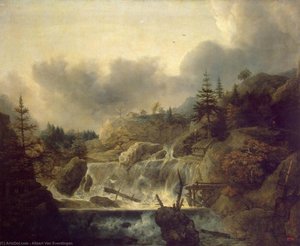
1621 - 1675

Discover the luminous mastery of Dutch Golden Age landscapes. Our expert guide explores the atmospheric realism of masters like Van Goyen and Cuyp. Elevate your space with museum-quality, hand-painted oil reproductions from WahooArt.com. Art history, beautifully realized.

探索伦勃朗25幅杰作,领略荷兰黄金时代光影大师的艺术传奇!从《夜巡》到自画像,深入了解巴洛克艺术、历史绘画与人物肖像背后的故事。WahooArt.com提供高清艺术复制品及家居装饰灵感。立即探索完整系列!
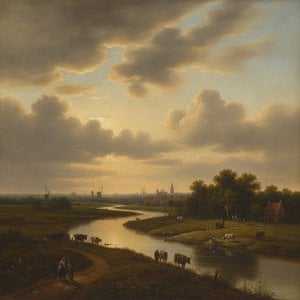
Discover the breathtaking beauty of Dutch Golden Age landscapes. Explore the mastery of light, chiaroscuro, and 17th-century realism through an expert art history lens, celebrating the enduring legacy of the Dutch Masters for discerning collectors and art lovers.

Discover the captivating maritime paintings of Willem van de Velde the Elder, a master chronicler of the Dutch Golden Age. Explore his unparalleled realism and lasting influence on naval art history.

探索荷兰黄金时代的艺术巅峰! 伦勃朗、维米尔等大师名作,带您领略巴洛克艺术的辉煌。高清画作、博物馆级品质,点亮您的家居空间。WahooArt.com 提供精选艺术复制品和定制装饰方案。立即在线探索全系列!


 实景预览
实景预览
 发送
发送 分享
分享
 详情
详情 指南
指南

 下载图片
下载图片
 相似作品
相似作品 X射线
X射线 幻灯片播放
幻灯片播放 统计数据
统计数据


 阅读全文
阅读全文









 玻璃选项仅适用于110厘米以下的尺寸。


