实景预览 AR 预览 订购纯手工绘制画作 切换至数字图像销售渠道 分享
详情 指南 加入收藏 下载作品 相似作品 X射线 幻灯片播放 问答 演示文稿 统计数据

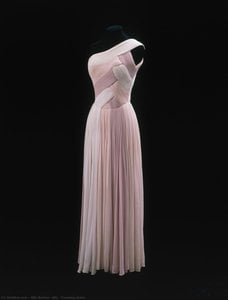
Evening Dress

Explore Alix Barton’s ‘Evening Dress,’ a neoclassical masterpiece mirroring Grès’ iconic draped designs. Discover the elegance & artistry of 1944 haute couture.

Alix (Madame Grès): Iconic French couturier famed for draped Grecian gowns & masterful drapery. A 'sphinx of fashion,' her designs revolutionized haute couture.

本页面展示的作品受版权法保护,这意味着我们无法合法地制作或销售与其完全相同的复制品。此项保护依据包括以下国际协议等: 伯尔尼公约 以及各国法律,包括下文所述的法律: 美国版权法第17编。

这种方法完全符合版权法规,因为它并不涉及对受保护艺术品的复制或翻录。相反,它是一种富有创意的重新诠释——是一件受原作启发、但与原作并不相同的全新绘画作品。

艺术微喷/版画

博物馆级艺术微喷或帆布版画,制作高效,并提供多种饰面选择。 ( 订购纯手工绘制画作 切换至数字图像销售渠道)

标准尺寸
定制
CM
INCH

您可以从与原作比例一致的预设尺寸中进行选择。

宽度
高度

请输入您所需的宽度和高度,以适配您的画框或墙面。由于印刷品只能进行裁剪,无法超出原图尺寸,因此若比例不一致,画面的一部分将会被裁切。在正式印刷之前,我们会为您发送一份数字效果图供您确认。本页面显示的图片并非最终裁剪后的效果——只有效果图才能展示真实的裁剪情况。

全球配送()仅需 2 周即可送达,无需等待标准流程的 4/5 周。(10 November)

全球免运费特快专递服务
优质亚麻画布
全程运输保险
关税退款保证
色彩精准还原保证
100天退货保障(仅限制造缺陷)
100% 退款保证
多件购买优惠

总计金额

¥ 462

Evening Dress

艺术微喷/版画

复刻品尺寸

-

最终结算价

¥ 462

Small pleats contour the lines of the chest, and the natural flow of the cloth becomes a skirt. This work demonstrates the typical style of Grès.Madame Grès opened the fashion house Alix in 1934, but was forces to close it in 1939. In 1942 she opened a new house under her husband

常见问题与解答

"Evening Dress"创作于何时,属于哪种艺术流派?

"Evening Dress"创作于1944年,属于Neoclassical运动时期的作品。其创作年代与艺术流派确立了该作品在艺术史上的地位。

“Evening Dress”整体色调是偏明亮还是偏暗?

Alix Barton, Alix 的《Evening Dress》 的记录数值为:亮度 brilliant,亮度感 Luminous。

"Evening Dress" 是否支持增强现实 (AR) 预览?

“Evening Dress” 支持增强现实(AR)预览:通过作品的 AR 效果预览 页面,您可以在兼容设备上查看该作品呈现在您专属空间的效果。


艺术家简介

A Life Sculpted in Silk: The Enigmatic World of Madame Grès

Germaine Émilie Krebs, the woman who would become known as Madame Grès, was born into a middle-class Parisian family in 1903. From an early age, her artistic inclinations leaned towards sculpture—a desire to mold and shape form that would ultimately define her legacy, though not through stone or bronze, but through the fluid medium of fabric. Her parents discouraged this path, steering her toward dressmaking, a more “suitable” vocation for a young woman of her time. This early redirection proved pivotal; it didn’t extinguish her sculptural ambitions, but rather channeled them into an entirely new realm. She began her career as a hat maker, honing her skills before transitioning to couture dressmaking at the esteemed Maison Premet, where exacting standards and meticulous technique were paramount. These formative years instilled in her a dedication to craftsmanship that would become her hallmark.

The Birth of a Signature: From Alix to Madame Grès

The evolution of her professional identity—from Mademoiselle Alix to Alix Barton and finally to Madame Grès—mirrors a deliberate crafting of persona, as carefully considered as the garments she created. The name “Grès” itself emerged in 1942 with her marriage to Russian painter Serge Anatolievitch Czerefkow, an anagram of his first name. This period was marked by both personal and professional challenges. Despite the turmoil of wartime Paris, Grès refused to compromise her artistic vision, continuing to design elegant dresses that subtly echoed the colors of the French flag—a quiet act of defiance that led to the temporary closure of her fashion house under German occupation. It was during this time, however, that her signature style truly crystallized: floor-length gowns draped with an unparalleled mastery, evoking the grace and timelessness of classical Greek sculpture.

Draping as Art: A Revolutionary Technique

Madame Grès wasn’t merely designing dresses; she was sculpting them onto the body. Unlike many of her contemporaries who relied on pattern making, Grès preferred to work directly on a mannequin, manipulating fabric—primarily silk jersey and paper taffeta—with an almost intuitive understanding of its properties. This process was famously laborious, often requiring up to 300 hours for a single gown. Each pleat, twist, and fold was meticulously crafted by hand, allowing the fabric to conform to the contours of the body rather than imposing a rigid structure upon it. She described this as a “battle” between designer and medium, a constant negotiation between her vision and the inherent qualities of the material. This dedication to draping elevated dressmaking to an art form, earning her the moniker "the Sphinx of Fashion" for her secretive nature and unwavering focus on her craft.

A Lasting Influence: Inspiring Generations

Throughout the 1940s and 50s, Madame Grès dressed some of the most iconic women of the era—the Duchess of Windsor, Paloma Picasso, Grace Kelly, Marlene Dietrich, and Greta Garbo among them. Her designs were characterized by their simplicity, elegance, and respect for the female form. She eschewed overt embellishment, allowing the beauty of the fabric and the artistry of her draping to speak for themselves. Her influence extended beyond the realm of haute couture, inspiring a new generation of designers with her innovative techniques and minimalist aesthetic. Azzedine Alaïa, in particular, was deeply captivated by Grès’s work, amassing a significant collection of her garments—a testament to his admiration and a recognition of her enduring legacy.

The Queen of Drapery: A Timeless Vision

Madame Grès' impact on the fashion world remains profound. Her pioneering approach to draping, her unwavering commitment to craftsmanship, and her ability to transform fabric into wearable sculpture continue to inspire designers today. She wasn’t interested in fleeting trends; she sought to create timeless garments that celebrated the beauty of the human body and the artistry of couture. Her work stands as a powerful reminder that fashion can be more than just clothing—it can be a form of art, a testament to skill, and an expression of enduring elegance. Her minimalistic draping techniques and her attention to and respect for the female body have had a lasting effect on the haute couture and fashion industry.
Alix Barton, Alix

Alix Barton, Alix

1903 - 1993 , France

艺术家简介

  • Full Name: Germaine Émilie Krebs
  • Nationality: French
  • Date Of Birth: 1903
  • Date Of Death: 1993
  • Place Of Birth: Paris, France
  • Notable Artworks:
    • Evening Dress
    • Dress
    • Two-piece Evening Gown
  • Artistic Movement Or Style: Haute Couture, Draping