博物馆级艺术微喷或帆布版画,制作高效,并提供多种饰面选择。 ( 订购纯手工绘制画作 切换至数字图像销售渠道)
您可以从与原作比例一致的预设尺寸中进行选择。

请输入您所需的宽度和高度,以适配您的画框或墙面。由于印刷品只能进行裁剪,无法超出原图尺寸,因此若比例不一致,画面的一部分将会被裁切。在正式印刷之前,我们会为您发送一份数字效果图供您确认。本页面显示的图片并非最终裁剪后的效果——只有效果图才能展示真实的裁剪情况。
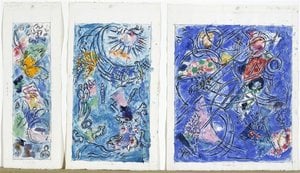
Flying Machine
复刻品尺寸
若想订购 Ali Cherri 的《Flying Machine》 的版画,只需前往其 艺术版画 页面进行订购即可:采用棉质帆布或档案级画布纸制作的艺术版画。
Ali Cherri 在 2017 年创作《Flying Machine》时,年龄为 41 岁。该年龄是根据艺术家的出生年份 1976 计算得出的。
Green to Violet Spectrum 色调贯穿了 Ali Cherri 的《Flying Machine》。
In the contemporary art landscape, few voices resonate with the profound sensitivity to heritage and transformation found in the work of Ali Cherri. Born in Beirut in 1976, Cherri’s artistic identity is inextricably linked to the complex, layered histories of Lebanon and the broader Middle Eastern landscape. His practice, which seamlessly weaves together the tactile presence of sculpture with the ephemeral nature of film, serves as a meticulous documentation of cultural memory. Moving from his formative years in Beirut to pursuing advanced studies in Amsterdam and Paris, Cherri has developed a global perspective that remains deeply rooted in the soil of his homeland. His work does not merely observe the passage of time; it seeks to capture the very essence of metamorphosis, exploring how landscapes, architectures, and identities shift under the pressures of globalization and conflict.
Cherri’s artistic evolution is marked by a transition from exploring urban narratives and architectural spaces to investigating much larger, more symbolic themes. His sculptural practice, in particular, is renowned for its ambitious scale and its ability to embody complex philosophical ideas through physical form. A definitive example of this is his 2017 masterpiece, Flying Machine. This monumental wooden sculpture, designed with the intricate anatomy of a dragonfly, acts as a profound tribute to the pioneers of aviation—from the scientific visions of Abbas Ibn Firnas and Leonardo da Vinci to the historic breakthroughs of the Wright Brothers. By utilizing wood, a material deeply embedded in Lebanese tradition, Cherri creates a tension between the organic, ancient textures of the earth and the soaring, technological aspirations of the human spirit. The piece functions as more than an object; it is a tangible manifestation of his belief in confronting challenges through adaptation and flight.
Beyond the physical weight of his sculptures, Cherri’s work as a filmmaker and video installation artist allows him to delve into the temporal dimensions of history. Using both found and original footage, he constructs multi-channel installations that act as portals to significant historical sites. His explorations have taken him from the grandeur of ʻIolani Palace in Hawaii—capturing the transformative legacy of the Hawaiian monarchy—to the archaeological depths of the Middle East. Through these cinematic endeavors, Cherri investigates how sites of power and memory are reshaped by time, creating a dialogue between the seen and the unseen, the historical and the contemporary. His films often function as meditations on the preservation of culture against the eroding forces of modernity.
The significance of Ali Cherri’s contribution to contemporary art is reflected in his extensive exhibition history at some of the world's most prestigious institutions. His work has graced the halls of the Guggenheim New York, the Tate Modern in London, and the Centre Georges Pompidou in Paris. His presence at major international gatherings, such as the Venice Biennale and the Berlinale Film Festival, underscores his role as a vital voice in the global art dialogue. Through these diverse platforms, Cherri continues to challenge his audience to look closer at the traces of the past, finding beauty in the wreckage of history and hope in the persistent human drive toward transformation.
To understand the breadth of his impact, one might consider the following milestones of his career:

1976 - , Lebanon


 实景预览
实景预览
 分享
分享 分享
分享
 详情
详情 指南
指南

 下载作品
下载作品
 相似作品
相似作品 X射线
X射线 幻灯片播放
幻灯片播放 Q&A
Q&A 统计数据
统计数据

 展开全文
展开全文






































 玻璃选项仅适用于110厘米以下的尺寸。