































从与原作比例一致的预设尺寸中进行选择。

您可以输入自定义尺寸,以适配特定的画框或空间。如果所选尺寸与原图比例不符,我们将通过裁剪作品或添加手绘元素来扩展画面。数字样稿将在制作开始前发送给您确认。
请注意,屏幕预览无法准确反映实际的裁剪或扩展效果,只有样稿才能真实呈现最终的构图。
虽然我们提供定制尺寸服务,但为了保留原作比例,建议您从预设列表中选择尺寸。

Topkapı Palace
复制品尺寸

Born in the vibrant, layered city of Istanbul in 1904, Ali Avni Çelebi’s life was inextricably linked to the evolving landscape of early 20th-century Turkey. His artistic journey wasn't a straightforward ascent through formal training; instead, it unfolded as a dynamic interplay between traditional Turkish aesthetics and the burgeoning influences of European modernism – a synthesis that would define his distinctive style and enduring legacy. From humble beginnings, nurtured by a family recognizing his talent, Çelebi’s path led him through institutions like Sanayi-i Nefise, Istanbul's pioneering art school, initially under the tutelage of Hikmet Onat and later İbrahim Çallı. This early grounding established a foundation in classical techniques, yet it was his subsequent sojourn to Munich that proved pivotal, exposing him to the revolutionary currents of Cubism and Expressionism.
His time with Hans Hofmann at the Academy of Fine Arts in Munich wasn’t merely an academic pursuit; it represented a profound shift in his artistic sensibilities. Hofmann's emphasis on simplified forms, flattened perspectives, and the use of color as a primary expressive tool resonated deeply with Çelebi, influencing his approach to composition and palette. However, returning to Turkey in 1927, he didn’t simply replicate these European innovations. Instead, he skillfully integrated them into a distinctly Turkish visual vocabulary, drawing upon centuries of Ottoman artistic tradition – particularly the intricate details of architecture and the evocative portrayal of daily life.
Çelebi's oeuvre is overwhelmingly defined by his intimate depictions of Istanbul. The city itself—its labyrinthine streets, majestic mosques, bustling marketplaces, and serene waterfronts—became the central subject of his work. He wasn’t merely recording scenes; he was attempting to capture the very essence of Istanbul – its historical weight, its vibrant energy, and its unique atmosphere. His paintings frequently feature grand architectural monuments like Topkapı Palace, rendered with meticulous detail and a keen eye for light and shadow, yet imbued with a sense of immediacy and human presence.
Technically, Çelebi’s style is characterized by a remarkable balance between observation and imagination. He employed a layered approach to painting, building up surfaces with multiple thin washes of color—a technique reminiscent of the Venetian masters but adapted to his own expressive needs. His use of perspective was often deliberately skewed, creating an illusionistic depth that drew the viewer into the scene. He skillfully blended elements of Cubism – particularly in the fragmentation and geometric simplification of forms – with a distinctly Turkish sensibility, evident in the rich colors and dynamic compositions.
Crucially, Çelebi’s artistic development was intertwined with his involvement in the Independent Painters and Sculptors' Association, founded in 1927. This collective represented a bold step towards establishing a modern Turkish art scene, challenging the conservative academic traditions that still dominated the field. Alongside fellow artists like Zeki Kocamemi, Çelebi advocated for artistic freedom and experimentation, embracing new ideas while remaining rooted in Turkish cultural heritage. The association’s exhibitions provided a vital platform for emerging artists and helped to shape public perceptions of contemporary art in Turkey.
His role as a lecturer at the Academy of Fine Arts and his subsequent position as assistant to Leopold Levy and Feyhaman Duran further solidified his influence within the artistic community, allowing him to mentor younger generations of painters. He wasn’t simply teaching technique; he was instilling a spirit of innovation and critical engagement with the changing world.
Ali Avni Çelebi's career spanned seven decades, during which he produced an extensive body of work that continues to captivate viewers. His paintings are not merely representations of Istanbul; they are windows into a bygone era—a testament to the city’s enduring beauty and its complex cultural identity. His ability to synthesize European modernism with traditional Turkish aesthetics established him as one of the most important figures in 20th-century Turkish art, leaving behind a rich legacy that continues to inspire artists today.
He died in Istanbul in 1993, but his paintings remain a powerful symbol of Turkish artistic heritage. His work is held in numerous collections throughout Turkey and internationally, ensuring that the vision of this remarkable artist will continue to be appreciated for generations to come.

1904 - 1993 , Turkey
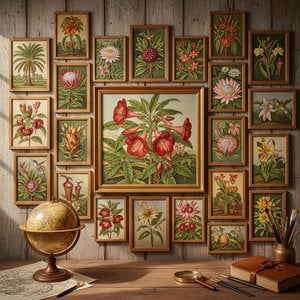
Journey through the vibrant world of Marianne North’s botanical paintings! Explore 25 iconic artworks from this Victorian artist, celebrating exotic flora & travel. Find museum-quality reproductions and curated decor ideas at WahooArt.com.

Explore the exquisite Rococo portraits of Jean-Étienne Liotard, a master of pastel and enamel. Discover his innovative techniques, captivating Turkish scenes, and lasting influence on art history. Learn more at WahooArt.
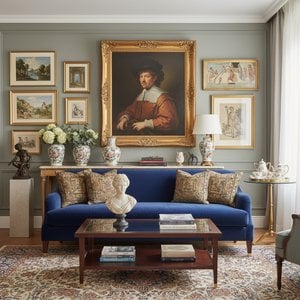
探索圣彼得堡冬宫博物馆25幅传世杰作!深入了解伦勃朗、达芬奇等大师的艺术故事与创作技巧。高清油画复制品,为您的家居带来经典艺术灵感。尽在WahooArt.com。


 效果预览
效果预览
 购买印刷品
购买印刷品 分享
分享 分享
分享
 详情
详情

 下载
下载
 相似作品
相似作品 X射线
X射线 幻灯片播放
幻灯片播放

 展开详情
展开详情









 玻璃选项仅适用于110厘米以下的尺寸。


