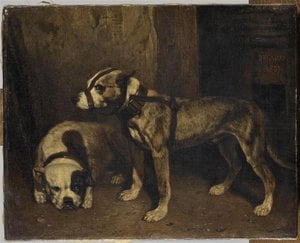
博物馆级艺术微喷或帆布版画,制作高效,并提供多种饰面选择。 ( 购买手绘画作 切换至数字图像销售渠道)





























从与原作比例一致的预设尺寸中进行选择。

您可以输入自定义尺寸,以适配特定的画框或空间。如果您选择的尺寸与原图比例不符,我们将对作品进行裁剪,或通过镜像填充/纯色填充边缘的方式来扩展图像。在开始制作之前,我们会向您发送一份数字效果图供您确认。
请注意,屏幕上的预览并不能反映实际的裁剪或扩展效果。只有效果图才能准确展示最终的构图。
虽然我们提供定制尺寸,但为了保持原图比例,我们建议您从预设列表中选择尺寸。

MENDIANT COMPTANT SA RECETTE
复制品尺寸
Alexandre Gabriel Decamps (1803-1860) stands as a pivotal figure in 19th-century French painting, a trailblazer who irrevocably altered the artistic landscape with his bold embrace of Orientalism. Unlike contemporaries preoccupied with idealized grandeur, Decamps possessed an unwavering dedication to meticulous observation and dramatic composition—qualities that propelled him to the forefront of École de peinture française and cemented his legacy as one of the era’s most distinctive voices.
Born in Paris amidst a burgeoning intellectual fervor, Decamps embarked on a transformative journey eastward, immersing himself in the vibrant cultures and landscapes of Persia and Egypt. This firsthand experience profoundly influenced his artistic sensibilities, shaping his style into an unparalleled fusion of realism and romanticism—a stylistic hallmark that distinguishes him from many of his peers.
“Mendiant Comptant Sa Recette,” painted in 1833, exemplifies Decamps’ signature approach to genre painting. The artwork depicts a poignant tableau of poverty and contemplation—a weathered stone wall serving as backdrop for an elderly beggar seated with unwavering focus on writing or calculating something on a small piece of paper held delicately in his hand. Beside him stands a young child, gazing upon the scene with inquisitive curiosity.
Decamps’ masterful technique employs visible brushstrokes to convey textural richness—the rough-hewn surface of the wall mirroring the worn fabric of the beggar's clothing and capturing the subtle nuances of skin tones. The muted color palette—dominated by browns, ochres, and greens—reflects the somber mood of the scene while subtly hinting at resilience amidst hardship.
Decamps’ artistic vision aligns seamlessly with the tenets of Romantic Realism. Rejecting academic conventions that favored idealized representations, he championed a commitment to portraying everyday life with unflinching honesty—a stylistic choice underscored by his meticulous attention to detail and dramatic use of light and shadow. Influenced by luminaries like Delacroix and Ingres, Decamps nevertheless forged an independent path, prioritizing emotional resonance alongside artistic accuracy.
The painting’s composition centers around the beggar figure, positioned slightly off-center to create visual balance—a deliberate gesture that underscores his importance as a subject of contemplation. Atmospheric perspective is subtly employed, deepening the sense of depth and enhancing the overall impression of tranquility. Decamps skillfully utilizes glazing techniques to achieve nuanced color variations, adding luminosity and capturing the ethereal quality of light.
"Mendiant Comptant Sa Recette" transcends mere depiction; it speaks volumes about human dignity and perseverance. The beggar’s posture embodies quiet contemplation—a deliberate effort to improve one's circumstances—while the child’s presence symbolizes hope for the future, innocence observing hardship. Decamps’ masterful rendering of these elements evokes a profound sense of empathy and invites viewers to contemplate themes of social justice and spiritual reflection.
This artwork remains a testament to Decamps’ enduring influence on French art history—a captivating glimpse into a bygone era characterized by intellectual curiosity, artistic innovation, and an unwavering fascination with the exotic allure of distant lands.


1803 - 1860 , 法国

Master the use of Realism in professional interiors. This expert guide explores 19th-century masterpieces, offering procurement managers and designers technical insights into selecting authentic, hand-painted oil reproductions for high-end hotel and corporate projects.
Explore the rich history of genre painting! Discover Dutch Masters & European artists who captured everyday life with stunning realism. Learn about symbolism, techniques & lasting influence.

Explore 10 defining masterpieces of Romantic Realism! Discover Courbet, Millet & Daumier's powerful paintings—capturing emotion and social realities. Find museum-quality reproductions for your home at WahooArt.com.

Explore the captivating world of Alexandre Gabriel Decamps, a pioneer of Romanticism and Orientalism. Discover his bold style, satirical masterpieces like 'The Experts,' and lasting impact on 19th-century art history.

探索丹特·加布里埃尔·罗塞蒂的25幅传世杰作!深入了解普拉拉斐利前派大师的艺术世界,感受维多利亚时代的浪漫主义与象征主义。在WahooArt.com欣赏高清油画复制品,为您的家居增添诗意与格调。立即探索完整系列!


 效果预览
效果预览
 分享
分享 分享
分享
 详情
详情

 下载
下载
 相似作品
相似作品 X射线
X射线 幻灯片播放
幻灯片播放 统计数据
统计数据

 展开详情
展开详情









 玻璃选项仅适用于110厘米以下的尺寸。