购买高分辨率增强版数字图像,其品质远超在线预览。
每一份文件都由我们的内部专家使用先进工具与专业的后期润色技术精心打造。我们确保每一张图像都具备卓越的清晰度、精准的色彩还原度以及细腻的细节表现。
最终文件将在 72 小时内通过电子邮件交付,并针对专业、编辑及印刷用途进行了优化。其品质与顶级设计工作室、出版社和画廊所信赖的标准完全一致。
下载高分辨率文件,用于个人展示、打印及创意项目。 ( 切换至版画销售渠道 订购此收藏品的纯手工复刻画作)
选择 WahooArt.com,您获得的不仅仅是一张图像——您收到的是经过专业级增强、精雕细琢的数字艺术作品,并享有满意保证。以下是您的订单中自动包含的所有内容:

您的高分辨率数字图像文件将在下单后 72 小时内通过电子邮件发送给您 —— 即可立即使用。

您的艺术品经过专业优化,结合先进的 AI 技术与人工修饰,确保呈现极致的细节、清晰度与色彩准确度。

不小心删除了文件或找不到了?没关系——我们将随时为您免费重发。

即刻拥有您的艺术作品,无需支付任何关税、税费或运费——数字下载始终免税。

我们通过专业工具与色彩管理技术,确保您的数字图像尽可能真实地还原原作色彩。

如果您对所购数字图像不满意,我们将在100天内为您进行修改或提供100%的全额退款——无需任何理由。

不满意?在收到数字文件后的100天内,您可以申请全额退款——无需任何理由。

购买 3 张享 10% 折扣 - 购买 5 张享 15% 折扣 - 购买 10 张以上享 20% 折扣。非常适合创意项目、画廊及机构使用。

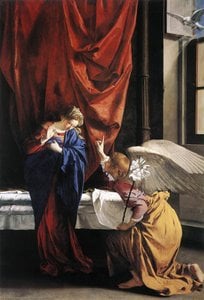
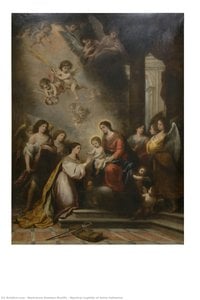
In the vibrant, sun-drenched landscape of eighteenth-century Rome, Agostino Masucci emerged as a painter of profound grace and technical refinement. Born in 1691, Masucci was a child of the Eternal City, coming of age at a moment when the heavy, dramatic grandeur of the High Baroque began to soften into the delicate, airy sensibilities of the Rococo. His artistic journey was one of seamless transition, navigating the shifting tides of European taste with a hand that remained anchored in classical tradition yet responsive to the burgeoning elegance of his era. Through his brush, the monumental weight of the previous century found a new, more luminous expression, bridging the gap between the theatricality of the Baroque and the nascent clarity of Neoclassicism.
The foundation of Masucci’s mastery was laid within the prestigious studios of Rome, where he first studied under Andrea Procaccino. However, it was his subsequent association with Carlo Maratta—the titan of Roman painting—that would most profoundly shape his aesthetic DNA. As a pupil in Maratta’s influential circle, Masucci absorbed a style characterized by clarity, balanced compositions, and a certain noble restraint. This lineage is evident in his religious works, which often possess a smooth, porcelain-like finish and a serene, cultivated atmosphere. While some critics of his time noted that his devotional Madonnas occasionally struggled to reach the heights of his master’s emotional intensity, there is no denying the exquisite technical precision and the "clear, cool" quality that defined his altarpieces.
Masucci’s influence extended far beyond the confines of a solitary studio; he was a central figure in the intellectual and social fabric of Rome’s artistic elite. His membership in the Accademia di San Luca provided him with a platform for scholarly exchange, and his appointment as Principe della Stamperia Re Reale Romana between 1736 and 1738 cemented his status as a leader within the Roman art world. This period of professional ascendancy allowed him to forge deep connections with the great architects of the age, such as Filippo Juvarra and Luigi Vanvitelli. These alliances transformed Masucci from a mere painter of canvases into a visionary of integrated spaces, where painting, architecture, and ornament coalesced into a singular, breathtaking experience.
Perhaps the most glittering testament to his international renown was his relationship with King John V of Portugal. This royal patronage led to one of the most ambitious artistic undertakings of the century: the design and oversight of the Chapel of Saint John the Baptist in Lisbon. In this monumental project, Masucci’s talent for narrative and decorative splendor was fully realized. His work on the chapel's magnificent mosaic panels demonstrated an ability to translate complex biblical narratives into enduring, opulent visual poetry, contributing to a religious space that remains one of the most costly and breathtakingly ornate in Europe.
While his large-scale religious commissions captured the public imagination, Masucci’s true versatility shone through in his intimate portraiture and his exceptional skill as a draughtsman. In an era where the portrait served as a vital instrument of social identity, Masucci proved himself a formidable chronicler of the Roman elite and European royalty alike. His portraits of figures such as Pope Clement XII and Cardinal Niccolò del Giudice reveal a keen eye for character and a sophisticated command of light and texture. It was in this genre that many contemporaries viewed him as the legitimate heir to Maratta, possessing a unique ability to imbue his subjects with both dignity and a lifelike presence.
Beyond the oil canvas, Masucci’s preparatory studies offer a window into his creative intellect. His drawings, executed in various media including black, red, and blue chalk, reveal an artist deeply engaged with the anatomical and compositional rigors of his craft. These works, such as his studies for Saint Anne in the Education of the Virgin, showcase a fluid, expressive line that anticipates the more spontaneous energy of the Rococo. Through this duality—the ability to execute monumental, structured compositions and to capture the fleeting delicacy of a sketch—Agostino Masucci secured his place as a pivotal figure whose work echoed the splendor and the evolving spirit of the Roman Golden Age.

1691 - 1758


 实景预览
实景预览
 发送
发送 分享
分享
 详情
详情 指南
指南

 下载图片
下载图片
 相似作品
相似作品 X射线
X射线 幻灯片播放
幻灯片播放 统计数据
统计数据


 阅读全文
阅读全文