
 Acrylic On CanvasWallArtMinimalist Abstract Expressionism
 1964
1964 183.0 x 183.0 cm
 纽约现代艺术博物馆
博物馆级艺术微喷或帆布版画,制作高效,并提供多种饰面选择。 ( 订购此收藏品的纯手工复刻画作 切换至数字图像销售渠道)





























您可以从与原作比例一致的预设尺寸中进行选择。

请输入您所需的宽度和高度,以适配您的画框或墙面。由于印刷品只能进行裁剪,无法超出原图尺寸,因此若比例不一致,画面的一部分将会被裁切。在正式印刷之前,我们会为您发送一份数字效果图供您确认。本页面显示的图片并非最终裁剪后的效果——只有效果图才能展示真实的裁剪情况。
The Tree
复刻品尺寸说明
Agnes Martin's "The Tree," painted in 1964, isn’t a painting that shouts for attention; rather, it invites a slow, deliberate engagement. Measuring a substantial 183 x 183 cm, this work embodies the core tenets of Minimalist art – reduction to essential forms, an embrace of objectivity, and a profound exploration of space and perception. It's a piece that speaks volumes through its silence, offering a meditative experience for the viewer as much as it does a visual one.
The artwork’s foundation lies in a deceptively simple arrangement: horizontal lines, rendered in subtle variations of pale grey and white, stretch across the canvas. These aren't perfectly aligned or uniformly thick; instead, they possess a gentle irregularity, a slight wobble that imbues the composition with an organic quality despite its geometric structure. This deliberate imperfection is key to Martin’s approach – she sought to capture the essence of feeling rather than precise representation. The technique employed appears to be meticulous layering of thin paint, likely acrylic or oil, creating a surface that feels both smooth and subtly textured, hinting at the artist's hand in shaping this serene landscape.
To understand “The Tree,” it’s crucial to consider Agnes Martin’s artistic journey. Born in 1912 in Mackinaw City, Canada, her early life was marked by constant relocation following the death of her father. This nomadic upbringing fostered a sense of detachment and an appreciation for vast, open spaces – qualities that would become central to her art. Martin initially pursued education in English and art, eventually finding her voice within the burgeoning Minimalist movement of the 1960s. Influenced by artists like Sol LeWitt and Donald Judd, she rejected traditional representational painting, instead focusing on the fundamental elements of line, shape, and color to evoke emotional responses.
The period surrounding 1964 was a pivotal one for Minimalist art, characterized by a desire to strip away all extraneous detail and focus solely on the inherent qualities of materials and processes. Martin’s work aligns perfectly with this ethos, offering a quiet counterpoint to the more assertive and conceptual approaches of some of her contemporaries. The grid-like structure, reminiscent of early 20th-century geometric abstraction, subtly nods to the legacy of artists like Piet Mondrian, while simultaneously forging its own distinct path.
While “The Tree” resists overt interpretation, its formal elements invite contemplation. The repetitive horizontal lines can be seen as pathways or currents – perhaps representing the passage of time, the flow of experience, or even the vastness of the landscapes that shaped Martin’s early life. The subtle variations in tone and thickness create a sense of depth, not through perspective, but through a carefully orchestrated modulation of light and shadow. This is a painting about feeling, rather than seeing; it's an invitation to lose oneself within its quiet rhythm.
Martin herself often resisted assigning specific meanings to her work, preferring that viewers find their own interpretations. The simplicity of the composition allows for a deeply personal connection – each viewer brings their own experiences and emotions to bear on this understated masterpiece. The absence of a central focal point encourages a holistic viewing experience, demanding that we engage with the entire surface of the canvas.
"The Tree" by Agnes Martin is more than just a painting; it’s an embodiment of tranquility and introspection. WahooArt offers meticulously crafted hand-painted reproductions that faithfully capture the nuances of this iconic work, ensuring that its quiet resonance can be experienced in any setting. Its minimalist aesthetic makes it exceptionally versatile, lending itself beautifully to contemporary interiors – from serene living rooms to contemplative studies. The subtle tonal variations create a calming effect, while the irregular lines add a touch of organic warmth. Investing in a reproduction of “The Tree” is an investment in a piece of art that speaks directly to the soul, offering a moment of respite and reflection in our increasingly complex world.


1912 - 2004 , 加拿大

Find serenity with 10 minimalist masterpieces! Explore Agnes Martin, Rothko & more. Discover the stories behind iconic abstract art, neutral palettes & calming designs. Museum-quality reproductions at WahooArt.com – elevate your home decor today!

探索抽象表现主义的十幅经典杰作!波洛克、罗斯科等大师作品,揭秘艺术史上的重要瞬间。WahooArt.com为您呈现高品质艺术品复制和精选家居装饰方案,感受现代艺术的力量与魅力。立即浏览全系列!

探索几何抽象艺术的十大杰作!康定斯基、蒙德里安等大师作品,色彩构成与非具象之美。WahooArt.com提供博物馆级艺术复制品,为您的家居带来现代艺术灵感。立即在线探索完整系列!
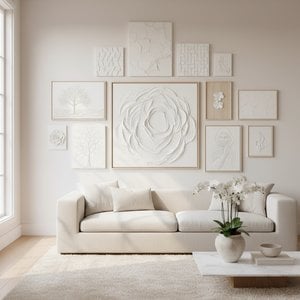
Explore 10 iconic white paintings by Monet, Whistler & Rothko! Discover the stories behind these serene masterpieces and their impact on art history. Find museum-quality reproductions for your home decor at .

Journey through Wassily Kandinsky's 25 most iconic abstract paintings. Explore his revolutionary use of color, form & spiritual expressionism. Find museum-quality Kandinsky reproductions and elevate your home decor with WahooArt.com. Discover all masterpieces on WahooArt.com!


 实景预览
实景预览
 发送
发送 分享
分享
 详情
详情 指南
指南

 下载图片
下载图片
 相似作品
相似作品 X射线
X射线 幻灯片播放
幻灯片播放 统计数据
统计数据 阅读全文
阅读全文









 玻璃选项仅适用于110厘米以下的尺寸。


