博物馆级艺术微喷或帆布版画,制作高效,并提供多种饰面选择。 ( 订购纯手工绘制画作 切换至数字图像销售渠道)





























您可以从与原作比例一致的预设尺寸中进行选择。

请输入您所需的宽度和高度,以适配您的画框或墙面。由于印刷品只能进行裁剪,无法超出原图尺寸,因此若比例不一致,画面的一部分将会被裁切。在正式印刷之前,我们会为您发送一份数字效果图供您确认。本页面显示的图片并非最终裁剪后的效果——只有效果图才能展示真实的裁剪情况。
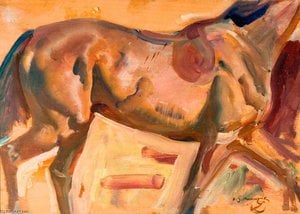
The Soarer
复刻品尺寸
Adrian Jones 的《The Soarer》 的亮度记录为 balanced,亮度值为 Gentle Luminance。
您可以在作品的 幻灯片展示 页面上以幻灯片形式浏览 Adrian Jones 的《The Soarer》。
"The Soarer" 属于 Academic Realism 流派,其创作者活跃于 19th Century 时期。

Born in the quiet landscape of Ludlow, Shropshire, on February 9, 1845, Adrian Jones possessed a spirit that was as much defined by scientific precision as it was by artistic passion. The son of James Brookholding Jones and Jane Marshall, his early years were steeped in an intense fascination with the animal kingdom, particularly the noble horse. While his father harbored reservations about a life dedicated to the arts, Jones pursued a path that would uniquely bridge the gap between science and aesthetics. By enrolling in the Royal Veterinary College in London in 1866, he secured his qualification as a veterinary surgeon, a decision that would later provide him with an unparalleled advantage in the studio. This deep, foundational knowledge of equine anatomy allowed him to perceive the subtle musculature, the tension of a tendon, and the rhythmic grace of a gallop with a clarity that few of his contemporaries could replicate.
His journey was not merely confined to the lecture halls of London; it was forged in the heat of global service. Joining the British Army as a veterinary officer in 1867, Jones’s life became an odyssey through Ireland, India, Abyssinia, Egypt, and South Africa. These years of military service instilled in him a profound sense of movement and a rugged, adventurous spirit. The diverse landscapes and cultures he encountered subtly permeated his artistic vision, lending a worldly depth to his later works. It was during this period of transition that he began to cultivate his sculptural talents, encouraged by the sculptor Charles Bell Birch. This mentorship helped transform a skilled surgeon into a rising star of the British art scene, leading to his triumphant debut at the Royal Academy in 1884 with A Hunter, one of the right sort.
As Jones transitioned from the battlefield to the studio, his reputation as a master of equestrian subjects grew with remarkable speed. His ability to capture the majesty and vitality of horses became his hallmark. In 1887, his bronze group Gone Away earned him first prize in the prestigious Goldsmiths’ Company competition, a milestone that solidified his standing among Britain's elite sculptors. His work was characterized by an extraordinary attention to detail and an ability to convey energy and motion within the stillness of bronze or the fluid strokes of oil on canvas. Whether depicting the spirited The Soarer or the joyful Merry Gal, Jones possessed a rare gift for imbuing his subjects with a sense of individual character and unbridled freedom.
His artistic repertoire extended beyond the sculptural medium into captivating paintings that are still celebrated today. In works such as Coronet, Merryman and Dewdrop, one can observe his mastery over light, shadow, and color. His paintings often feature:
The later years of Adrian Jones's life were marked by significant public contributions that moved beyond the purely aesthetic into the realm of national memory. Following the profound losses of the Boer War and World War I, Jones undertook several monumental commissions, creating war memorials that served as poignant tributes to fallen soldiers and their equine companions. These works, including his notable involvement with the Royal Marines Memorial, showcased his ability to use sculpture as a medium for collective mourning and historical preservation. His work became a permanent fixture in the British landscape, bridging the gap between private emotion and public commemoration.
By the time of his passing in 1938, Adrian Jones had left an indelible mark on the history of British art. He remains a singular figure—a man who could dissect the physical form with the precision of a surgeon and reimagine it with the soul of a poet. His legacy lives on through the countless admirers of his equine masterpieces, which continue to evoke the timeless beauty, strength, and spirit of the horse.

1845 - 1938
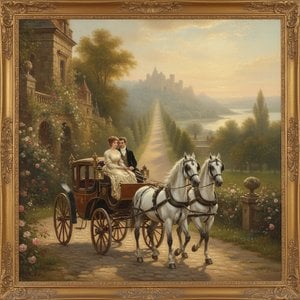
Embark on a visual journey through the romantic world of horse carriage art. Discover the mastery of equestrian oil paintings, from Impressionist textures to classical realism, and learn how to bring timeless elegance into your home with museum-quality reproductions.

Discover the enduring allure of oil on canvas. Explore how master techniques like impasto and glazing create the depth, texture, and emotional resonance found in the world's greatest masterpieces. An essential guide for fine art enthusiasts and discerning collectors.

Discover the profound allure of oil on canvas. Explore the mastery of impasto textures, the science of pigment longevity, and expert guides to selecting museum-quality reproductions that elevate your collection with timeless elegance and tactile depth.

Discover the enduring legacy of oil on board painting. Explore how historical techniques, rich impasto textures, and structural durability create timeless masterpieces that bridge Renaissance grandeur with modern art collecting excellence.

 实景预览
实景预览
 分享
分享 分享
分享
 详情
详情 指南
指南

 下载作品
下载作品
 相似作品
相似作品 X射线
X射线 幻灯片播放
幻灯片播放 问答
问答
 统计数据
统计数据


 展开全文
展开全文









 玻璃选项仅适用于110厘米以下的尺寸。