
 WatercolorWallArt
 187219th Century
 31.0 x 26.0 cm
 南澳大利亚美术馆
由我们的艺术家按需定制,为您提供您所选尺寸及画框的布面手工油画。 ( 切换至版画销售渠道 切换至数字图像销售渠道)





























从与原作比例一致的预设尺寸中进行选择。

您可以输入自定义尺寸,以适配特定的画框或空间。如果所选尺寸与原图比例不符,我们将通过裁剪作品或添加手绘元素来扩展画面。数字样稿将在制作开始前发送给您确认。
请注意,屏幕预览无法准确反映实际的裁剪或扩展效果,只有样稿才能真实呈现最终的构图。
虽然我们提供定制尺寸服务,但为了保留原作比例,建议您从预设列表中选择尺寸。

Dog chasing a kangaroo
复制品尺寸

Théodore Géricault (1821 – 1874) stands as a pivotal figure in the transition from Neoclassicism to Romanticism, an artist whose turbulent life and intensely dramatic works profoundly shaped the course of French painting. Born into a family with Huguenot roots—a history of religious dissent that imbued him with a spirit of independence and social awareness—Géricault’s career was marked by both critical acclaim and persistent struggle. He wasn't simply a painter; he was an investigator, a chronicler of human suffering, and a revolutionary in his approach to subject matter and artistic technique. His legacy rests not just on individual masterpieces but on the seismic shift he instigated within the art world, challenging established conventions and paving the way for future generations of artists.
Géricault’s childhood in Paris was far from idyllic. His father, a shipowner, died when Théodore was young, leaving him and his siblings in precarious circumstances. This early loss instilled within him a deep empathy for the marginalized and a keen awareness of social injustice. He received limited formal artistic training, initially apprenticed to a painter of portraits and miniatures. However, it was his exposure to the works of Michelangelo—particularly the powerful emotion conveyed in the *Last Judgment* at St. Peter’s Basilica in Rome—that proved to be a transformative influence. This encounter ignited within him a fascination with grand narratives, dramatic scenes, and the depiction of human suffering, themes that would dominate much of his later work. The Neoclassical style, championed by Jacques-Louis David, initially exerted a strong pull, but Géricault quickly recognized its limitations—its emphasis on idealized beauty and rational order—and sought to forge a new path.
Perhaps the most iconic work in Géricault’s oeuvre, *The Raft of the Medusa* (1819-1823), is a monumental painting that encapsulates his artistic vision and political convictions. Commissioned for the Salon of 1820, it depicts the harrowing aftermath of the wreck of the French naval frigate *Medusa*, which ran aground off the coast of West Africa in 1816. The disaster was largely attributed to the incompetence of Captain Chaumareys, a royalist appointed through political connections, and the painting became a searing indictment of corruption and governmental negligence. Géricault meticulously researched the event, interviewing survivors and constructing a scale model of the raft to ensure accuracy. He deliberately eschewed the heroic narratives favored by Neoclassical painters, instead presenting a scene of abject despair, starvation, and cannibalism—a brutal depiction of human vulnerability in the face of overwhelming adversity. The painting’s raw emotion, dramatic composition, and unflinching realism shocked audiences and cemented Géricault's reputation as a radical artist.
While *The Raft of the Medusa* secured his place in art history, Géricault continued to explore themes of suffering and social injustice throughout his career. He produced a series of intensely personal and psychologically probing portraits of individuals condemned to death—criminals, political prisoners, and victims of disease—capturing their anguish, despair, and quiet dignity with remarkable sensitivity. These works, often painted *en plein air* (outdoors), were revolutionary in their approach to portraiture, moving beyond idealized representations to offer a starkly realistic portrayal of human vulnerability. His series of studies on the “maniacs” at the Salpêtrière hospital in Paris—a sprawling asylum for the mentally ill—demonstrated his commitment to documenting the lives of those marginalized by society. These paintings were not simply depictions of illness; they were profound explorations of the human psyche, revealing the hidden depths of suffering and the complexities of mental distress.
Théodore Géricault’s impact on art history is undeniable. He shattered the conventions of Neoclassicism, paving the way for Romanticism's emphasis on emotion, subjectivity, and the sublime. His willingness to tackle controversial subjects—political corruption, social injustice, and human suffering—challenged the established order and inspired a generation of artists to engage with the realities of their time. The influence of *The Raft of the Medusa* can be seen in the works of Eugène Delacroix, Gustave Courbet, and Édouard Manet, among others. Géricault’s innovative techniques—his use of dramatic lighting, dynamic composition, and expressive brushwork—also profoundly influenced subsequent generations of painters. He remains a towering figure in art history, celebrated for his artistic genius, his unwavering commitment to social justice, and his enduring legacy as a pioneer of modern painting.

1821 - 1882 , Ireland

Discover the ethereal beauty of premium watercolor reproductions and bespoke commissions at WahooArt. From museum-quality landscapes to custom AI-enhanced portraits, our master artists deliver unparalleled craftsmanship and white-glove service for discerning collectors worldwide.

Step into the spotlight with WahooArt's AI-driven transformation. Turn your photos into stunning, hand-painted anime oil masterpieces. Experience the perfect fusion of cutting-edge technology and museum-grade craftsmanship to create a timeless pop-culture legacy for your home.
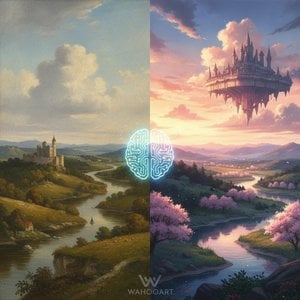
Transform your photos into high-octane action anime masterpieces with WahooArt. Our expert artists blend AI innovation with traditional oil painting to create premium, hand-painted pop culture legacies for your home. Experience museum-quality craftsmanship and a 100% satisfaction guarantee.

Discover the ethereal beauty of watercolor through an art-historical lens. Master the delicate balance of light, fluidity, and pigment to capture the luminous essence of nature, inspired by the legendary techniques of the Old Masters and Impressionist greats.

An expert guide for art collectors exploring the chemistry and artistry of oil, acrylic, tempera, and watercolor. Discover how medium specificity and material integrity define the longevity and value of fine art masterpieces.


 效果预览
效果预览
 分享
分享 分享
分享
 详情
详情

 下载
下载
 相似作品
相似作品 X射线
X射线 幻灯片播放
幻灯片播放 统计数据
统计数据 展开详情
展开详情









 玻璃选项仅适用于110厘米以下的尺寸。


