A Whisper of the Wild: Introducing Cabrit Jean
Cabrit Jean is an emerging contemporary artist whose work evokes a profound sense of tranquility and connection to the natural world. Though biographical details remain intentionally sparse, allowing the art itself to take center stage, Jean’s paintings have quickly garnered attention for their lush depictions of forests, serene landscapes, and evocative use of light and shadow. Born in an undisclosed location – a deliberate choice by the artist to foster a direct relationship between viewer and work, unmediated by personality cult or biographical narrative – Jean currently resides and works from a studio deeply immersed within the very environments that inspire their creations. This proximity is palpable; each canvas feels less like a representation *of* nature and more like an extension *from* it. The artist’s deliberate anonymity encourages audiences to engage with the paintings on a purely emotional level, focusing solely on the visual experience and the feelings of peace and wonder they elicit.
Themes and Influences: Echoes of Romanticism and Beyond
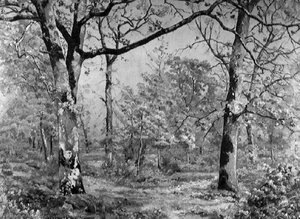
Jean's artistic vision is rooted in a deep reverence for nature, but it’s not simply a photographic replication of scenery. Instead, their work delves into the emotional and spiritual qualities of woodland environments. The forests depicted are often bathed in soft, diffused light, creating an atmosphere of mystery and introspection. There’s a strong sense of presence within these spaces – a feeling that the trees themselves are sentient beings, observing and protecting. While eschewing explicit statements about influences, art historians have noted echoes of Romantic landscape painters like Caspar David Friedrich and J.M.W. Turner in Jean's work, particularly in their use of atmospheric perspective and emphasis on the sublime power of nature. However, Jean’s palette is often more muted and contemporary, favoring earthy tones and subtle gradations of color that create a sense of calm rather than dramatic spectacle.
The artist seems less interested in capturing the grandeur of nature and more focused on its quiet intimacy. A closer look reveals a delicate balance between realism and abstraction; forms are recognizable but softened, edges blurred, inviting viewers to lose themselves within the painted world.
Technique and Style: Layers of Atmosphere
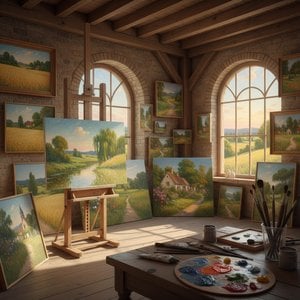
Jean’s technique is characterized by a meticulous layering process. They begin with a carefully prepared canvas, often applying multiple underlayers of color to create depth and texture. The paint application itself is remarkably subtle; Jean employs a variety of brushes and blending tools to achieve smooth transitions and soft edges. This creates an almost ethereal quality in the finished work, as if the landscapes are emerging from a dreamlike haze.
The artist’s mastery of light is particularly noteworthy. They don't simply depict light falling on objects; they capture its *essence* – the way it filters through leaves, dances on water, and transforms the mood of an entire scene. This is achieved through careful observation of natural phenomena combined with a sophisticated understanding of color theory. The resulting paintings are not merely visually appealing; they possess a tactile quality that draws viewers in, inviting them to experience the landscapes on a visceral level.
Major Achievements and Historical Significance
Despite being a relatively new presence on the art scene, Cabrit Jean has quickly established themselves as a significant voice in contemporary landscape painting. Their work has been featured in numerous online galleries and private collections worldwide, attracting a dedicated following of collectors who appreciate their unique vision and emotional depth. While it’s still early in their career, Jean's paintings are already being recognized for their ability to evoke a sense of peace and connection in an increasingly chaotic world.
- Their work represents a departure from the often-hyperrealistic depictions of nature prevalent in contemporary art.
- Jean’s deliberate anonymity challenges traditional notions of artistic authorship, placing greater emphasis on the artwork itself.
- The paintings offer a powerful reminder of the importance of preserving and appreciating the natural world.
As environmental concerns continue to grow, Jean's work resonates with audiences seeking solace and inspiration in nature. Their ability to capture the quiet beauty and spiritual essence of woodland environments makes them a compelling artist whose influence is likely to expand significantly in the years to come. The historical significance lies not just in the aesthetic quality but also in the philosophical approach – a return to experiencing landscape as a source of inner peace, rather than simply an object of observation or consumption.