Мистецький твір, представлений на цій сторінці, захищений законом про авторське право, що унеможливлює легальне створення або продаж його ідентичної репродукції. Цей захист забезпечується відповідно до міжнародних угод, таких як Бернська конвенція та національним законодавством, зокрема положеннями, що викладені в Законодавство США про авторське право — Розділ 17. Всі права захищені. Будь-яке використання без дозволу заборонено.
Цей метод повністю відповідає нормам авторського права, оскільки він не передбачає копіювання чи дублювання захищеного твору мистецтва. Натомість це творче переосмислення — створення нового малюнка під впливом оригіналу, який не є його точним відтворенням.
Друк جيкле або на полотні музейної якості з оперативним виготовленням та різноманітними варіантами фінішної обробки. ( Замовити картину ручної роботи Перейти до цифрових зображень)





























Обирайте з наших стандартних розмірів, що відповідають оригінальним пропорціям твору мистецтва.

Введіть необхідну ширину та висоту, щоб принт ідеально підійшов до вашої рами або стіни. Принт можна лише обрізати, але не можна зробити більшим за оригінал, тому при зміні пропорцій частина зображення буде втрачена. Перед друком ми надсилаємо вам цифровий макет для затвердження. Зображення на цій сторінці не відображає реальну обрізку — її можна побачити лише на макеті.
Доставка по всьому світу () за 2 тижні замість стандартних 4/5 тижнів. (9 Листопад)
China China
Розмір репродукції
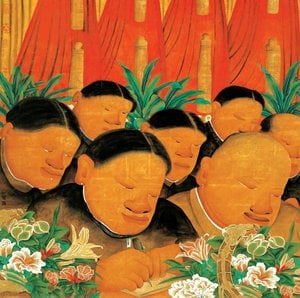
To stand before a work by Zhu Wei is to encounter not merely a painted likeness, but a carefully curated moment in the vast, churning narrative of contemporary China. This piece, capturing a man radiating an almost palpable warmth from beneath a striking red jacket, immediately draws the viewer into its orbit. The subject’s smile, directed outward as if acknowledging your very presence across the museum expanse, is both inviting and deeply guarded. It suggests a complexity—a public persona layered over private depths—that has become a hallmark of modern Chinese portraiture. Zhu Wei, whose career spans the seismic shifts of post-Tiananmen art, uses this seemingly straightforward figure to engage in a subtle, yet profound, dialogue with history and identity.
Technically, the painting showcases a remarkable dexterity. While the subject matter feels immediate and contemporary, the underlying execution hints at deep roots in Chinese artistic tradition. Zhu Wei’s background, steeped in both formal academy training and the sometimes rigid structures of state-sanctioned art, allows him to navigate these currents with an almost effortless grace. The rendering of the white collar against the vibrant red jacket is a study in contrasts—the crisp formality meeting the passionate hue. It is this tension between polished technique and underlying critical spirit that elevates the work beyond mere portraiture; it becomes a cultural artifact itself.
The choice of color, particularly that commanding red, cannot be overstated. In Chinese culture, red symbolizes joy, celebration, good fortune, and vitality. Yet, when paired with the subject's knowing expression, it takes on a more nuanced meaning—perhaps resilience, or even defiance cloaked in gaiety. The man himself, positioned so centrally within this large format (63 x 90 cm), becomes an emblem of the modern Chinese experience: outwardly vibrant and engaging, yet carrying the weight of untold stories beneath that seemingly effortless smile. It invites contemplation on what it means to present oneself to the world while navigating profound societal change.
For the collector or designer seeking a piece with genuine narrative weight, this reproduction offers an unparalleled opportunity. Owning such a work is not simply adorning a wall; it is curating a conversation. It speaks of history, of artistic endurance, and of the enduring human capacity for complex emotion. The energy emanating from the canvas—that bright, engaging smile—has the power to revitalize any space, injecting it with an intellectual spark and a touch of vibrant, sophisticated mystery that only truly great contemporary art can provide.
Рівень контрасту твору «China China» роботи Чжу Вей становить Bold.
Для створення «China China» Чжу Вей використав(ла) техніку Painting. Саме ця техніка визначає матеріальну природу оригінального твору.
«China China» пов’язує мистецтво Contemporary Chinese Art із Китай через місце народження його творця.

Народившись у Пекіні в 1966 році, Чжу Вей став визначним представником сучасного китайського мистецтва, чиє ім'я асоціюється з тонким критичним осмисленням політики та суспільства на тлі стрімких змін у сучасному Китаї. Він постає як один із найбільш помітних майстрів епохи після подій на площі Тяньаньмень, демонструючи дивовижну вірність традиційному китайському живопису та водночас пропонуючи витончений коментар до історичного контексту своєї країни.
Чжу Вей посідає вирішальне місце в сучасному китайському мистецтві. Як митець, що з'явився на світ після подій на площі Тяньаньмень, він відображає складний процес переговорів між традицією та модернізмом, державним контролем та індивідуальним самовираженням. Його тонка критика політичних і соціальних структур, подана через призму класичного китайського живопису, пропонує унікальний погляд на стрімку трансформацію Китаю. Він доводить, що традиційні художні форми можуть бути потужно адаптовані для вирішення сучасних проблем, закріплюючи за собою статус життєво важливого голосу в глобальному мистецькому дискурсі.

1966 - , Китай

Embark on a profound journey through the soul of Chinese calligraphy. Explore the historical mastery of ink, brush, and script, from ancient Zhuanshu to elegant running script, and discover how this timeless art form reflects the enduring spirit of classical East Asian aesthetics.

Elevate your design projects with WahooArt's premium canvas prints and hand-painted reproductions. From Giclée excellence to bespoke oil commissions, we provide professional decorators with museum-quality, affordable art solutions delivered worldwide with a 100% satisfaction guarantee.
 Переглянути в інтер'єрі
 Надіслати як листівку
 Поділитися
 Деталі витвору
 Посібник

 Завантажити
 Схожі екземпляри
 Рентгенівське дослідження
 Слайд-шоу
 Питання та відповіді
 Статистика


 Розгорнути текст









 Скляний варіант доступний лише для розмірів до 110 см