БЕЗКОШТОВНА КОНСУЛЬТАЦІЯ З МИСТЕЦТВА

x
Замовити друк Замовити друкКупити цифрове зображення Купити цифрове зображення НадіслатиНадіслати
ДеталіДеталі Додати до улюблених Додати до улюблених ЗавантажитиЗавантажити Схожі виробиСхожі вироби Рентгенівське дослідженняРентгенівське дослідження Слайд-шоуСлайд-шоу

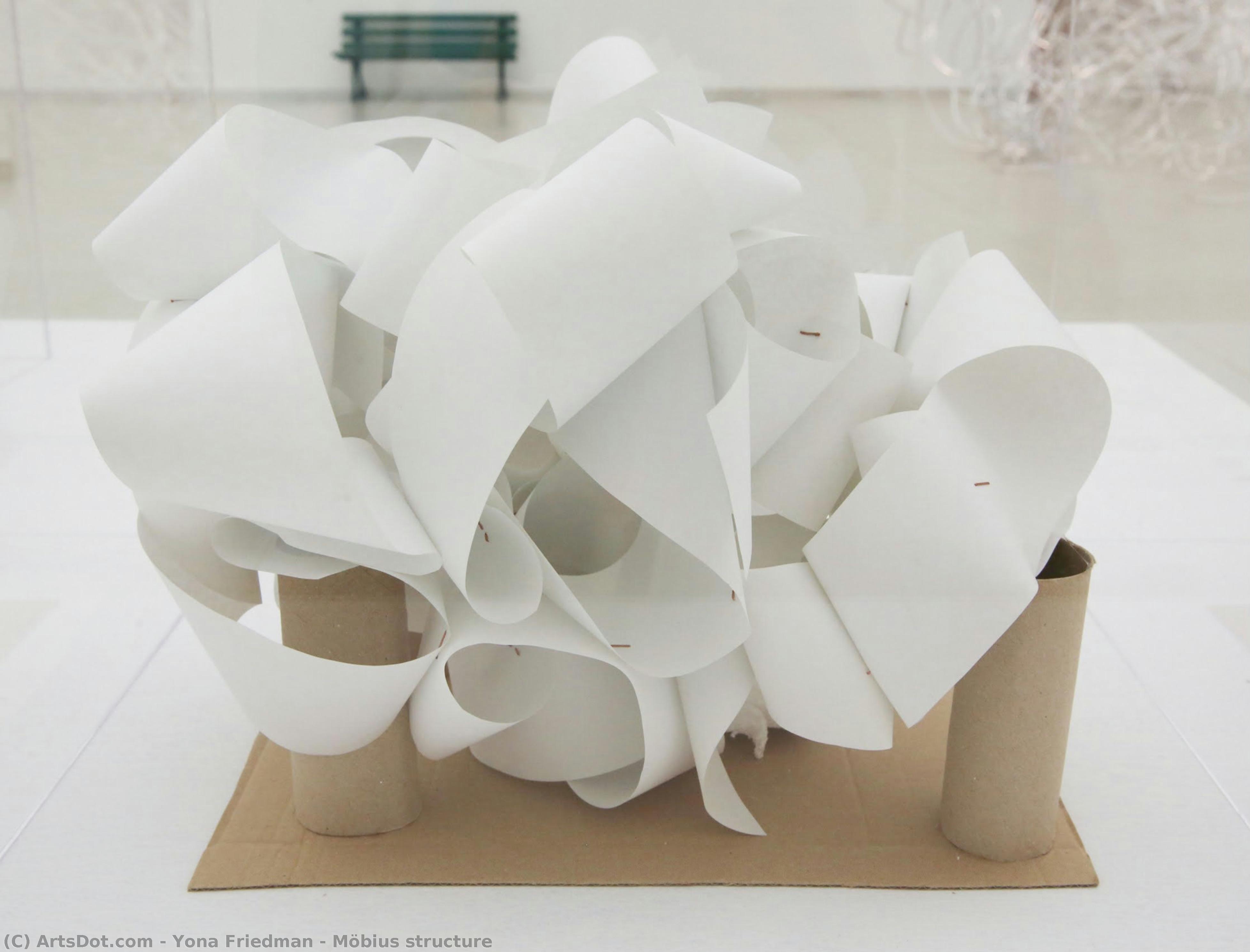
Möbius structure

Explore the visionary architecture of Yona Friedman (1923-2020). Pioneer of 'mobile architecture' & utopian urbanism, his designs challenge convention. Discover his influential theories and unique artworks.

Олійная репродукція ручної роботи

Написана вручну олією на полотні у вашому розмірі та рамі, виготовлена на замовлення нашими художниками.

Standard
custom
CM
INCH

Обирайте з наших стандартних розмірів, що відповідають оригінальним пропорціям твору мистецтва.

ширина
висота

Ви можете вказати власні розміри, щоб репродукція підійшла до конкретної рами або інтер'єру. Якщо вибраний вами розмір не відповідає пропорціям оригіналу, ми або обріжемо полотно, або доповнимо картину додатковими елементами, промальованими вручну. Цифровий макет буде надіслано вам на затвердження перед початком виробництва.
Зверніть увагу, що попередній перегляд на екрані не відображає фактичне обрізання або розширення зображення. Тільки макет точно покаже остаточну композицію.
Хоча ми можемо виготовити виріб у нестандартному розмірі, для збереження оригінальних пропорцій рекомендуємо обирати варіанти зі встановленого списку.

Приклади можливих змін: замінити обличчя на фото клієнта; додати домашню тварину (наприклад, замінити кота на собаку); додати приховане повідомлення на фоні; змінити ландшафт або елементи фону.
Після оформлення замовлення команда WahooArt.com зв'яжеться з клієнтом електронною поштою для отримання інструкцій та надасть попередній макет

Доставка по всьому світу () за 3–4 тижні замість стандартних 5 тижнів. (6 Липень). Без жодних компромісів у якості.

why_choose_icon
Безкоштовна експрес-доставка по всьому світу
why_choose_icon
Високоякісне лляне полотно
why_choose_icon
Повне страхове покриття доставки
why_choose_icon
Гарантія відшкодування митних зборів
why_choose_icon
Гарантія точного відтворення кольорів
why_choose_icon
Політика повернення протягом 60 днів (лише у разі виявлення дефектів)
why_choose_icon
Гарантія повернення 100% коштів
why_choose_icon
Знижка на багатоелементні замовлення

Загальна вартість

-

reproduction

Möbius structure

Матеріал репродукції

Розмір репродукції

-

Підсумкова ціна

-

Опис твору

Yona Friedman describes his unrealized projects as a parabola. His autonomous world, ensconced between art and legend, predicts a brand new way of life in civil society. From this point of view, Friedman is an uncompromising realist. Buildings and their inhabitants were an expression of freedom of choice. He let construction workers model exteriors based on their own predilections, leaving interior spaces for occupants to design and create. Although it was said that Friedman was too

Біографія митця

Yona Friedman (1923–2020): Architect of Mobile Utopia

Yona Friedman (5 June 1923 – 20 February 2020) was a Hungarian-born French architect, urban planner and designer. He was influential in the late 1950s and early 1960s, best known for his theory of ‘mobile architecture,’ which envisioned a radical reimagining of cities as dynamic systems capable of adapting to evolving needs and conditions. Friedman’s pioneering approach challenged conventional architectural dogma and cemented his place as a visionary figure in the history of modernism.

Early Life and Education

Born in Budapest, Hungary, into an ethnic Jewish family grappling with antisemitic legislation during the period of Nazi occupation, Friedman faced considerable obstacles pursuing higher education. Despite these difficulties, he persevered, securing admission to Technische Universität Wien (TU Wien) where he studied architecture—a formative experience that instilled in him a lifelong fascination with spatial exploration and experimentation. Following his graduation in 1948, Friedman embarked on a journey of artistic discovery, relocating to Israel in 1957 at the invitation of Jean Prouvé, cementing his connection to the burgeoning Bauhaus movement’s spirit of innovation.

The Genesis of Mobile Architecture

Friedman's intellectual breakthrough arrived in 1956 with the publication of *Mobile Architecture,* a manifesto that fundamentally altered perceptions of urban design and architectural practice. Rejecting static structures as inherently inflexible and unresponsive, Friedman argued for a paradigm shift toward “mobile architecture”—a concept he elaborated upon through intricate drawings and diagrams—where buildings could expand outwards to accommodate growth without sacrificing their core identity. This audacious proposition drew inspiration from the principles of Gestalt psychology and explored connections between mathematics, geometry, and spatial perception. He envisioned cities as interconnected networks of structures that would adapt to changing populations and circumstances, prioritizing human comfort and fostering a sense of collective dynamism.

Collaborations with Archigram and Superstudio

Friedman’s theoretical framework quickly gained traction within the influential Team 10 architectural group—a collective dedicated to challenging established norms and advocating for humanist values in design. He collaborated closely with fellow architects Richard Rogers, Ernő Goldfinger, Dennis Lasdun, and Alison Macintosh on projects that embodied the spirit of Team 10's rebellious idealism. Notably, Friedman’s partnership with Archigram produced groundbreaking experimental buildings—such as Habitat ’67—that pushed the boundaries of structural engineering and architectural aesthetics. Similarly, his collaboration with Superstudio resulted in iconic artworks—like *Container Structures II*—which utilized paper cutouts to generate mesmerizing visual patterns—a precursor to future urban landscapes and a testament to Friedman’s ability to transform conceptual ideas into tangible realities.

Recognition and Legacy

Throughout his prolific career, Friedman received numerous accolades for his contributions to architecture and urban planning, including the Austrian Frederick Kiesler Prize for Architecture and the Arts in 2018—a prestigious honor recognizing his enduring influence on architectural thought. His drawings were exhibited internationally, captivating audiences with their meticulous detail and evocative exploration of spatial relationships. Friedman’s work continues to inspire architects and artists alike, serving as a reminder that innovation stems from questioning assumptions and embracing imaginative possibilities. He passed away peacefully in Paris in February 2020 at the age of 96, leaving behind an indelible mark on the history of modern architecture—a legacy characterized by unwavering optimism and a steadfast belief in the transformative power of design to shape human experience.
yona friedman

yona friedman

1923 - 2020 , Hungary

Короткі факти

  • Artistic Movement Or Style: Mobile Architecture
  • Artists Or Movements Influenced By This Artist: ['Spatial City']
  • Artists Who Influenced This Artist:
    • Jean Prouvé
    • Archigram
    • Superstudio
  • Date Of Birth: 1923
  • Date Of Death: 2020
  • Full Name: Yona Friedman
  • Nationality: Hungarian-French
  • Notable Artworks:
    • Container Structures II
    • Möbius structure
  • Place Of Birth: Budapest, Hungary