Переглянути в інтер'єріПереглянути в інтер'єрі Перегляд в ARПерегляд в AR Замовити репродукцію ручної роботи Замовити репродукцію ручної роботиSwitch to Digital Image Switch to Digital Image Надіслати як листівкуНадіслати як листівку
ДетальнішеДетальніше Додати до улюблених Додати до улюблених ЗавантажитиЗавантажити Схожі експонатиСхожі експонати Рентгенівське дослідженняРентгенівське дослідження Слайд-шоуСлайд-шоу StatsStats

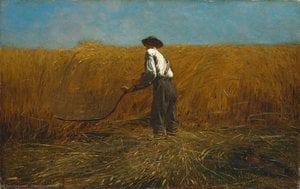
The Sand Dune

Відкрийте для себе Вінслоу Гомера (1836-1910)! Потужні картини американського реалізму: морські пейзажі, життя та епоха 19 століття. Шедеври 'Західний потік' та 'Вітри на повні пару'.

Гікле / Художній принт

Музейна якість друку جيкле або на полотні з оперативним виготовленням та різноманітними варіантами фінішної обробки. (Замовити репродукцію ручної роботи Замовити репродукцію ручної роботиSwitch to Digital Image Switch to Digital Image)

P118B $10
P118H $10
P118W $10
P438Z $10
P508JH $12
P508YH $12
P805H $10
P805Z $10
P919BZ $10
P919G $10
P919XJ $10
P959ZH $10
P968JZ $12
W106C $8
W218G $10
W218JH $8
W218Y $10
W307PJ $10
W316G $10
W316PJ $8
W316Y $10
W398PJ $8
W4111J $10
W500HY $15
W500JH $15
W692G $12
W849H $8
W940BG $15
W953PJ $8

Стандартний розмір
індивідуальний
CM
INCH

Обирайте з наших стандартних розмірів, що відповідають оригінальним пропорціям твору мистецтва.

ширина
висота

Ви можете вказати власні розміри, щоб репродукція ідеально підійшла до конкретної рами або інтер'єру. Якщо обраний вами розмір не відповідає пропорціям оригіналу, ми або обріжемо полотно, або розширимо зображення за допомогою дзеркального відображення чи суцільної заливки країв. Перед початком виробництва вам буде надіслано цифровий макет для затвердження.
Будь ласка, зверніть увагу, що попередній перегляд на екрані не відображає фактичне обрізання або розширення. Тільки макет точно покаже фінальну композицію.
Хоча можливість замовлення індивідуальних розмірів доступна, ми рекомендуємо обирати формат із попередньо визначеного списку, щоб зберегти оригінальні пропорції.

Доставка по всьому світу () за 2 тижні замість стандартних 4/5 тижнів. (7 Вересень)

why_choose_icon
Безкоштовна експрес-доставка по всьому світу
why_choose_icon
Високоякісне лляне полотно
why_choose_icon
Повне страхове покриття доставки
why_choose_icon
Гарантія відшкодування митних зборів
why_choose_icon
Гарантія точного відтворення кольорів
why_choose_icon
Політика повернення протягом 100 днів (тільки у разі виявлення дефектів)
why_choose_icon
Гарантія повернення 100% коштів
why_choose_icon
Пропозиція на оптові замовлення

Загальна вартість

$ 68

reproduction

The Sand Dune

Гікле / Художній принт

Розмір репродукції

-

Підсумкова вартість

$ 68

Основна інформація

  • Location: Terra Foundation
  • Subject or theme: Rural life, nature
  • Artist: Winslow Homer
  • Notable elements: Woman, dog, bird
  • Artistic style: Landscape painting
  • Title: The Sand Dune
  • Influences: Country School

Квіз про мистецтво

У кожному запитанні лише одна правильна відповідь.

Запитання 1:
What is the primary subject matter of Winslow Homer’s ‘The Sand Dune’?
Запитання 2:
In what year was ‘The Sand Dune’ painted?
Запитання 3:
Which of the following best describes Winslow Homer’s artistic style as exemplified in ‘The Sand Dune’?
Запитання 4:
What detail in the painting contributes to its overall charm?
Запитання 5:
Where is ‘The Sand Dune’ currently housed?

A Moment of Quietude: Winslow Homer’s “The Sand Dune”

Winslow Homer's "The Sand Dune," painted in 1871, isn’t merely a depiction of a woman and her dog on the beach; it’s a profound meditation on the relationship between humanity and nature, rendered with an almost palpable sense of serenity. This oil-on-canvas masterpiece captures a fleeting moment – a quiet afternoon bathed in golden light – that speaks volumes about the American spirit of observation and appreciation for the simple pleasures of rural life. Homer, already establishing himself as one of America’s most significant artists, eschewed the grand narratives favored by European academies, instead choosing to immerse himself in the realities of his native New England, a decision that profoundly shaped his artistic vision.

The painting immediately draws the eye with its expansive landscape. The undulating sand dunes dominate the composition, stretching towards a hazy horizon, creating an illusion of limitless space and inviting the viewer into this intimate scene. Homer’s masterful use of color – warm ochres, sandy yellows, and muted blues – evokes the feeling of sun-drenched heat and the soft texture of the sand beneath one's feet. The woman, dressed in a simple hat that adds a touch of formality to the otherwise casual setting, stands with a relaxed posture, her gaze directed towards an unseen point beyond the frame. Beside her, two dogs – a sturdy terrier and a smaller breed – are engaged in playful interaction, their presence adding a layer of domestic warmth to the scene.

Technique and Composition: Echoes of Homer’s Early Style

Examining the painting's technique reveals a fascinating blend of realism and Impressionistic influence. Homer’s early training as an illustrator is evident in his meticulous attention to detail, particularly in the rendering of the sand dunes and the textures of the dogs’ fur. However, he departs from strict photographic accuracy, employing loose brushstrokes and subtle color variations to capture the atmospheric quality of the light and the sense of movement within the landscape. The composition itself is carefully balanced, with the diagonal lines created by the dunes leading the eye towards the distant horizon, while the figures in the foreground provide a grounding element. Notably, “The Sand Dune” shares stylistic similarities with works like "Country School" and "Girl with Pitchfork," demonstrating Homer’s consistent exploration of rural American life.

The inclusion of the bird on the right side is particularly intriguing. It could be interpreted as a symbol of freedom or perhaps simply an element of the natural world seamlessly integrated into the scene. Homer's ability to imbue even seemingly minor details with significance underscores his deep understanding of the interconnectedness of all things within the landscape.

Historical Context and Artistic Significance

"The Sand Dune" was created during a period of significant social and artistic change in America. Following the Civil War, there was a growing interest in documenting American life and celebrating the nation’s diverse landscapes. Homer's work reflects this trend, offering a nuanced portrayal of rural America that moved beyond romanticized depictions to capture the everyday realities of its people. The painting is currently housed at the Terra Foundation for American Art in Chicago, an institution dedicated to preserving and promoting the understanding of historical American art – a testament to Homer’s enduring legacy.

Owning a Piece of History: Reproductions and Beyond

WahooArt.com offers meticulously crafted, hand-painted reproductions of “The Sand Dune,” allowing art enthusiasts to experience the beauty and emotional resonance of this iconic painting firsthand. These reproductions capture not only the visual details but also the spirit and atmosphere of Homer’s original work. For those seeking further information on Winslow Homer or his artistic journey, we encourage you to explore the resources available at WahooArt.com and the Wikipedia page dedicated to the artist. Explore a high-quality reproduction today: https://WahooArt.com


Біографія митця

Winslow Homer: A Brush With the American Spirit

Winslow Homer, born in Boston in 1836, wasn’t sculpted by the traditional European art academies that shaped so many of his contemporaries. Instead, he emerged from a distinctly American experience, one rooted in practicality and observation. His journey began not with grand historical canvases, but as a commercial illustrator at the tender age of twelve for Harper's Weekly. This early apprenticeship was formative, honing an exceptional ability to capture scenes with clarity and detail – skills that would become hallmarks of his mature work. He wasn’t learning perspective in Paris; he was learning to *see* America, its people, and its unfolding story. The bustling streets of Boston, the quiet dignity of rural New England life, these were his first subjects, rendered with a precision born of necessity for the demands of print media. This foundation allowed him to transition into painting, initially in watercolor, before fully embracing the expressive potential of oil paints.

From Pastoral Scenes to the Raw Power of Nature

Homer’s early paintings often depicted idyllic scenes – children playing, farmers tending their fields, quiet moments of domesticity. These works, while charming, hinted at a deeper artistic sensibility waiting to be unleashed. The catalyst for this transformation was undoubtedly the Civil War. As a war correspondent for Harper's Weekly, Homer witnessed firsthand the brutal realities of conflict. He didn’t focus on heroic battles or grand strategies; instead, he documented the everyday lives of soldiers and civilians, the quiet moments of grief and resilience amidst chaos. This experience profoundly altered his artistic vision. The pastoral scenes gave way to more challenging subjects: veterans grappling with trauma, freed slaves navigating a new world, and the stark beauty of landscapes touched by hardship. He began to explore themes of struggle, isolation, and humanity’s precar He wasn't interested in imitating European styles; he wanted to create an art that was uniquely American, reflecting its landscapes, its people, and its challenges. His style also evolved, becoming bolder and more direct, reflecting the raw emotional impact of what he had witnessed. Breezing Up (A Fair Wind), painted in 1876, exemplifies this skill – a quintessential depiction of American maritime life, brimming with energy and movement. The Gulf Stream, created decades later, is perhaps his most iconic work, a powerful and symbolic portrayal of a lone man battling the forces of nature, a metaphor for human struggle against overwhelming odds. He possessed an extraordinary ability to capture light, whether it was the dazzling glare of the sun on the ocean or the soft glow of twilight over a rural landscape. This mastery extended to his watercolors, where he achieved remarkable atmospheric effects through vibrant colors and delicate washes. Innocence, a poignant portrayal of childhood set against the backdrop of nature, and **Man of Science** demonstrating his skill in capturing human psychology, are testaments to this commitment.

Mastering Light, Texture, and the American Landscape

Winslow Homer's artistic technique is immediately recognizable for its solidity and texture. He wasn’t interested in fleeting impressions; he wanted to build up a sense of tangible reality on the canvas. His oil paintings are characterized by a direct painting approach – layers of paint applied with confidence, creating depth and luminosity. He wasn’t simply painting what he saw; he was conveying a feeling, an emotional truth about the human condition. His unwavering dedication to capturing the essence of American life—from the serene beauty of coastal vistas to the arduous realities of rural existence—established him as a cornerstone of American Realism.

A Legacy Forged in American Realism

His influence can be seen in the work of later American painters who sought to depict their own country with similar directness and emotional depth. He wasn’t interested in imitating European styles; he wanted to create an art that was uniquely American, reflecting its landscapes, its people, and its challenges. His legacy lies in his ability to portray America with honesty and authenticity, without romanticizing or idealizing it. He remained a pivotal figure in the development of American Realism, securing his place as one of America’s most important and enduring artists.
  • His work continues to inspire contemporary artists.
  • Homer remains a cornerstone of American Realism.

Вінслоу Гомер

Вінслоу Гомер

1836 - 1910 , США

Короткі факти

  • Artistic Movement Or Style: Американський Реалізм
  • Artists Or Movements Influenced By This Artist: ['Американські художники']
  • Artists Who Influenced This Artist:
    • Барбізоньський Школа
    • Кубер
    • Мілет
  • Date Of Birth: 3 жовтня 1836 р.
  • Date Of Death: 1910 р.
  • Full Name: Winslow Homer
  • Nationality: Американський
  • Notable Artworks:
    • Бриз Вітер
    • Течія Густини
    • Ніна
  • Place Of Birth: Бостон, США
Досліджуйте твори мистецтва, впорядковані за темами, стилями та характеристиками.