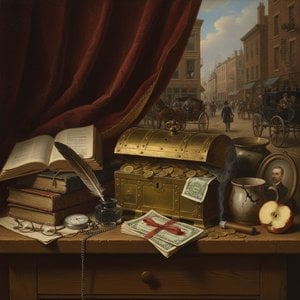
Біографія митця
A Life Painted in Light: The World of William Merritt Chase
William Merritt Chase, ім'я якого назавжди асоціюється з розквітом американського імпресіонізму, був не просто живописцем – він став ключовою фігурою у формуванні національної мистецької ідентичності Америки на початку 20-го століття. Його шлях від скромних початків в індійському містечку Williamsburg до визнання як видатного художника та впливового педагога – це свідчення непохитної відданості та природного таланту. Раннє життя Вільяма було позначене переїздом сім’ї до Індепенденс, штат Індіана, де він спочатку допомагав своєму батькові у веденні справи. Проте, навіть серед цих практичних обов'язків, зерна мистецького патріотизму були посаджені та вирощувалися, підкріплені навчанням у місцевих вчителів Бартона С. Хейса та Джейкоба Кокса. Ця фундаментальна освіта запалила бажання досліджувати далі, що призвело до короткої служби на військовому флоті, перш ніж він, у 1869 році, звернувся до жвавого мистецького життя Нью-Йорка. Там, під керівництвом Джозефа Оріела Ейтона в Національній академії дизайну та пізніше Лемюеля Вілмарта, учня Жан-Леона Жермера, Chase почав удосконалювати свої навички, заклавши фундамент для кар'єри, яка переосмислила американське живописство. Тимчасові фінансові труднощі змусили його переїхати до св. Луїса в 1870 році, але навіть цей виклик виявився плідним, дозволивши йому заслужити визнання у місцевій арт-спільноті та продемонструвати свій зростаючий талант.
Від Академічних Корнів до Імпресіоністичного Блиску
Розвиток мистецтва Chase не був раптовим стрибком в імпресіонізм, а скоріше поступовою еволюцією, заснованою на суворому академічному навчанні та широких подорожах. Ключовим моментом став його тривалий відпочинок у Мюнхені, що почався в 1872 році, де він навчався в Академії мистецтв під керівництвом Олександра фон Вагнера та Карла фон Пілоти. Цей період навчив його традиційних технік і схильності до драматичних композицій, але під час візиту у Венецію разом з американськими художниками Френком Дувенаком та Джоном Твактманом Chase почав відмовлятися від більш вільного підходу до живопису. Натхненний сяючим світлом і яскравими кольорами італійського пейзажу, він почав експериментувати з більш розслабленою технікою малювання та підвищеною чутливістю до атмосферних ефектів. Повернувшись до Нью-Йорка в 1878 році, Chase повністю прийняв імпресіоністичні принципи, захоплюючи миттєві моменти сучасного життя з енергійним і захопливим стилем. Роботи, такі як Keying Up – The Court Jester (1876), представлені на виставці в Бостонському художньому клубі та на Centennial Exposition у Філадельфії, продемонстрували його здатність передавати рух і особистість за допомогою сміливих мазків і динамічної композиції. Він продовжував досліджувати різноманітні теми – вражаючі портрети, такі як Portrait of Virginia Gerson, емоційні пейзажі, зокрема Gowanus Bay (aka Misty Day, Gowanus Bay), та сцени, що зображують багатство міського життя, включаючи Alice Fernandez. Інші значущі роботи включають “A Friendly Call”, “A Study in Curves” і “Terrace at the Mall, Central Park”.
Навчання: Формування Покоління Митців
Окрім досягнень як художника, William Merritt Chase залишив незгладимий слід в американському мистецтві завдяки своїй відданості навчанню. Розпізнавши необхідність інноваційної арт-освіти, він заснував Chase School у Нью-Йорку в 1896 році, який пізніше еволюціонував у Parsons The New School for Design. Ця установа стала місцем народження мистецького таланту, підкреслюючи безпосереднє спостереження, технічну майстерність і творчу експериментальність. На відміну від багатьох його колег, які віддавали перевагу жорсткому академічному навчанню, Chase заохочував своїх учнів розвивати власні голоси та досліджувати різноманітні стилі. Він обіймав посади викладача в Пенсільванській академії мистецтв, Художньому товаристві Нью-Йорка та Бруклінському художньому товаристві, поширюючи свою мистецьку філософію далеко і широко. Його вплив поширився на численних митців, включаючи Ваймана Елібрейда Адамса, який відкрито визнавав Chase своїм наставником. Акцент на пленерному живописі – малюванні безпосередньо на природі – став основою його педагогічного підходу, сприяючи глибшому зв’язку між учнями та їхніми темами.
Історична Значимість і Наследяність
Місце Вільяма Merritt Chase в історії американського мистецтва зафіксоване. Він зблизив академічні традиції та імпресіоністичний рух, значно внесений у розвиток виразна національна мистецька ідентичність. Його відданість захопленню суті сучасного життя – бурхливих міських пейзажів, затишних домашніх інтер’єрів та розваг його часу – резонувала з аудиторією, яка прагнула нового візуального мови. Хоча його пізні роки позначені тимчасовим спадом критичної визнаваності, його роботи пережили відродження в останні десятиліття, зміцнюючи його репутацію як одного з найважливіших і впливових американських митців. Він не просто документував сцени; він інтерпретував дух еволюціонуючої нації через яскравий імпресіоністичний погляд. Його спадок продовжує формувати ландшафт американського мистецтва для наступних поколінь, виходячи далеко за межі його полотен і надихаючи безліч митців.



 Переглянути в інтер'єрі
 Перейти до друку
 Надіслати
 Поділитися
 Деталі
 Посібник

 Завантажити
 Схожі предмети колекціонування
 Рентгенівське дослідження
 Слайд-шоу
 Статистика переглядів


 Читати далі






































 Скляний варіант доступний лише для розмірів до 110 см