Біографія митця
A Life Forged in Abstraction
Willem de Kooning, ім'я якого стало синонімом необмеженої енергії та глибокої емоційної глибини Абстрактного експресіонізму, народився в Гамбурзі, Нідерланди, у 1904 році. Раннє дитинство було позначене сімейним розколом – його батьки розлучилися, коли йому було лише кілька років, що, можливо, заклало в нього відчуття безперервного пошуку, яке пронизало весь його мистецький шлях. У вісімнадцять років він покинув формальне навчання та став учнем комерційної художньої студії, заклавши фундамент для своєї технічної майстерності, водночас підживлюючи бажання звільнитися від звичних обмежень. Вечори у Академії образотворчого мистецтва та технічних наук в Гамбурзі надали йому додаткового освітнього досвіду, але прагнення до чогось більшого – більш виразної мови – зрештою підштовхнуло його до Америки у 1926 році. Його прибуття не було легким – він відомо, що втекти на кораблі, втілюючи дух людини, яка шукає нових горизонтів. Нью-Йорк став його прийнятим домом, і його енергійне, часто похмуре життя глибоко вплинуло на розвиток його стилю. Він працював різними роботами – фарбувальник, столяр, – усі вони безперестанку прагнули до свого мистецького бачення, вбираючи в себе пульс міста у свою роботу.
Від Міських Пейзажів до Абстрактного Буйства
Ранні картини де Конаінга відображали його безпосереднє оточення: міські краєвиди та портрети, які передавали динаміку нью-Йоркського життя. Однак це були лише етапи на шляху до глибшого дослідження форми та емоцій. Переломним моментом став його зв’язок з Аршіле Жорко, чия вплив виявився трансформативним. Жорко заохочував де Конаінга експериментувати з абстракцією, сприяючи готовності розірвати традиційне представлення на пошуки чогось глибшого. 1930-ті роки позначилися для де Конаінга роботами в соціальному реалізмі та створення монументів через Програму робітничих проектів (WPA), період, який удосконалив його навички, але також підкреслив обмеження чисто репрезентативного мистецтва. Він відчував тяжіння до творчості Стіюарда Девіса та Джона Грейхема – художників, які вже проривалися крізь межі традицій. Цей потік впливів поступово спрямував його від буквального зображення до все більш абстрактної лексики. Це не було різке перетворення, а радше повільний процес – свідома деконструкція встановлених норм, підкріплена інтелектуальною цікавістю та наполегливим прагненням до мистецьшої істини.
"Woman" Series: Місцезнаходження та Символізм
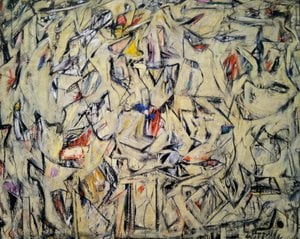
Після Другої світової війни де Конаінга визнали центральною фігурою в розквіті руху Абстрактного експресіонізму. Цей період став поворотним моментом, що призвів до його знакового циклу "Woman" (1950-1953). Ці картини – зокрема, грандіозний *Woman I* – не є просто зображеннями жіночих фігур; це вивірені дослідження жіночності, сексуальності та складнощів людських емоцій. Характеризовані агресивними мазками, розірваними формами та дисонуючим поєднанням кольорів, серія "Woman" кинула виклик традиційним уявленням про красу та представлення. Вони були суперечливими, навіть шокуючими для деяких, але їхня сила полягала в тому, що вони відмовлялися відповідати нормам. Де Конаінга не цікавило створення ідеалізованих образів; він прагнув зафіксувати первозданну, нестримну сутність своїх моделей. Окрім серії "Woman", роботи, такі як *The Glazier* та *Excavation*, продемонстрували його динамічний підхід до живопису, демонструючи майстерне володіння текстурою, кольором і композицією. Він не соромився хаосу чи невизначеності; замість цього він сприймав їх як невід’ємну частину свого мистецького мови.
Еволюція Пейзажів та Наслідки
У 1960-х роках стиль де Конаінга зазнав ще одного значного етапу розвитку. Хоча абстракція залишалася центральною у його роботах, пейзажні елементи почали відігравати більш помітну роль, часто зображуючись яскравішими кольорами та більш плавним мазком. Він продовжував безперестанку експериментувати протягом свого життя, досліджуючи різні техніки та матеріали, ніколи не задовольняючись тим, що досягнув. Його пізні роботи демонструють вражаючу здатність переозначуватися, залишаючись вірним своїм основним художнім принципам. Наслідки творчості де Конаінга неможливо недооцінити. Він допоміг встановити Нью-Йорк як глобальний центр мистецтва, кинувши виклик домінуванню європейських традицій і відкривши шлях для майбутніх поколінь художників. Його творчість продовжує надихати та провокувати дебати, нагадуючи нам про силу абстракції у передачі глибоких емоційних істин. Віллем де Конаінга помер у 1997 році, залишивши за собою величезний та впливовий корпус робіт, який є свідченням його непохильного прагнення до мистецьких інновацій і його вічної спадщини як одного з найважливіших американських художників XX століття. *Його вплив відчувається й сьогодні.*



 Переглянути в інтер'єрі
 Switch to Print
 Надіслати як листівку
 Поділитися
 Детальніше

 Завантажити
 Схожі експонати
 Рентгенівське дослідження
 Слайд-шоу
 Stats
Stats

 Читати далі






































 Скляний варіант доступний лише для розмірів до 110 см