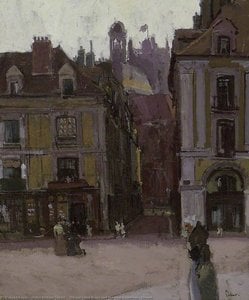
A Life Painted in Shadows and Light
Walter Richard Sickert, народжений у Мюнхені в 1860 році, був фігурою, що постійно перебувала між світами – німець за походженням, британський за приналежністю, і митець, який безперервно коливався між традиціями живопису та бурхливими потоками модернізму. Його раннє життя було сповнене рухів; переїзд сім’ї до Англії в 1868 році, викликаний політичними змінами в Європі, заклав у нього відчуття розгубленості, яке, можливо, і підживлювало його все життя захоплення чужинцями та маргінальними людьми. Хоча він належав до роду художників – його батько, Оскальд Сіккерт, був данським живописцем – молодий Вальттер спочатку прагнув стати актором, короткий час виступаючи на сцені поряд з видатним Генрі Ірвінгом. Це раннє залучення до театрального мистецтва, до мистецтва ілюзії та характеру, глибоко вплинуло на його художній погляд, наповнюючи його картини театральністю та психологічною глибиною, які відрізняли його від сучасників. Однак тяжіння до візуальної вираження було сильнішим, і він вступив до Slade School у 1881 році, а потім став відданим учнем Джеймса Еббота Макнейла Вхістера. Це керівництво було трансформаційним, навчивши Сіккерта надавати перевагу тоновим дослідженням, написаним *alla prima*, безпосередньо з натури, і вдосконалити естетичне чуття, яке лежало в основі його ранніх робіт. Вплив Вхістера був не лише технічним; він сприяв цінуванню мистецького незалежності та готовності кидати виклик традиційним нормам.
London’s Underbelly and the Allure of Modern Life
Мистецький компас Сіккерта швидко звернувся до яскравої, часто грубої реальності Лондона. Він був зачарований атмосферою міста – музичних залів, де вирувало енергія, спектаклю та різноманітна публіка. Його картини того періоду, такі як Katie Lawrence at Gatti's, вражають своєю безкомпромісною здатністю зображувати ці середовища та їхніх мешканців. Це були не просто зображення; це були дослідження сучасного міського існування, захоплюючи миттєвості та емоції, що відчувалися в цих стінах. Він прагнув малювати життя таким, яким воно було насправді, а не таким, яким воно було ідеалізоване – радикальний відхід від вікторіанських художніх звичаїв. Його готовність зображувати звичайних людей, особливо жіночних артисток, чесною та без романтизації, був провокаційним актом, що передував переходу до соціального реалізму в мистецтві 20-го століття. Його час, проведений у Діппі, Франція, з 1894 року, також виявився важливим, пропонуючи нові перспективи щодо світла, кольору та композиції, а його подальші візити до Венеції ще більше вдосконалили його підхід до зображення інтер’єрів і складних укладок фігур. Він не просто фіксував те, що бачив; він інтерпретував це через свій особистий погляд, наповнюючи навіть найпростіші сцени відчуттям таємничості та психологічної напруги.
A Catalyst for Change: The Camden Town Group and Beyond
З настанням 20-го століття Сіккерт став ключовою фігурою в розгалуженому британському авангардному русі. Він приєднався до New English Art Club у 1888 році, зближуючись з художниками, які приймали імпресіоністські принципи Франції. Пізніше він відіграв вирішальну роль у створенні Camden Town Group у 1911 році – колективу митців, присвячених зображенню сучасного життя безкомпромісно чесним та стилістично інноваційним способом. Вплив Сіккерта на цей клуб був значним, заохочуючи їх відірватися від академічних обмежень і досліджувати нові форми вираження. Він пропагував неромантичне бачення міського ландшафту, зосереджуючись на повсякденних сценах та звичайних людях. Його картини того періоду часто зображали тривожні теми, такі як його серія
Camden Town Murder, відображаючи зростаючу зацікавленість злочинністю та психологічною напругою. Його готовність зіткнутися з важкими темами зміцнював його репутацію провокаційного та виклик художника. Він не просто прагнув зображувати поверхневі речі; він хотів заглибитися в темні глибини людської психіки, досліджуючи теми відчуження, тривоги та моральної невизначеності.
Legacy and Lingering Mysteries
Наследяність Вальтера Річарда Сіккерта продовжує жити за межами його великої продуктивності. Він був каталізатором змін у британському мистецтві, прокладаючи шлях для наступних поколінь художників, які прагнули прийняти модернізм і досліджувати нові шляхи вираження. Його вплив можна побачити в роботах багатьох митців, особливо тих, хто пов’язаний з Лондонським групою та іншими авангардними рухами. Його новаторський дух, його відданість реалізму та готовність кидати виклик суспільним нормам продовжують надихати художників сьогодні. Хоча суперечки навколо його життя – зокрема, спекуляції щодо його можливої причетності до вбивств Джека Потроха – додавали шарів інтриги до його історії, вони не зменшують його мистецькі досягнення. Ці теорії, хоча й відкинуті дослідниками, говорять про тривожну якість його робіт і їхню заклопотаність темами насильства та міської розрухи. Його картини залишаються потужними свідченнями змінюваного світу, пропонуючи погляди на життя та досвід тих, кого традиційно не враховували в мистецтві історії.
Key Details & Influences
- Born: May 31, 1860, Munich, Bavaria
- Died: January 22, 1942, Bathampton, England
- Key Influences: James Abbott McNeill Whistler, Edgar Degas
- Associated Groups: New English Art Club, Camden Town Group
Роботи Сіккерта знаходяться в музеях у всьому світі, гарантуючи, що його бачення продовжує надихати та провокувати аудиторії роками. Він залишається ключовою фігурою в історії британського мистецтва – митцем, який сміливо дивився за межі поверхні, зіштовхувався з незручними істинами сучасного життя та зображував їх на полотні.



 Переглянути в інтер'єрі
 Перейти до друку
 Надіслати
 Поділитися
 Деталі
 Посібник

 Завантажити
 Схожі предмети колекціонування
 Рентгенівське дослідження
 Слайд-шоу
 Статистика переглядів


 Читати далі






































 Скляний варіант доступний лише для розмірів до 110 см