


 Migration Period Art
 500
500 14.0cm x 7.0cm
 The Walters Art Museum
Музейна якість друку جيкле або на полотні з оперативним виготовленням та різноманітними варіантами фінішної обробки. ( Замовити репродукцію ручної роботи Купити цифрове зображення)
Обирайте з наших стандартних розмірів, що відповідають оригінальним пропорціям твору мистецтва.

Ви можете вказати власні розміри, щоб репродукція ідеально підійшла до конкретної рами або інтер'єру. Якщо обраний вами розмір не відповідає пропорціям оригіналу, ми або обріжемо полотно, або розширимо зображення за допомогою дзеркального відображення чи суцільної заливки країв. Перед початком виробництва вам буде надіслано цифровий макет для затвердження.
Будь ласка, зверніть увагу, що попередній перегляд на екрані не відображає фактичне обрізання або розширення. Тільки макет точно покаже фінальну композицію.
Хоча можливість замовлення індивідуальних розмірів доступна, ми рекомендуємо обирати формат із попередньо визначеного списку, щоб зберегти оригінальні пропорції.
Доставка по всьому світу () за 2 тижні замість стандартних 4/5 тижнів. (6 Вересень)


Eagle Fibula
Розмір репродукції

The story of the Visigoths is one rarely told as a narrative of artistic creation, yet their impact on the Iberian Peninsula—modern Spain and Portugal—during the 5th through 8th centuries was profound. They weren’t born artists in the traditional sense; they were a Germanic people, forged in the crucible of late antiquity, initially defined by military prowess and migration rather than aesthetic pursuits. Their origins lie with the Thervingi, who crossed the Roman frontier in 376, fleeing pressure from the Huns. This influx wasn’t a singular event but a gradual process, bringing diverse groups under the leadership of figures like Alaric I. The early Visigoths were less about establishing a culture and more about survival within—and eventually against—the crumbling Roman Empire. Their initial encounters with Rome were fraught with conflict, culminating in the dramatic sack of Rome in 410 AD, an event that reverberated throughout the ancient world.
However, Alaric’s Visigoths weren't simply destroyers. They sought land and recognition, eventually forging a treaty with the Romans that settled them in southwestern Gaul (modern France) in 418 as *foederati*—allies bound by mutual obligation. This marked a turning point. The Visigothic kingdom gradually expanded from Toulouse, extending its reach into Hispania, displacing other groups like the Suebi and Vandals who had already claimed Roman territories. It was within this new landscape that the seeds of a unique artistic identity began to take root. The transition wasn’t immediate; early Visigothic art in Spain reflects a continuation of Roman traditions, albeit with emerging Germanic influences—a pragmatic adaptation rather than a revolutionary break.
The 6th century witnessed the consolidation of Visigothic power and, crucially, the development of a distinctly *Hispano-Visigothic* style. This wasn’t a wholesale rejection of Roman aesthetics but rather a fascinating synthesis. The Visigoths were initially Arian Christians—a theological divergence from the Nicene Christianity practiced by most Romans—and this religious difference likely contributed to their initial reluctance to embrace fully the established artistic conventions associated with orthodox churches. Instead, they favored simpler architectural forms and a more restrained decorative vocabulary. Archaeological excavations at sites like Recópolis, an early Visigothic capital, reveal basilicas constructed with reused Roman materials, often featuring horseshoe arches—a motif that would become emblematic of Iberian architecture for centuries to come.
The true brilliance of the Hispano-Visigoths lies in their small-scale art: intricate metalwork, illuminated manuscripts, and especially sculpture. While monumental sculpture was rare, they excelled at creating portable objects of exquisite craftsmanship. The *treasure of Guarrazar*, discovered in 1985, provides a breathtaking glimpse into this world. This collection of votive crowns and crosses, crafted from gold and precious stones, demonstrates an astonishing level of technical skill and artistic sophistication. The designs are characterized by geometric patterns, stylized animal motifs, and a remarkable use of color and texture. These weren’t merely decorative objects; they were deeply symbolic expressions of faith and power, offered as gifts to churches and reflecting the Visigothic kings' devotion.
A pivotal moment in Visigothic history—and for their art—came in 589 with the conversion of King Reccared I to Nicene Christianity. This wasn’t simply a change in religious affiliation; it was a deliberate attempt to unify his kingdom and integrate the Hispano-Roman population. The adoption of orthodox Christian practices led to a flourishing of church building and decoration, now unburdened by theological constraints. The Visigothic Code, completed in 654, further solidified this integration by abolishing legal distinctions between Visigoths and Romans—a remarkable achievement for the time.
The influence of the Hispano-Visigoths extends far beyond their own kingdom’s boundaries. Their architectural forms, particularly the horseshoe arch, were adopted by subsequent cultures, most notably the Moors during their centuries-long rule in Spain. The metalworking techniques and decorative motifs developed by Visigothic artisans continued to be employed long after the fall of their kingdom. Their legal code, with its emphasis on written law and social justice, had a lasting impact on Iberian jurisprudence. While often overshadowed by other historical events, the Visigoths left an indelible mark on Spain’s cultural landscape—a testament to their resilience, adaptability, and unexpected artistic achievements.

Spain
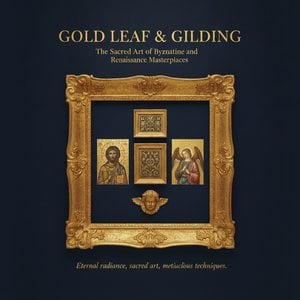
Explore the divine mastery of Byzantine gold leaf and gilding. Discover how ancient artisans used gold ground and mosaics to create celestial light, a timeless legacy of spiritual splendor and technical excellence in sacred art history.

Embark on a visual journey through the world's most radiant masterpieces. Discover how gold leaf, impasto textures, and gilded tones define luxury in fine art, from Byzantine icons to modern abstracts. Explore the eternal allure of gold in curated, museum-quality art collections.

Embark on a visual journey through Early Medieval art. Explore the profound beauty of illuminated manuscripts, sacred symbols, and golden light through an expert historical lens, celebrating the enduring legacy of medieval craftsmanship and divine artistry.

Embark on a scholarly journey through the sacred beauty of High Medieval art. Discover the profound symbolism, luminous iconography, and spiritual depth of Gothic masterpieces in this expert guide for classical art enthusiasts.

Embark on a scholarly journey through the spiritual grandeur of Late Medieval art. Discover the intricate symbolism, technical mastery, and profound religious narratives that define the Gothic era in this expert-led guide for art enthusiasts and collectors.

 Переглянути в інтер'єрі
 Надіслати як листівку
 Поділитися
 Детальніше

 Завантажити
 Схожі експонати
 Рентгенівське дослідження
 Слайд-шоу
 Читати далі




































 Скляний варіант доступний лише для розмірів до 110 см


