БЕЗКОШТОВНА КОНСУЛЬТАЦІЯ З МИСТЕЦТВА

x
Замовити репродукцію Замовити репродукціюКупити цифрове зображення Купити цифрове зображення НадіслатиНадіслати
ДеталіДеталі Додати до улюблених Додати до улюблених ЗавантажитиЗавантажити Схожі виробиСхожі вироби Рентгенівське дослідженняРентгенівське дослідження Слайд-шоуСлайд-шоу

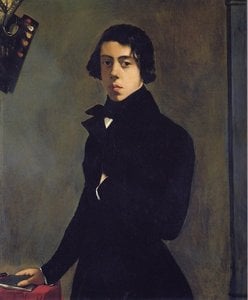
Self-Portrait

Explore Théodore Chassériau's 'Self-Portrait,' a captivating 1835 oil painting showcasing the artist’s restrained elegance and introspective style, housed in the Louvre.

Теодора Шассеріу (1819–1856) – французький романтичний художник, що об'єднав стиль Інгреса та Делакруа. Його творчість вражає портретністю, історичними полотнами та екзотичними пейзажами Північної Африки.

Гікле / Художній принт

Музейна якість друку جيкле або на полотні з оперативним виготовленням та різноманітними варіантами фінішної обробки.

P118B $10
P118H $10
P118W $10
P438Z $10
P508JH $12
P508YH $12
P805H $10
P805Z $10
P919BZ $10
P919G $10
P919XJ $10
P959ZH $10
P968JZ $12
W106C $8
W218G $10
W218JH $8
W218Y $10
W307PJ $10
W316G $10
W316PJ $8
W316Y $10
W398PJ $8
W4111J $10
W500HY $15
W500JH $15
W692G $12
W849H $8
W940BG $15
W953PJ $8

Standard
custom
CM
INCH

Обирайте з наших стандартних розмірів, що відповідають оригінальним пропорціям твору мистецтва.

ширина
висота

Ви можете вказати власні розміри, щоб репродукція ідеально підійшла до конкретної рами або інтер'єру. Якщо обраний вами розмір не відповідає пропорціям оригіналу, ми або обріжемо полотно, або розширимо зображення за допомогою дзеркального відображення чи суцільної заливки країв. Перед початком виробництва вам буде надіслано цифровий макет для затвердження.
Будь ласка, зверніть увагу, що попередній перегляд на екрані не відображає фактичне обрізання або розширення. Тільки макет точно покаже фінальну композицію.
Хоча можливість замовлення індивідуальних розмірів доступна, ми рекомендуємо обирати формат із попередньо визначеного списку, щоб зберегти оригінальні пропорції.

Доставка по всьому світу () за 2 тижні замість стандартних 4/5 тижнів. (4 Липень)

why_choose_icon
Безкоштовна експрес-доставка по всьому світу
why_choose_icon
Високоякісне лляне полотно
why_choose_icon
Повне страхове покриття доставки
why_choose_icon
Гарантія відшкодування митних зборів
why_choose_icon
Гарантія точного відтворення кольорів
why_choose_icon
Політика повернення протягом 60 днів (лише у разі виявлення дефектів)
why_choose_icon
Гарантія повернення 100% коштів
why_choose_icon
Знижка на багатоелементні замовлення

Загальна вартість

-

reproduction

Self-Portrait

Гікле / Художній принт

Розмір репродукції

-

Підсумкова ціна

-

Основні факти

  • Influences:
    • Ingres
    • Delacroix
  • Movement: Romanticism
  • Artist: Théodore Chassériau
  • Dimensions: 99 x 82 cm
  • Year: 1835
  • Location: Louvre, Paris
  • Artistic style: 19th-century

Вікторина з мистецтва

Для кожного питання є лише одна правильна відповідь.

Запитання 1:
What artistic movement is most closely associated with Théodore Chassériau’s ‘Self-Portrait’?
Запитання 2:
The microphone stand visible in the painting 'Self-Portrait' suggests which of the following?
Запитання 3:
What is the predominant color palette used in ‘Self-Portrait’?
Запитання 4:
According to the description, what is a key characteristic of Chassériau’s technique in this painting?
Запитання 5:
Théodore Chassériau was born in which country?

Опис експоната

The Enigmatic Self: Théodore Chassériau’s “Self-Portrait in a Redingote”

Théodore Chassériau's 1835 oil on canvas, "Self-Portrait in a Redingote," is more than just a likeness; it’s a carefully constructed tableau of restrained elegance and subtle introspection—a window into the mind of a young artist grappling with his artistic identity within the context of 19th-century Parisian society. Housed within the prestigious Musée du Louvre, this painting immediately draws the viewer in with its dark palette and the commanding presence of the subject, a young man radiating an almost melancholic intensity.

The work firmly anchors itself within the Romantic movement, yet it subtly resists simple categorization. While undeniably influenced by the dramatic flair of Eugène Delacroix – particularly evident in the dynamic lighting and the suggestion of movement – Chassériau retains a core Neoclassical discipline, meticulously rendered lines defining the sharp angles of his suit jacket and the precise contours of his face. This duality reflects the artist’s own journey: initially trained under the rigorous tutelage of Jean-Auguste-Dominique Ingres, he ultimately forged his own path, embracing a more expressive and emotionally charged style.

A Study in Light and Shadow – Technique and Composition

Chassériau's masterful technique is immediately apparent. The painting’s composition centers around the subject, occupying nearly the entire frame, creating an intimate and almost claustrophobic effect. He stands in a three-quarter pose, his gaze directed slightly to the left, inviting the viewer into his world. A subtle yet significant detail—a microphone stand discreetly positioned behind him on the left – hints at a performance context, perhaps suggesting Chassériau’s burgeoning career as a stage designer or illustrator, alongside his painting endeavors. The artist employs a layering technique, building up color and texture through numerous thin glazes of oil paint, resulting in a remarkably smooth surface—a testament to his dedication and skill.

The lighting is particularly noteworthy. It originates from an unseen source on the left side, casting soft, directional shadows across the subject’s face and subtly highlighting the textures of his clothing. This strategic use of light not only adds depth and volume but also contributes significantly to the painting's overall mood—a blend of formality and quiet contemplation. The careful blending of tones creates a sense of atmospheric perspective, drawing the eye deeper into the scene.

Symbolism and Emotional Resonance

Beyond its technical brilliance, “Self-Portrait in a Redingote” is rich in symbolic meaning. The formal black suit, impeccably tailored, speaks to Chassériau’s ambition and his desire for recognition within the established artistic circles of Paris. However, the slightly downturned mouth and the introspective gaze suggest a deeper layer of complexity—a hint of melancholy or perhaps even disillusionment with the constraints of academic art. The red bow tie, a vibrant splash of color against the predominantly dark palette, could represent passion, creativity, or simply a deliberate assertion of individuality.

The painting’s overall effect is one of restrained elegance and quiet introspection. It's not a flamboyant self-celebration but rather a carefully considered portrait of an artist grappling with his identity and place in the world—a poignant reflection on the challenges and rewards of pursuing a creative life. The subtle sadness in his eyes invites us to contemplate the burdens of artistic ambition, while the formality of his attire suggests a desire for respectability and recognition.

A Legacy of Romanticism – Historical Context

Created during a period of significant social and political upheaval—the aftermath of the Napoleonic Wars and the rise of Romanticism—Chassériau’s work reflects the movement's emphasis on emotion, individualism, and the sublime. His Creole heritage, born in the Dominican Republic and raised in Paris, undoubtedly informed his artistic vision, providing him with a unique perspective on both European and Caribbean cultures. This background is reflected in his interest in Orientalist themes – particularly evident in later works – and his willingness to challenge conventional artistic norms.

Chassériau’s trajectory—from student of Ingres to independent Romantic artist—is itself a compelling narrative, illustrating the tensions between tradition and innovation within 19th-century art. “Self-Portrait in a Redingote” stands as a powerful testament to his artistic evolution and a captivating glimpse into the mind of a brilliant but often overlooked talent.

Схожі витвори мистецтва


Біографія митця

Théodore Chassériau (1819–1856): Bridging Neoclassicism and Romantic Passion

Théodore Chassériau, born September 20, 1819, in Sainte-Barbe de Samano, Santo Domingo (now Dominican Republic), was a French painter whose artistic legacy stands as a testament to the transformative power of blending classical precision with romantic fervor. His life unfolded against the backdrop of shifting cultural currents—a Creole upbringing imbued him with a unique perspective shaped by his father’s diplomatic endeavors and his mother's lineage rooted in Haiti and France—setting him apart from many of his contemporaries. From humble beginnings, Chassériau ascended to prominence as one of the foremost Romantic artists of his era, leaving an indelible mark on French art history. ### Early Training and Ingres’s Influence Chassériau’s artistic journey commenced under the tutelage of Jean-Auguste-Dominique Ingres, a titan of Neoclassicism whose exacting standards profoundly impacted young Chassériau's formative years. Recognizing an exceptional talent, Ingres welcomed him into his studio in 1830, fostering a relationship that would define Chassériau’s artistic development. As a boy, Chassériau demonstrated an extraordinary gift for pencil drawing—a skill that Ingres famously declared “Come, gentlemen, come see, this child will be the Napoleon of painting.” This mentorship instilled within him a mastery of line and form, mirroring Ingres's unwavering commitment to classical ideals. The influence of Ingres extended beyond technique; it fostered a deep appreciation for timeless beauty and harmonious composition—principles that would permeate Chassériau’s oeuvre throughout his career. ### Embracing Romantic Expression: Delacroix and Beyond While initially adhering faithfully to Ingres’s stylistic rigor, Chassériau gradually succumbed to the allure of Romanticism, spearheaded by Eugène Delacroix. This pivotal shift occurred around 1843, as Chassériau deliberately sought to synthesize Ingres's linear grace with Delacroix’s vibrant color palette and dramatic narrative style. Evidence of this influence is readily apparent in his paintings from approximately 1846 onward—particularly *Scene in the Jewish Quarter of Constantine* and *Moorish Woman Leaving the Bath in the Seraglio*, where Chassériau captured the dynamism and exoticism characteristic of Delacroix’s vision. He wasn't merely imitating Delacroix; he absorbed its spirit, forging a distinctive artistic language that allowed him to explore complex themes with both technical brilliance and emotional depth. ### Travels and Artistic Inspiration: Algeria and Orientalism Chassériau’s fascination with the Orient deepened during his travels to Algeria in 1846—a journey that served as a catalyst for significant artistic innovation. The landscapes, cultures, and human dramas encountered in North Africa captivated him, fueling his creative imagination and informing his stylistic choices. This newfound inspiration manifested prominently in his paintings of Moorish life and Jewish communities—works imbued with an atmosphere of sensual richness and architectural grandeur. His meticulous observation of detail—a hallmark of Chassériau’s artistic practice—paralleled Delacroix's commitment to capturing the immediacy of experience, resulting in images that transcend mere representation and resonate with profound emotional significance. ### Major Achievements and Legacy: Decorative Murals and Artistic Synthesis Chassériau achieved considerable renown as a painter of monumental allegorical murals for the Cour des Comptes in Paris—a project tragically curtailed by the devastating fire of 1871, which consumed much of his artistic output. Despite this loss, Chassériau’s enduring legacy resides in his masterful synthesis of Neoclassical precision and Romantic passion—a stylistic hallmark that distinguishes him from many of his peers. His portraits—including *Comtesse de La Tour-Maubourg*, *Suzanne and the Old Men*, and *Macbeth and Banquo Meeting the Witches on the Heath*—demonstrate his unparalleled ability to convey not only physical likeness but also inner character and psychological nuance. Furthermore, Chassériau’s contribution to Orientalist art cemented his place as a pioneer in exploring exotic cultures and landscapes—inspiring subsequent generations of artists to delve into uncharted territories of artistic expression. His work continues to captivate audiences today, serving as a poignant reminder of the transformative potential inherent in embracing diverse influences and forging one's own unique artistic path.
Теодор Шассеріу

Теодор Шассеріу

1819 - 1856 , Домініканська Республіка

Короткі факти

  • Artistic Movement Or Style: Неокласицизм та Романтизм
  • Artists Or Movements Influenced By This Artist: ['Ежен Делакруа']
  • Artists Who Influenced This Artist:
    • Жан-Оґюст Домбрі
    • Жан-Аґуст Домінґік Інгрès
  • Date Of Birth: 20 вересня 1819 р.
  • Full Name: Теодор Шассеріу
  • Nationality: Француз
  • Notable Artworks:
    • Десдемона (Пісня верби
    • Сцена єврейського кварталу Константинополя
  • Place Of Birth: Сainte-Barbe де Самана, Домініканська Республіка
Досліджуйте твори мистецтва, відсортовані за темами, стилями та характеристиками.