


Написана вручну олією на полотні у вашому розмірі та рамі, виготовлена на замовлення нашими художниками. ( Замовити принт Купити цифрове зображення)





























Обирайте з наших стандартних розмірів, що відповідають оригінальним пропорціям твору мистецтва.

Ви можете вказати власні розміри, щоб репродукція ідеально підійшла до конкретної рами або інтер'єру. Якщо вибраний вами розмір не відповідає пропорціям оригіналу, ми або обріжемо полотно, або доповнимо картину додатковими елементами, промальованими вручну. Цифровий макет буде надіслано вам на затвердження перед початком виробництва.
Зверніть увагу, що попередній перегляд на екрані не відображає фактичне обрізання або розширення зображення. Тільки макет точно покаже остаточну композицію.
Хоча ми можемо виготовити виріб у нестандартному розмірі, для збереження оригінальних пропорцій рекомендуємо обирати варіанти зі встановленого списку.
Доставка по всьому світу () за 3–4 тижні замість стандартних 5 тижнів. (6 Вересень). Без жодних компромісів у якості.


Kasui
Розмір репродукції
“Kasui,” painted in 1922 by Shōroku Yanase, is more than just an abstract composition; it's a potent distillation of the artistic ferment brewing within Japan at the cusp of the modern era. Born in Eshima in 1900, Yanase’s early life, spent largely in Fukuoka, instilled in him a restless curiosity and a willingness to embrace diverse creative avenues – a characteristic that would define his prolific career. This particular work, with its bold interplay of red, blue, and purple, exemplifies this spirit, offering a glimpse into the burgeoning modernist movement while retaining a distinctly Japanese sensibility.
The painting’s power lies in its unapologetic use of color. Yanase doesn't employ color for representational purposes; instead, he harnesses it to evoke emotion and create dynamic visual rhythms. The dominant red shapes, strategically placed on the right side, command immediate attention – a deliberate choice that speaks to the influence of Western Expressionism, yet tempered by a uniquely Japanese aesthetic. Juxtaposed against this fiery intensity are the cooler tones of blue and purple, creating a compelling tension within the composition. The artist’s technique suggests a layering approach, likely utilizing oil paints applied with varying degrees of opacity to build depth and texture. The loose brushwork contributes to the painting's energetic feel, avoiding any sense of rigid control.
1922 represents a pivotal moment in Japanese history. The nation was grappling with rapid industrialization, social upheaval, and a growing desire to forge its own path away from traditional constraints. Yanase’s artistic experimentation reflects this broader cultural shift. While influenced by European modernism – particularly the Fauves and early Expressionists – he wasn't simply replicating Western styles. Instead, he adapted these influences to his own unique vision, creating something distinctly Japanese in its emotional intensity and formal approach. The painting can be seen as a visual manifestation of Japan’s burgeoning modernity, a bold declaration of artistic independence.
The title “Kasui,” which translates roughly to "pure" or "unadorned," hints at the painting's core intention. It suggests an attempt to strip away superficiality and reveal something fundamental – perhaps a primal emotion, or a raw expression of form. The vibrant colors themselves carry symbolic weight; red often associated with passion, energy, and even danger, while blue and purple evoke feelings of serenity, spirituality, and introspection. Ultimately, “Kasui” is a powerfully emotive work that invites the viewer to engage in a direct dialogue with its visual language. It’s a testament to Yanase's skill in translating complex ideas into a visually arresting experience.


1900 - 1945 , Japan

Пориньте у світ сіро-блакитного кольору! Від Моне до Ренуара – топ-10 знаменитих картин, що зачаровують глибиною відтінків. Історія мистецтва, техніки та натхнення для вашого дому. Знайдіть репродукцію мрії на WahooArt.com!

Відкрийте для себе 25 найвідоміших шедеврів Василя Кандинського! Пориньте у світ абстрактного мистецтва, експресіонізму та кольорових композицій. Репродукції картин Кандинського преміум-якості на WahooArt.com – для вашого інтер'єру з душею. Дослідіть повну колекцію онлайн!

Відкрийте для себе 10 шедеврів абстрактного експресіонізму! Дізнайтесь історію Поллока, Ротко та інших геніїв. Репродукції картин преміум-якості для вашого дому від WahooArt.com. Дослідіть колекцію онлайн!

Відкрийте для себе 10 шедеврів геометричної абстракції від Кандинського, Малевича та Мондріана! Історія мистецтва, кольори та форми. Репродукції картин преміум-класу на WahooArt.com – ідеальний декор для вашого дому.
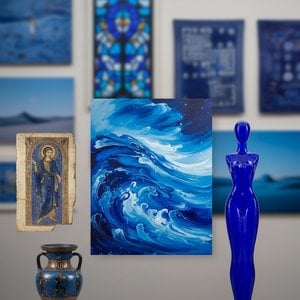
Explore the rich history of blue in art! Discover its symbolism, from ancient pigments to modern masterpieces by Kandinsky & Seurat. Uncover the psychological impact and cultural meanings behind this captivating hue.

 Переглянути в інтер'єрі
 Надіслати як листівку
 Поділитися
 Детальніше

 Завантажити
 Схожі експонати
 Рентгенівське дослідження
 Слайд-шоу


 Читати далі







 Скляний варіант доступний лише для розмірів до 110 см


