


Написана вручну олією на полотні у вашому розмірі та рамі, виготовлена на замовлення нашими художниками. ( Замовити принт Купити цифрове зображення)





























Обирайте з наших стандартних розмірів, що відповідають оригінальним пропорціям твору мистецтва.

Ви можете вказати власні розміри, щоб репродукція ідеально підійшла до конкретної рами або інтер'єру. Якщо вибраний вами розмір не відповідає пропорціям оригіналу, ми або обріжемо полотно, або доповнимо картину додатковими елементами, промальованими вручну. Цифровий макет буде надіслано вам на затвердження перед початком виробництва.
Зверніть увагу, що попередній перегляд на екрані не відображає фактичне обрізання або розширення зображення. Тільки макет точно покаже остаточну композицію.
Хоча ми можемо виготовити виріб у нестандартному розмірі, для збереження оригінальних пропорцій рекомендуємо обирати варіанти зі встановленого списку.
Доставка по всьому світу () за 3–4 тижні замість стандартних 5 тижнів. (7 Вересень). Без жодних компромісів у якості.


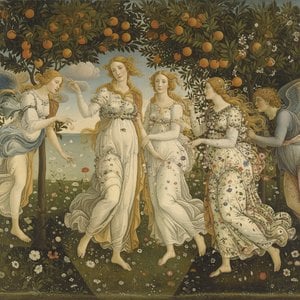
Primavera (detail) (18)
Розмір репродукції
Sandro Botticelli’s “Primavera,” housed in the Uffizi Gallery of Florence, isn't merely a painting; it’s an invitation into a meticulously crafted dreamscape—a visual embodiment of rebirth and fecundity that continues to captivate audiences centuries later. Completed around 1482 during the height of Florentine artistic fervor under Lorenzo de’ Medici, this monumental panel depicts a vibrant celebration of spring, drawing heavily on classical mythology and humanist ideals.
The painting's genius lies in its masterful composition. Botticelli eschews traditional linear perspective, opting instead for a shallow depth that draws the viewer into the scene’s intimate embrace. Dominating the canvas are two figures—a woman adorned with flowers and surrounded by attendants—and a male nude embracing her. These central characters command attention, their intertwined hands symbolizing connection and perhaps hinting at the complexities of love. The surrounding foliage is rendered in dense detail, creating an illusion of lushness and movement that guides the eye across the expanse of the canvas.
Botticelli’s style is instantly recognizable—characterized by graceful lines, idealized forms, and a remarkable sensitivity to color. He employs sfumato techniques—a subtle blending of tones—to soften contours and create an ethereal atmosphere. Layers upon layers of thin glazes of oil paint achieve luminous effects, particularly noticeable on the skin tones and drapery fabrics. The artist’s meticulous brushwork contributes to a velvety texture that conveys both delicacy and grandeur.
"Primavera" is steeped in symbolism rooted in classical mythology and humanist philosophy. The figures represent Venus, Flora, Zephyr, Chloris, Mercury, and Cupid—each embodying virtues associated with springtime and fertility. Venus embodies beauty and love, while Flora represents the blossoming season. Zephyr, god of the west wind, brings warmth and vitality to the grove, and Chloris transforms into Flora, symbolizing regeneration. The inclusion of Cupid underscores the theme of desire and passion. Beyond these individual symbols, the painting speaks to broader concepts of harmony, balance, and the triumph of life over death—themes central to Renaissance thought.
More than just aesthetically pleasing, “Primavera” evokes a profound emotional response. Its serene beauty and harmonious arrangement convey a sense of tranquility and wonder, transporting viewers back to the artistic milieu of Florence during its golden age. Botticelli’s masterful depiction of human form—particularly Venus—celebrates idealized femininity and embodies the humanist aspiration for perfection. The painting continues to inspire artists and collectors alike, serving as a testament to Botticelli's enduring legacy as one of the most influential painters of the Renaissance.


1445 - 1510 , Італія
Explore the ethereal beauty of Sandro Botticelli's masterpieces. Delve into the profound symbolism, mythological grace, and technical mastery that define the Italian Renaissance through an expert art-historical lens.

 Переглянути в інтер'єрі
 Надіслати як листівку
 Поділитися
 Детальніше

 Завантажити
 Схожі експонати
 Рентгенівське дослідження
 Слайд-шоу


 Читати далі







 Скляний варіант доступний лише для розмірів до 110 см


