Early Life and Florentine Beginnings
Sandro Botticelli, народжений Alessandro di Mariano di Vanni Filipepi близько 1445 року у Флоренції, Італія, з’явився на тлі виняткового культурного підйому – раннього Ренесансу. Його життя тісно переплетене з мистецьким та соціальним життям міста; він ніколи не віддалявся далеко від свого району Огноссанти, що свідчить як про сімейні зв’язки, так і про жваву творчу екосистему, яка виховала його. Його батько, Маріано Філіпепі, спочатку золотій майстер, а пізніше дермантент, забезпечив раннє знайомство з ремеслом та увагою до деталей – якості, які глибоко вплинули на мистецький підхід Botticelli. Хоча спочатку повідомлялося про навчання у золотоварстві, він незабаром знайшов своє покликання під керівництвом Фра Філіппо Ліппі, провідного художника того часу. Це стажування виявилося вирішальним, зануривши його в техніки та естетику флорентійської школи, а також пов’язавши його з впливовими патронами, такими як родина Медічі.
A Style Defined by Grace and Myth
Мистецький стиль Botticelli миттєво розпізнається своєю ліричною красою, що характеризується елегантною лінійною симетрією, плавною контурами та делікатним використанням кольорів. Він майстерно з’єднав пізньоготичні традиції з розвитком Ренесансу, поглинаючи впливи таких майстрів, як Фра Анжело та Паоло Учелло, але формуючи своє унікальне бачення. Його фігури мають ефірну якість, часто зображені з витягнутими пропорціями та граційними поставами, що передають як спокій, так і ледь помітне меланхолійне відчуття. Визначною особливістю його робіт є часте використання класичної міфології – відображення гуманістичних інтересів, які ширилися у Флоренції Ренесансу. Він не просто ілюстрував ці давні історії; він наповнював їх новими шарами сенсу, досліджуючи теми любові, краси та духовного прагнення.
Botticelli’s technique was innovative for his time. He often employed a silverpoint drawing method underpainting his canvases, contributing to the luminosity and delicate detail seen in his finished works. His use of tempera paint allowed for precise rendering and vibrant colors, while his later experiments with oil paints broadened his expressive possibilities.
Iconic Masterpieces and Artistic Development
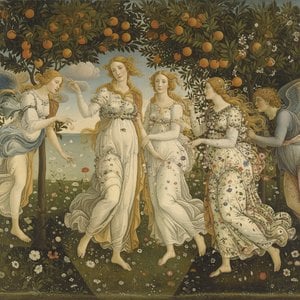
Наследяність Botticelli спирається на кілька іконних картин, які й досі захоплюють аудиторії протягом століть. **The Birth of Venus**, створена приблизно в 1486 році, є, мабуть, його найвідомішою роботою – алегоричне зображення богині, що виходить з раковини, символізуючи ідеали Ренесансу краси та гармонії. Її елегантна композиція, делікатна палітра кольорів та емоційна символіка зробили її незмінним символом епохи. Не менш знаменита **Primavera**, створена приблизно в 1482 році, складна та загадкова картина, що відзначає весну та кохання, населена символічними фігурами з класичної міфології. Ці твори демонструють майстерність Botticelli у композиції, його здатність створювати атмосферну глибину та глибоке розуміння людських емоцій.
Його мистецький шлях розгортався в чітких фазах. Ранні 1470-ті роки були присвячені релігійним сюжетам, коли він удосконалював свої технічні навички та закладав собі репутацію майстра виконання. 1480-ті роки позначилися піком його творчого потенціалу, з створенням найвідоміших міфологічних картин. Однак пізні 1490-ті роки стали свідченням зміни в його стилі, під впливом реготу Girolamo Savonarola – домініканського ченця, який засуджував те, що він бачив як декаданс і моральну деградацію Флоренції. Цей період призвів до створення більш суворих та емоційно насичених робіт, відображаючи зростаючу духовну інтенсивність.
Major Works
- The Birth of Venus (c. 1486): An iconic depiction embodying Renaissance ideals of beauty.
- Primavera (c. 1482): A complex allegorical painting celebrating spring and love.
- Adoration of the Magi (1475-1476): Demonstrates early mastery of composition and perspective.
- Mystic Nativity (1501): Reflects a shift towards spiritual themes in his later career.
Legacy and Rediscovery
Після смерті в 1510 році Botticelli його репутація поступово згасла, будучи відкинутою на майже три століття, затьмареною досягненнями майстрів епохи Ренесансу. Однак у кінці 19-го століття відбулася вражаюча переоцінка, завдяки виникненню Прерафаелітів – групи англійських художників та поетів, які відкинули академічні традиції та шукали натхнення в мистецтві раннього Ренесансу. Вони були зачаровані лінійним шармом Botticelli, його яскравими кольорами та поетичним баченням. Його творчість була визнана як щось близьке до їхніх власних. Ця нова оцінка призвела до широкого переосмислення його робіт, встановивши його як одного з найважливіших художників раннього Ренесансу. Сьогодні Botticelli шанується за своє унікальне мистецьке бачення, майстерність та здатність викликати красу, емоції та духовне роздумування. Його вплив можна побачити в наступних поколіннях митців, які прагнули передати той самий почуття елегантності та граційності у своїх власних роботах. Він залишається символом мистецьких досягнень Флоренції та свідченням сили гуманістичних ідей Ренесансу.



 Переглянути в інтер'єрі
 Замовити репродукцію ручної роботи
 Надіслати як листівку
 Поділитися
 Детальніше

 Завантажити
 Схожі експонати
 Рентгенівське дослідження
 Слайд-шоу
 Статистика


 Читати далі






































 Скляний варіант доступний лише для розмірів до 110 см