Раннє життя та навчання Гвідо Рені
Гвідо Рені, також відомий як
Le Guide (Провідник), народився в Болоньї, Італія, у 1575 році. Він був єдиною дитиною Даніеле Рені, музиканта, та Джиневри Поцці, яка також походила з музичної родини. Це виховання прищепило йому любов до гармонії та форми, що пізніше вплинуло на його художній стиль. У віці дев'яти років Гвідо почав навчання під керівництвом Деніса Кальваерта, фламандського художника, який працював у Болоньї. Він навчався разом з іншими перспективними митцями – Альбані та Доменіко, закладаючи міцну основу класичних принципів. Його ранній період навчання був позначений ретельним вивченням анатомії та композиції, що стало фундаментом для його майбутніх творів.
Художня кар'єра та розвиток
Кар’єра Гвідо Рені охопила декілька італійських міст, включаючи Рим, Неаполь та рідну Болонью. Його ранні роботи демонстрували вплив Кальваерта та родини Карраччі, підкреслюючи анатомічну точність і драматичну композицію. Однак Рені швидко розробив власний унікальний стиль, що характеризувався елегантним класицизмом, вишуканою технікою та емоційною глибиною. Він став домінуючою фігурою в Болонській школі, відомою акцентом на академічному навчанні та ідеалізованих формах. Його творчість відрізнялася прагненням до гармонії кольору та світла, а також вмінням передавати складні емоції через вираз обличчя та жести персонажів.
Ключові впливи
- Деніс Кальваерт: Перший вчитель Рені забезпечив його міцною основою фламандських технік живопису, навчивши ретельності у деталях і майстерності передачі текстур.
- Родина Карраччі (Аннібале, Агостіно, Лудовіко): Їхній акцент на класичному мистецтві та анатомічних дослідженнях глибоко вплинув на його художній розвиток, спонукаючи до вивчення античної скульптури та живопису.
- Рафаель: Рені дуже захоплювався грацією та гармонійними композиціями Рафаеля, які помітні у багатьох його роботах. Він прагнув досягти такої ж бездоганності форми та витонченості ліній.
Основні роботи та художній стиль
Творчість Рені охоплює широкий спектр тем, включаючи релігійні сцени, міфологічні розповіді та алегоричні зображення. Деякі з його найвідоміших робіт:
- Аполлон на сонячній колісниці (Albertina, Відень): Динамічний малюнок, що демонструє майстерність Рені в стилі бароко та вміння передавати рух і енергію.
- Святий Яків Старший: Демонструє його вміння захоплювати релігійний запал і людські емоції, створюючи глибокий духовний образ.
- Аталанта та Гіппомен (Палац Каподімонте, Неаполь): Приклад його міфологічних картин, що характеризуються граційними фігурами та драматичним оповіданням. Композиція сповнена руху і напруги.
- Святий Єронім: Свідчення здатності Рені балансувати композицію з емоційною глибиною, створюючи образ покаяння та роздумів.
- Тарантелла (Палац Каподімонте, Неаполь): Ілюструє його вплив на італійську народну танцювальну культуру, передаючи радість і енергію народного свята.
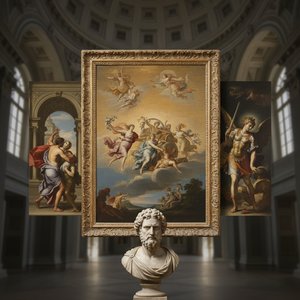
Стиль Рені часто описують як еклектичний класицизм. Він поєднував точність класичного мистецтва з динамізмом та емоціями періоду бароко. Його фігури зазвичай ідеалізовані, володіючи безтурботністю краси та граційним рухом. Він майстерно використовував світлотінь для створення об’єму та підкреслення драматизму сцен.
Історичне значення та спадок
Гвідо Рені відіграв вирішальну роль у формуванні розвитку стилю високого бароко в Італії. Він вплинув на покоління художників своєю вишуканою технікою, елегантними композиціями та емоційною глибиною. Його роботи можна знайти у відомих музеях по всьому світу, включаючи Палац Каподімонте в Неаполі. Спадщина Рені простягається за межі живопису; він також був поетом і шанованою інтелектуальною фігурою свого часу. Його мистецтво продовжує надихати художників та любителів мистецтва сьогодні, закріплюючи його місце як одного з найважливіших живописців XVII століття. Його вплив можна побачити в наступних барокових митцях, які прагнули наслідувати його грацію та емоційну силу.
Смерть
Гвідо Рені помер у Болоньї в 1642 році, залишивши після себе багату художню спадщину, яка продовжує захоплювати глядачів століттями. Його творчість залишається невичерпним джерелом натхнення для майбутніх поколінь митців і шанувальників мистецтва.



 Переглянути в інтер'єрі
 Замовити репродукцію ручної роботи
 Надіслати як листівку
 Поділитися
 Детальніше

 Завантажити
 Схожі експонати
 Рентгенівське дослідження
 Слайд-шоу
 Статистика


 Читати далі






































 Скляний варіант доступний лише для розмірів до 110 см