Переглянути в інтер'єрі Перегляд в AR Перейти до друку Перейти до цифрових зображень Надіслати як листівку
Деталі витвору Посібник Додати до улюблених Завантажити Схожі екземпляри Рентгенівське дослідження Слайд-шоу Q&A Статистика

The Pilgrim Hand-painted oil painting reproduction

Explore René Magritte’s ‘The Pilgrim,’ a surrealist portrait of identity & duality. Deep blues, geometric forms, & unsettling juxtaposition – a classic masterpiece.

Рене Маґрітт – бельгійський сюрреаліст, що створював загадкові та дивовижні картини, які кидають виклик нашому сприйняттю реальності. Відкрийте світ його шедеврів! #Маґрітт #Сюрреалізм

Мистецький твір, представлений на цій сторінці, захищений законом про авторське право, що унеможливлює легальне створення або продаж його ідентичної репродукції. Цей захист забезпечується відповідно до міжнародних угод, таких як Бернська конвенція та національним законодавством, зокрема положеннями, що викладені в Законодавство США про авторське право — Розділ 17. Всі права захищені. Будь-яке використання без дозволу заборонено.

Як шанобливу та законну альтернативу, ми пропонуємо унікальні картини ручної роботи, створені натхненням від оригіналу. Наші досвідчені професійні художники ретельно вивчають стиль, настрій та художню сутність оригіналу, щоб створити новий, неповторний твір, який викликає ті ж почуття, — залишаючись при цьому самобутнім творінням.

Цей метод повністю відповідає нормам авторського права, оскільки він не передбачає копіювання чи дублювання захищеного твору мистецтва. Натомість це творче переосмислення — створення нового малюнка під впливом оригіналу, який не є його точним відтворенням.

Олійная репродукція ручної роботи

Написана вручну олією на полотні у вашому розмірі та рамі, виготовлена на замовлення нашими художниками. ( Перейти до друку Перейти до цифрових зображень)

Corner sample of the P118B picture frame: формований полістирол, 5 cm wide and 3 cm thick
P118B ₴10
Corner sample of the P118H picture frame: формований полістирол, 5 cm wide and 3 cm thick
P118H ₴10
Corner sample of the P118W picture frame: формований полістирол, 5 cm wide and 3 cm thick
P118W ₴10
Corner sample of the P438Z picture frame: формований полістирол, 5.5 cm wide and 3.5 cm thick
P438Z ₴10
Corner sample of the P508JH picture frame: формований полістирол, 7 cm wide and 3.5 cm thick
P508JH ₴12
Corner sample of the P508YH picture frame: формований полістирол, 7 cm wide and 3.5 cm thick
P508YH ₴12
Corner sample of the P805H picture frame: формований полістирол, 5 cm wide and 3.5 cm thick
P805H ₴10
Corner sample of the P805Z picture frame: формований полістирол, 5 cm wide and 3.5 cm thick
P805Z ₴10
Corner sample of the P919BZ picture frame: формований полістирол, 7 cm wide and 3.5 cm thick
P919BZ ₴10
Corner sample of the P919G picture frame: формований полістирол, 7 cm wide and 3.5 cm thick
P919G ₴10
Corner sample of the P919XJ picture frame: формований полістирол, 7 cm wide and 3.5 cm thick
P919XJ ₴10
Corner sample of the P959ZH picture frame: формований полістирол, 5 cm wide and 3 cm thick
P959ZH ₴10
Corner sample of the P968JZ picture frame: формований полістирол, 6 cm wide and 4 cm thick
P968JZ ₴12
Corner sample of the W106C picture frame: масив дерева, 5 cm wide and 3 cm thick
W106C ₴8
Corner sample of the W218G picture frame: масив дерева, 5 cm wide and 3 cm thick
W218G ₴10
Corner sample of the W218JH picture frame: масив дерева, 5 cm wide and 3 cm thick
W218JH ₴8
Corner sample of the W218Y picture frame: масив дерева, 5 cm wide and 3 cm thick
W218Y ₴10
Corner sample of the W307PJ picture frame: масив дерева, 6 cm wide and 3 cm thick
W307PJ ₴10
Corner sample of the W316G picture frame: масив дерева, 6 cm wide and 3 cm thick
W316G ₴10
Corner sample of the W316PJ picture frame: масив дерева, 6 cm wide and 3 cm thick
W316PJ ₴8
Corner sample of the W316Y picture frame: масив дерева, 6 cm wide and 3 cm thick
W316Y ₴10
Corner sample of the W398PJ picture frame: масив дерева, 5 cm wide and 3 cm thick
W398PJ ₴8
Corner sample of the W4111J picture frame: масив дерева, 6.5 cm wide and 3.5 cm thick
W4111J ₴10
Corner sample of the W500HY picture frame: масив дерева, 7 cm wide and 5 cm thick
W500HY ₴15
Corner sample of the W500JH picture frame: масив дерева, 7 cm wide and 5 cm thick
W500JH ₴15
Corner sample of the W692G picture frame: масив дерева, 8 cm wide and 4 cm thick
W692G ₴12
Corner sample of the W849H picture frame: масив дерева, 5 cm wide and 3 cm thick
W849H ₴8
Corner sample of the W940BG picture frame: масив дерева, 7.5 cm wide and 4.5 cm thick
W940BG ₴15
Corner sample of the W953PJ picture frame: масив дерева, 6 cm wide and 3.5 cm thick
W953PJ ₴8

Стандартний розмір
індивідуальний розмір
CM
INCH

Обирайте з наших стандартних розмірів, що відповідають оригінальним пропорціям твору мистецтва.

ширина
висота

Введіть необхідну ширину та висоту, щоб картина підійшла до вашої рами або стіни. Оскільки це ручний розпис, для зміни пропорцій художник може дописати трохи більше по краях або дещо обрізати композицію — вибір за вами. Перед початком роботи ми надішлемо вам цифровий макет для затвердження. Зображення, показане на цій сторінці, не є реальним результатом — лише макет відображає майбутній вигляд.

Приклади можливих змін: замінити обличчя на фото клієнта; додати домашню тварину (наприклад, замінити кота на собаку); додати приховане повідомлення на фоні; змінити ландшафт або елементи фону.
Після оформлення замовлення команда WahooArt.com зв'яжеться з клієнтом електронною поштою для отримання інструкцій та надасть попередній макет

Доставка по всьому світу () за 3–4 тижні замість стандартних 5 тижнів. (30 Жовтень). Без жодних компромісів у якості.

Безкоштовна експрес-доставка по всьому світу
Високоякісне лляне полотно
Повне страхове покриття доставки
Гарантія повернення митних зборів
Гарантія точного відтворення кольорів
Політика повернення протягом 100 днів (лише у разі виявлення дефектів)
Гарантія повернення 100% коштів
Пропозиція на оптові замовлення

Загальна вартість

₴ 12193

The Pilgrim

Матеріал репродукції

Розмір репродукції

-

Підсумкова вартість

₴ 12193

Основна інформація

  • Year: 1966
  • Artistic style: Stylized
  • Artist: René Magritte
  • Movement: Surrealism
  • Location: Private Collection

Квіз про мистецтво

У кожному запитанні лише одна правильна відповідь.

Запитання 1:
What artistic movement is René Magritte’s ‘The Pilgrim’ primarily associated with?
Запитання 2:
Describe the dominant color palette of 'The Pilgrim'.
Запитання 3:
What stylistic element contributes to the unsettling feeling conveyed by Magritte’s painting?
Запитання 4:
The artwork utilizes geometric shapes – squares, circles, and rectangles – primarily to achieve what effect?
Запитання 5:
What is one symbolic interpretation suggested by Magritte’s depiction of the man's head merging with his clothing?

The Pilgrim: A Surrealist Meditation on Identity

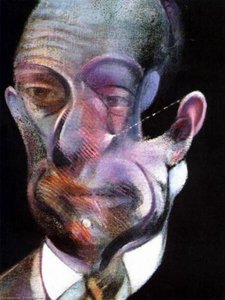
René Magritte’s “The Pilgrim,” completed in 1966, stands as a quintessential example of Surrealist art—a deceptively simple portrait that unravels into layers of psychological complexity. More than just an image, it's a carefully constructed puzzle designed to provoke contemplation on themes of selfhood, perception, and the elusive nature of reality.

  • Subject Matter & Composition: The artwork depicts a solitary man dressed in formal attire—a dark suit and bowler hat—whose head seamlessly merges with the upper portion of his jacket. This jarring juxtaposition immediately establishes a sense of unease and disrupts conventional visual logic, mirroring the Surrealist preoccupation with destabilizing familiar patterns.
  • Style & Technique: Magritte’s stylistic approach firmly anchors itself within the Surrealist movement, rejecting representational accuracy in favor of dreamlike imagery and illogical juxtapositions. Executed in oil on canvas, the painting utilizes smooth brushwork to achieve a velvety surface texture—though devoid of detailed rendering—emphasizing form over realism.
  • Color Palette & Lighting: Dominated by deep blues and blacks, “The Pilgrim” employs a restrained color palette that contributes to its melancholic atmosphere. The scarlet tie and ivory shirt collar provide striking visual accents, highlighting the formal garb while simultaneously hinting at vulnerability. Soft, diffused lighting illuminates the subject evenly, avoiding harsh shadows and fostering an aura of mystery.
  • Geometric Forms & Symbolism: Magritte’s use of geometric shapes—squares, circles, and rectangles—reinforces the artwork's stylized quality and underscores its symbolic resonance. The head merging with the jacket can be interpreted as representing the unity of mind and body, yet simultaneously highlighting the fragmentation inherent in human experience. The overall composition speaks to the difficulty of grasping one’s true self amidst societal pressures.
  • Historical Context & Emotional Impact: Created during Magritte's prolific period, “The Pilgrim” reflects the broader Surrealist exploration of subconscious desires and anxieties—a reaction against rationalism and a yearning for liberation from conscious control. The artwork evokes feelings of introspection, melancholy, and subtle critique – inviting viewers to confront questions about identity and the limitations of perception.

This striking reproduction captures the essence of Magritte’s genius, allowing you to experience the profound beauty and unsettling power of Surrealist art within your own home. Explore more captivating artworks at WikiArt.

Питання та відповіді

Яка техніка була використана для створення «The Pilgrim» і коли цей твір було створено?

«The Pilgrim» було створено у 1966 році з використанням техніки Oil On Canvas. Матеріал та дата описують, як і коли було створено оригінал.

Де я можу завантажити «The Pilgrim» роботи Рене Маґрітт?

Для твору «The Pilgrim» доступне завантаження: на сторінці Завантажити цифрове зображення ви можете завантаження цифрового зображення високої роздільної здатності.

Чи доступний попередній перегляд «The Pilgrim» у доповненій реальності?

Сторінка Перегляд в AR для твору «The Pilgrim» роботи Рене Маґрітт використовує технологію доповненої реальності, щоб показати витвір у вашому власному просторі за допомогою сумісного пристрою.


Біографія митця

Early Life and the Seeds of Surrealism

René Magritte, born René François Ghislain Magritte on November 21, 1898, in Lessines, Belgium, emerged into a world that would profoundly shape his enigmatic artistic vision. His early years were marked by an unsettling event – the suicide of his mother when he was just thirteen. The image of her body being recovered from the River Sambre, with her dress obscuring her face, became a haunting motif that would subtly permeate his later work, manifesting in veiled figures and a persistent exploration of hidden realities. This early trauma instilled within him a fascination with mystery, loss, and the unsettling power of what remains unseen. While details of his childhood remain somewhat elusive, it’s clear this formative experience laid the groundwork for his lifelong questioning of perception and representation. He began drawing lessons at age ten, revealing an innate inclination towards visual expression, but initially explored Impressionism before embarking on a path that would lead him to become one of the most significant figures in Surrealist art.

Artistic Development and Influences

Magritte’s artistic journey was not immediate or straightforward. He studied at the Académie Royale des Beaux-Arts in Brussels, yet found its traditional methods stifling. His early work experimented with Futurism and Cubism, absorbing elements of these avant-garde movements but ultimately rejecting their purely formal concerns. It wasn't until encountering Giorgio de Chirico’s painting *The Song of Love* in 1922 that Magritte discovered a resonance that would irrevocably alter his artistic course. De Chirico’s dreamlike landscapes and unsettling juxtapositions unlocked within Magritte a new way of seeing – a world where the familiar could be rendered strange, and the ordinary imbued with profound mystery. This encounter sparked his commitment to Surrealism, though he often maintained a unique distance from its more overtly psychological or automatic approaches. He preferred a meticulous, almost clinical precision in his painting, using realistic techniques to depict illogical scenarios.

The Heart of Surrealism: Challenging Reality

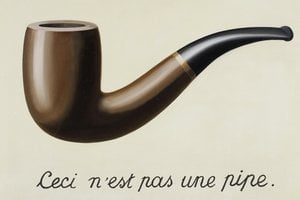
By 1926, Magritte had fully embraced the tenets of Surrealism, producing *Le Jockey Perdu (The Lost Jockey)*, widely considered his first truly surrealist work. However, his brand of Surrealism was distinct. He wasn’t interested in exploring the subconscious through free association or dream imagery in the manner of some of his contemporaries. Instead, Magritte sought to challenge viewers' perceptions of reality by presenting ordinary objects in unexpected contexts, forcing them to question their assumptions about the world around them. Iconic works like *The Treachery of Images (This is not a pipe)* (1929) brilliantly deconstructs the relationship between image and object, reminding us that a representation is never the thing itself. *Les Amants (The Lovers)* (1927-1928), with its shrouded figures, echoes the trauma of his mother’s death while simultaneously exploring themes of concealment and intimacy. *Time Transfixed* (1938) presents a locomotive bursting through a brick wall, disrupting our sense of space and time. And *The Human Condition* (1933), a canvas within a canvas, blurs the boundaries between representation and reality, prompting us to consider how we perceive and interpret the world.

Later Life, Recognition, and Enduring Legacy

Despite initial struggles for recognition, Magritte’s work gradually gained prominence, particularly in the United States with exhibitions in 1936 and later retrospective shows at the Museum of Modern Art (1965) and the Metropolitan Museum of Art (1992). He remained politically engaged throughout his life, advocating for artistic autonomy. He continued to refine his signature style, exploring themes of repetition, illusion, and the power of language in paintings that are both intellectually stimulating and visually arresting. Magritte died on August 15, 1967, leaving behind a body of work that continues to captivate and challenge audiences worldwide. His influence extends far beyond the realm of painting, impacting pop art, minimalist art, conceptual art, and even advertising and film. Today, his paintings are held in major museum collections around the globe, including the Musées royaux des beaux-arts de Belgique in Brussels, which houses the Magritte Museum – dedicated entirely to his work and boasting the world’s largest collection of his creations.
  • Museum Collections: Musées royaux des beaux-arts de Belgique, Brussels; Magritte Museum.
Magritte's enduring legacy lies in his ability to make us see the familiar anew, to question our assumptions about reality, and to appreciate the power of art to provoke thought and inspire wonder. He wasn’t simply painting images; he was crafting visual paradoxes that continue to resonate with viewers decades after their creation, solidifying his position as a true master of Surrealism and a pivotal figure in 20th-century art.

Рене Маґрітт

Рене Маґрітт

1898 - 1967 , Бельгія

Короткі факти

  • Artistic Movement Or Style: Сюрреалізм
  • Artists Or Movements Influenced By This Artist:
    • Поп-арт
    • Мінімалізм
    • Концептуальне мистецтво
  • Artists Who Influenced This Artist: ['Джорджо де Кіріко']
  • Date Of Birth: 21 листопада 1898
  • Date Of Death: 15 серпня 1967
  • Full Name: René François Ghislain Magritte
  • Nationality: Бельгійський
  • Notable Artworks:
    • Любовні
    • Обман зображень
    • Застиглий час
    • Умова людини
  • Place Of Birth: Лесене, Бельгія
Досліджуйте твори мистецтва, впорядковані за темами, стилями та характеристиками.