x
Переглянути в інтер'єріПереглянути в інтер'єрі Перегляд в ARПерегляд в AR Замовити принт Замовити принтЗамовити репродукцію ручної роботи Замовити репродукцію ручної роботи Надіслати як листівкуНадіслати як листівку
ДетальнішеДетальніше Додати до улюблених Додати до улюблених ЗавантажитиЗавантажити Схожі експонатиСхожі експонати Рентгенівське дослідженняРентгенівське дослідження Слайд-шоуСлайд-шоу

The guide

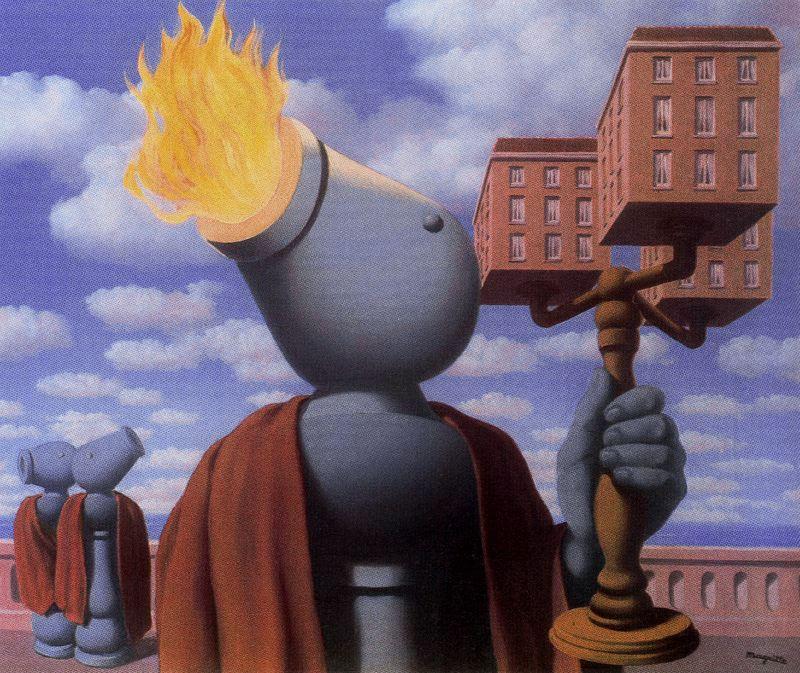
René Magritte’s surrealist masterpiece ‘The Guide’ presents a captivating juxtaposition of robotic figures and natural elements—a robot clutching a fire hydrant symbolizes hidden knowledge alongside birds perched in the Belgian artist's dreamlike landscape.

Рене Маґрітт – бельгійський сюрреаліст, що створював загадкові та дивовижні картини, які кидають виклик нашому сприйняттю реальності. Відкрийте світ його шедеврів! #Маґрітт #Сюрреалізм

Придбайте цифрову копію високої роздільної здатності з покращеною якістю, що значно перевершує онлайн-перегляд.

Кожен файл ретельно підготовлений нашими фахівцями за допомогою сучасних інструментів та професійної ручної ретуші. Ми гарантуємо виняткову чіткість, точну передачу кольору та високу деталізацію кожного зображення.

Фінальний файл надсилається електронною поштою протягом 72 годин і оптимізований для негайного використання у професійних виданнях та друкованих матеріалах. Таку якість обирають провідні дизайнерські студії, видавництва та галереї.

Цифрове зображення

Завантажте файл високої роздільної здатності для особистого використання, друку та творчих проєктів. (Замовити принт Замовити принтЗамовити репродукцію ручної роботи Замовити репродукцію ручної роботи)

Підсумкова вартість

$ 24,90

Переваги кожного замовлення цифрових зображень

Експертна цифрова доставка з гарантією якості

Обираючи WahooArt.com, ви отримуєте не просто зображення — ви отримуєте професійно вдосконалений цифровий витвір мистецтва, створений з надзвичайною точністю та підкріплений гарантією задоволення. Ось усе, що автоматично додається до вашого замовлення:

shipping_icon
Швидка доставка на email

Ваш цифровий файл із зображенням високої роздільної здатності буде надісланий вам електронною поштою протягом 72 годин після оформлення замовлення — він буде готовий до негайного використання.

canvas_icon
Цифровий файл із покращенням ШІ

Ваш витвір мистецтва професійно оптимізовано за допомогою передових інструментів штучного інтелекту та ручної корекції, що забезпечує максимальну деталізацію, чіткість і точність передачі кольорів.

insurance_icon
Безкоштовне повторне завантаження назавжди

Випадково видалили або втратили файл? Не хвилюйтеся — ми надішлемо його вам повторно в будь-який час безкоштовно.

tax_icon
Без митних зборів — ніколи

Насолоджуйтесь вашим витвором мистецтва миттєво без жодних мит, зборів або плати за доставку — цифрові завантаження завжди не оподатковуються.

color_icon
Гарантія точності кольорів

Ми гарантуємо максимально точне відтворення оригінальних кольорів на вашому цифровому зображенні завдяки використанню професійних інструментів та систем управління кольором.

return_icon
Гарантія задоволення протягом 60 днів

Якщо ви не задоволені придбаним цифровим зображенням, ми відкоригуємо його або повернемо 100% вартості протягом 60 днів — без жодних запитань.

guarantee_icon
Гарантія повернення 100% коштів

Не задоволені покупкою? Отримайте повне повернення коштів протягом 60 днів після отримання цифрового файлу — без жодних запитань.

discount_icon
Знижки на оптові замовлення

Купуйте 3 зображення — заощаджуйте 10% — Купуйте 5 — заощаджуйте 15% — Купуйте 10+ — заощаджуйте 20%. Чудово підходить для творчих проєктів, галерей та агентств.

Основна інформація

  • Artistic style: Dreamlike
  • Location: Private Collection
  • Notable elements: Robot, Fire hydrant
  • Year: 1964
  • Movement: Surrealism
  • Medium: Oil on canvas

A Surrealist Riddle: Decoding René Magritte’s “The Guide”

To gaze upon René Magritte's 1962 masterpiece, “The Guide,” is to step directly into a dreamscape where the logic of the waking world dissolves into a profound, unsettling mystery. This evocative Surrealist work does not merely present a scene; it poses a question that lingers in the mind long after one has turned away. At its heart, the painting presents a startling juxtaposition: a humanoid robot, rendered with a meticulous, almost clinical precision, stands before a nondescript building, clutching a bright red fire hydrant firmly within its mouth. This central, bizarre image is flanked by two additional robotic figures, creating an atmosphere of eerie stillness and silent observation. The composition is further animated by the presence of three birds—one perched in the upper left, another drifting through the center-right, and a third nestled at the bottom left—elements that introduce a fragile, natural grace to an otherwise mechanical and stark landscape.

Magritte’s technique is a masterclass in the art of deception. Eschewing the expressive brushwork of the Impressionists, he employed a smooth, controlled application of oil paint on canvas to achieve a deliberate flatness. This precision serves a higher purpose: by rendering these impossible objects with such clarity and realistic detail, Magritte forces the viewer to confront the "reality" of the absurd. His style aligns perfectly with the Surrealist movement's mission to bypass rational thought and tap into the subconscious. There is no heavy texture to distract the eye; instead, the seamless blending of colors creates an illusionistic surface that makes the impossible feel tangibly present, inviting collectors and enthusiasts to inhabit this beautifully rendered, dreamlike dimension.

Symbolism and the Architecture of the Subconscious

Every element within “The Guide” acts as a piece in a larger, enigmatic puzzle. The robot, a symbol of the man-made and the artificial, holding a fire hydrant—a vessel for the most fundamental element of life, water—creates a powerful tension between technology and nature. This juxtaposition serves to challenge our assumptions about identity and utility. Is the robot a servant, or is it a distorted mirror of human existence? The presence of the birds adds a layer of organic unpredictability to the scene, their flight paths suggesting a freedom that contrasts sharply with the rigid, metallic forms of the robots. Magritte often used such motifs to explore the boundaries between what is seen and what is hidden, a theme deeply rooted in his own life experiences and the broader intellectual climate of post-war Europe.

For the discerning interior designer or art collector, this piece offers more than just visual intrigue; it provides a profound emotional resonance. The painting evokes a sense of quiet contemplation, a stillness that can transform a modern living space into a sanctuary for thought. It is a work that demands engagement, making it an ideal centerpiece for those who appreciate art that provokes conversation and stimulates the intellect. Whether viewed as a study in Surrealist history or as a striking contemporary statement, “The Guide” remains a timeless exploration of the elusive boundaries between reality and illusion, making it a truly captivating addition to any curated collection.


Біографія митця

Early Life and the Seeds of Surrealism

René Magritte, born René François Ghislain Magritte on November 21, 1898, in Lessines, Belgium, emerged into a world that would profoundly shape his enigmatic artistic vision. His early years were marked by an unsettling event – the suicide of his mother when he was just thirteen. The image of her body being recovered from the River Sambre, with her dress obscuring her face, became a haunting motif that would subtly permeate his later work, manifesting in veiled figures and a persistent exploration of hidden realities. This early trauma instilled within him a fascination with mystery, loss, and the unsettling power of what remains unseen. While details of his childhood remain somewhat elusive, it’s clear this formative experience laid the groundwork for his lifelong questioning of perception and representation. He began drawing lessons at age ten, revealing an innate inclination towards visual expression, but initially explored Impressionism before embarking on a path that would lead him to become one of the most significant figures in Surrealist art.

Artistic Development and Influences

Magritte’s artistic journey was not immediate or straightforward. He studied at the Académie Royale des Beaux-Arts in Brussels, yet found its traditional methods stifling. His early work experimented with Futurism and Cubism, absorbing elements of these avant-garde movements but ultimately rejecting their purely formal concerns. It wasn't until encountering Giorgio de Chirico’s painting *The Song of Love* in 1922 that Magritte discovered a resonance that would irrevocably alter his artistic course. De Chirico’s dreamlike landscapes and unsettling juxtapositions unlocked within Magritte a new way of seeing – a world where the familiar could be rendered strange, and the ordinary imbued with profound mystery. This encounter sparked his commitment to Surrealism, though he often maintained a unique distance from its more overtly psychological or automatic approaches. He preferred a meticulous, almost clinical precision in his painting, using realistic techniques to depict illogical scenarios.

The Heart of Surrealism: Challenging Reality

By 1926, Magritte had fully embraced the tenets of Surrealism, producing *Le Jockey Perdu (The Lost Jockey)*, widely considered his first truly surrealist work. However, his brand of Surrealism was distinct. He wasn’t interested in exploring the subconscious through free association or dream imagery in the manner of some of his contemporaries. Instead, Magritte sought to challenge viewers' perceptions of reality by presenting ordinary objects in unexpected contexts, forcing them to question their assumptions about the world around them. Iconic works like *The Treachery of Images (This is not a pipe)* (1929) brilliantly deconstructs the relationship between image and object, reminding us that a representation is never the thing itself. *Les Amants (The Lovers)* (1927-1928), with its shrouded figures, echoes the trauma of his mother’s death while simultaneously exploring themes of concealment and intimacy. *Time Transfixed* (1938) presents a locomotive bursting through a brick wall, disrupting our sense of space and time. And *The Human Condition* (1933), a canvas within a canvas, blurs the boundaries between representation and reality, prompting us to consider how we perceive and interpret the world.

Later Life, Recognition, and Enduring Legacy

Despite initial struggles for recognition, Magritte’s work gradually gained prominence, particularly in the United States with exhibitions in 1936 and later retrospective shows at the Museum of Modern Art (1965) and the Metropolitan Museum of Art (1992). He remained politically engaged throughout his life, advocating for artistic autonomy. He continued to refine his signature style, exploring themes of repetition, illusion, and the power of language in paintings that are both intellectually stimulating and visually arresting. Magritte died on August 15, 1967, leaving behind a body of work that continues to captivate and challenge audiences worldwide. His influence extends far beyond the realm of painting, impacting pop art, minimalist art, conceptual art, and even advertising and film. Today, his paintings are held in major museum collections around the globe, including the Musées royaux des beaux-arts de Belgique in Brussels, which houses the Magritte Museum – dedicated entirely to his work and boasting the world’s largest collection of his creations.
  • Museum Collections: Musées royaux des beaux-arts de Belgique, Brussels; Magritte Museum.
Magritte's enduring legacy lies in his ability to make us see the familiar anew, to question our assumptions about reality, and to appreciate the power of art to provoke thought and inspire wonder. He wasn’t simply painting images; he was crafting visual paradoxes that continue to resonate with viewers decades after their creation, solidifying his position as a true master of Surrealism and a pivotal figure in 20th-century art.

Рене Маґрітт

Рене Маґрітт

1898 - 1967 , Бельгія

Основна інформація

  • Artistic Movement Or Style: Сюрреалізм
  • Artists Or Movements Influenced By This Artist:
    • Поп-арт
    • Мінімалізм
    • Концептуальне мистецтво
  • Artists Who Influenced This Artist: ['Джорджо де Кіріко']
  • Date Of Birth: 21 листопада 1898
  • Date Of Death: 15 серпня 1967
  • Full Name: René François Ghislain Magritte
  • Nationality: Бельгійський
  • Notable Artworks:
    • Любовні
    • Обман зображень
    • Застиглий час
    • Умова людини
  • Place Of Birth: Лесене, Бельгія