OilWallArtCubist Surrealism
 1919Modern
 40.0 x 29.0 cm
Написана вручну олією на полотні у вашому розмірі та рамі, виготовлена на замовлення нашими художниками. ( Замовити принт Купити цифрове зображення)





























Обирайте з наших стандартних розмірів, що відповідають оригінальним пропорціям твору мистецтва.

Ви можете вказати власні розміри, щоб репродукція ідеально підійшла до конкретної рами або інтер'єру. Якщо вибраний вами розмір не відповідає пропорціям оригіналу, ми або обріжемо полотно, або доповнимо картину додатковими елементами, промальованими вручну. Цифровий макет буде надіслано вам на затвердження перед початком виробництва.
Зверніть увагу, що попередній перегляд на екрані не відображає фактичне обрізання або розширення зображення. Тільки макет точно покаже остаточну композицію.
Хоча ми можемо виготовити виріб у нестандартному розмірі, для збереження оригінальних пропорцій рекомендуємо обирати варіанти зі встановленого списку.
Доставка по всьому світу () за 3–4 тижні замість стандартних 5 тижнів. (6 Вересень). Без жодних компромісів у якості.


Nude
Розмір репродукції
In the quiet corridors of art history, few works possess the haunting, whispered intensity of René Magritte’s 1919 masterpiece, "Nude." At first glance, the composition appears deceptively simple, yet it serves as a profound meditation on the boundaries of perception. The painting captures a woman in a moment of profound repose, her form set against a muted, sun-dusted yellow backdrop that seems to vibrate with a still, expectant energy. This choice of color is far from accidental; the warmth of the background acts as a soft veil, heightening the sense of stillness while subtly obscuring the finer details of the environment, forcing the viewer’s gaze inward toward the subject's mysterious presence.
As we delve deeper into the canvas, the technique reveals a fascinating intersection of styles. While Magritte would later become the titan of Surrealism, "Nude" reflects his early engagement with Cubism. Rather than offering a purely naturalistic depiction of the human form, he utilizes fragmented geometric planes to disrupt conventional visual expectations. This deliberate distortion does not merely serve an aesthetic purpose; it acts as a rejection of mere illusion, inviting an intellectual exploration of the figure. The interplay of light and shadow across the woman's torso creates a tactile quality that makes the piece feel both grounded in reality and untethered from it, making it an extraordinary focal point for any sophisticated interior.
The emotional heartbeat of the painting lies in its most striking feature: the crimson cloth draped partially over the woman's face. This motif is deeply evocative, serving as a potent symbol of both vulnerability and concealment. For many art historians, this veil serves as a poignant echo of Magritte’s personal history—specifically the tragic loss of his mother, whose death left a permanent imprint on his subconscious. The red fabric acts as a barrier between the seen and the unseen, representing the impossibility of ever fully grasping the true essence of another being. It transforms an act of looking into an act of questioning, prompting the viewer to wonder what lies beneath the surface of appearances.
This sense of mystery is complemented by the subject's downward gaze, which suggests a state of deep introspection or perhaps a quiet connection with something beyond the physical realm. The tension between the exposed skin and the obscured face creates a psychological depth that resonates long after one has turned away from the painting. For collectors and designers, this duality makes "Nude" a captivating piece; it offers a sophisticated narrative of grief, mystery, and the beauty of the unknown, making it much more than a mere study of the human form.
For the discerning art lover or interior designer, a high-quality reproduction of "Nude" offers a unique opportunity to introduce a sense of intellectual curiosity and quiet drama into a living space. The painting’s palette—a striking contrast between the warm yellow background and the bold crimson cloth—allows it to integrate seamlessly into various decor styles, from minimalist contemporary galleries to more eclectic, classical settings. It is a piece that does not shout for attention but rather commands it through its silent, enigmatic presence.
Owning a piece of Magritte’s early evolution allows one to possess a fragment of the moment when Surrealism began to breathe. It is an invitation to contemplate the layers of reality and to find beauty in the obscured. Whether placed in a sunlit study or a moody, dimly lit lounge, this reproduction serves as a window into the subconscious, providing endless inspiration and a constant subject for profound conversation.


1898 - 1967 , Бельгія

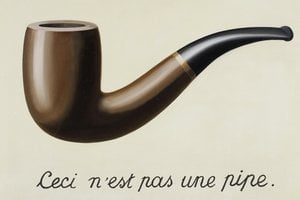
Delve into the profound mysteries of René Magritte’s Surrealism. Explore an expert analysis of 'The Treachery of Images,' decoding the philosophical paradoxes and visual subversions that redefined modern art history for collectors and connoisseurs alike.

 Переглянути в інтер'єрі
 Надіслати як листівку
 Поділитися
 Детальніше

 Завантажити
 Схожі експонати
 Рентгенівське дослідження
 Слайд-шоу
 Читати далі







 Скляний варіант доступний лише для розмірів до 110 см