БЕЗКОШТОВНА КОНСУЛЬТАЦІЯ З МИСТЕЦТВА

x
Замовити друк Замовити друкКупити цифрове зображення Купити цифрове зображення НадіслатиНадіслати
ДеталіДеталі Додати до улюблених Додати до улюблених ЗавантажитиЗавантажити Схожі виробиСхожі вироби Рентгенівське дослідженняРентгенівське дослідження Слайд-шоуСлайд-шоу

The Tooth Puller

Witness 18th-century Venetian life with Pietro Longhi's genre scene of a tooth puller; capture the intimate drama of daily existence from this exquisite print.

Пietro Longhi (1701-1785) був видатним венеційським живописцем, відомим своїми тонко продуманими жанровими картинами XVIII століття, що передають дух Венеції та соціальні реалії епохи – справжній «Венеціанський Хоґарт». Він майстерно зображував повсякденне життя венеційців із сатиричним гумором і особливою увагою до деталей.

Олійная репродукція ручної роботи

Написана вручну олією на полотні у вашому розмірі та рамі, виготовлена на замовлення нашими художниками.

Standard
custom
CM
INCH

Обирайте з наших стандартних розмірів, що відповідають оригінальним пропорціям твору мистецтва.

ширина
висота

Ви можете вказати власні розміри, щоб репродукція підійшла до конкретної рами або інтер'єру. Якщо вибраний вами розмір не відповідає пропорціям оригіналу, ми або обріжемо полотно, або доповнимо картину додатковими елементами, промальованими вручну. Цифровий макет буде надіслано вам на затвердження перед початком виробництва.
Зверніть увагу, що попередній перегляд на екрані не відображає фактичне обрізання або розширення зображення. Тільки макет точно покаже остаточну композицію.
Хоча ми можемо виготовити виріб у нестандартному розмірі, для збереження оригінальних пропорцій рекомендуємо обирати варіанти зі встановленого списку.

Приклади можливих змін: замінити обличчя на фото клієнта; додати домашню тварину (наприклад, замінити кота на собаку); додати приховане повідомлення на фоні; змінити ландшафт або елементи фону.
Після оформлення замовлення команда WahooArt.com зв'яжеться з клієнтом електронною поштою для отримання інструкцій та надасть попередній макет

Доставка по всьому світу () за 3–4 тижні замість стандартних 5 тижнів. (5 Липень). Без жодних компромісів у якості.

why_choose_icon
Безкоштовна експрес-доставка по всьому світу
why_choose_icon
Високоякісне лляне полотно
why_choose_icon
Повне страхове покриття доставки
why_choose_icon
Гарантія відшкодування митних зборів
why_choose_icon
Гарантія точного відтворення кольорів
why_choose_icon
Політика повернення протягом 60 днів (лише у разі виявлення дефектів)
why_choose_icon
Гарантія повернення 100% коштів
why_choose_icon
Знижка на багатоелементні замовлення

Загальна вартість

-

reproduction

The Tooth Puller

Матеріал репродукції

Розмір репродукції

-

Підсумкова ціна

-

Основні факти

  • Subject or theme: Everyday life in Venice
  • Title: The Tooth Puller
  • Artist: Pietro Longhi
  • Artistic style: Genre painting
  • Year: 1746

Вікторина з мистецтва

Для кожного питання є лише одна правильна відповідь.

Запитання 1:
What is the primary subject matter depicted in 'The Tooth Puller'?
Запитання 2:
Which city is the artist, Pietro Longhi, most associated with depicting scenes from?
Запитання 3:
Pietro Longhi is best known for painting which genre of subject matter?
Запитання 4:
Approximately what year was 'The Tooth Puller' painted?
Запитання 5:
Based on the description, what kind of setting appears to be in the painting?

Опис твору

A Glimpse into Venetian Domesticity

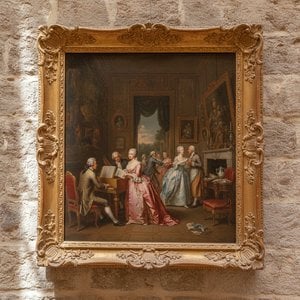
To stand before Pietro Longhi’s depiction of The Tooth Puller is not merely to observe an event; it is to slip, quite unexpectedly, into the vibrant, intimate tapestry of 18th-century Venice. This painting transports us beyond the grand pronouncements of mythology or history that often dominated art, offering instead a profoundly human moment—a scene unfolding within what appears to be a richly furnished domestic space. The composition buzzes with life, capturing a gathering around a central dining table. One can almost hear the murmur of conversation mingling with the focused tension surrounding the procedure taking place in the foreground. Longhi masterfully frames this confluence of everyday activity and minor drama, inviting the viewer not as an objective spectator, but as a privileged guest who has stumbled upon a private moment.

The Art of the Everyday Moment

Pietro Longhi is celebrated precisely because he dared to look at the mundane and find it extraordinary. As a chronicler of daily life, his genius lay in elevating genre scenes—the gatherings, the meals, the simple acts of human interaction—to the level of high art. In The Tooth Puller, the sheer number of figures, numbering at least twelve, creates a complex social ecosystem. They are arranged with an almost theatrical naturalism; some stand observing from the periphery, others are seated in close proximity to the action. This density is not chaotic; rather, it suggests the interwoven nature of community life in Venice—a place where public and private spheres constantly overlapped. The black and white quality of this particular rendition lends a timeless, almost photographic quality, allowing us to focus intensely on gesture, expression, and the subtle dynamics between the assembled company.

Technique and Historical Resonance

The technical brilliance evident in Longhi’s hand is palpable. While the original medium would have allowed for rich color, this reproduction captures the delicate brushwork that defined his style—a lightness of touch paired with an acute understanding of human anatomy and costume. The setting itself, suggested by the dining table and surrounding furniture, speaks volumes about the social strata and domestic elegance of the era. Longhi’s ability to render texture, from the folds of clothing to the polished wood of the room, anchors the viewer firmly in the year 1746. It is a masterclass in observational painting, where the artist acts as both chronicler and skilled illusionist.

Symbolism of Community and Vulnerability

At its heart, the scene carries a subtle undercurrent of vulnerability juxtaposed against communal support. The tooth extraction itself is an act of necessary discomfort, a moment of focused pain managed by expertise. Yet, this singular medical event becomes the focal point for an entire social circle. It symbolizes how human experience—even moments of minor distress—are always shared, witnessed, and absorbed by the surrounding community. For the collector or decorator, owning such a piece is acquiring more than just decoration; it is acquiring a narrative device—a conversation starter that speaks to the enduring power of human connection against the backdrop of daily routine.

Схожі витвори мистецтва


Біографія митця

A Venetian Chronicler of Daily Life

Pietro Longhi, born Pietro Falca in Venice on November 5th, 1701, wasn’t painting grand historical narratives or mythological scenes; he was capturing the quiet dramas unfolding within the city's elegant homes and bustling streets. He became renowned for his witty genre paintings – intimate glimpses into the lives of 18th-century Venetians, a departure from the prevailing artistic trends of his time. The son of Alessandro Falca, a silversmith, Longhi’s early training began under the Veronese painter Antonio Balestra, who recognized and nurtured the young artist's talent. This foundation in traditional technique would later serve as a subtle counterpoint to the innovative spirit he brought to his chosen subject matter. He adopted the surname “Longhi” upon beginning his artistic career, a symbolic shedding of his father’s trade for the pursuit of painting.

From Religious Scenes to Venetian Interiors

Longhi's initial works reflected the expectations of the era: altarpieces and religious themes dominated his early portfolio. His 1732 altarpiece for the church of San Pellegrino demonstrates a skillful command of traditional techniques, showcasing broken brushwork and vibrant color glazes characteristic of Venetian painting. These masterful compositions hark back to the glories of Renaissance art, yet Longhi subtly infused them with a Venetian sensibility—a luminous palette and an attention to atmospheric perspective that distinguished him from many of his contemporaries. However, it was in the late 1730s that Longhi truly found his voice, shifting towards the small-scale genre scenes that would define his legacy. This transition wasn’t merely a change in subject matter; it represented a deliberate engagement with the burgeoning social and cultural shifts of the time. The 18th century witnessed a growing fascination with the private lives of the bourgeoisie, a focus on domesticity and everyday rituals. Longhi masterfully captured this shift, offering viewers a window into Venetian society that was both charming and subtly satirical. He married Caterina Maria Rizzi in 1732, and together they had eleven children, though only three survived to adulthood. This personal life, while not directly reflected in his art, undoubtedly shaped his understanding of the domestic sphere he so frequently depicted.

The “Venetian Hogarth” and a Satirical Eye

Longhi quickly earned the moniker "the Venetian William Hogarth," a testament to his ability to infuse seemingly innocuous scenes with layers of social commentary. Like Hogarth, Longhi didn’t shy away from depicting human foibles and societal contradictions. However, while Hogarth's satire was often pointed and moralizing, Longhi’s tended to be more nuanced, imbued with a gentle irony. His paintings are populated with masked figures – a nod to the exuberant Carnival celebrations of Venice – engaged in various activities, from gambling and flirtation to clandestine meetings and dubious transactions. The Concert portrays a richly decorated salon scene where characters engage in polite conversation and subtle gestures of social maneuvering. Longhi’s meticulous attention to detail—the textures of fabrics, the expressions on faces—reveals his profound understanding of human psychology. He wasn't simply recording life as it was; he was offering a sly commentary on its complexities and contradictions. His ability to capture these subtleties is what sets him apart, elevating his genre scenes beyond mere documentation into insightful social observations.

Technique, Influence, and Lasting Legacy

Longhi’s technique was as distinctive as his subject matter. He favored small canvases, meticulously rendered with a delicate touch and a keen eye for detail. His interiors are bathed in soft light, creating an atmosphere of intimacy and realism. He possessed a remarkable ability to depict textures – the sheen of silk, the roughness of wood, the delicate folds of fabric – adding depth and authenticity to his scenes. He drew inspiration from earlier Venetian masters like Giuseppe Maria Crespi, whose use of color and expressive brushwork foreshadowed Longhi’s own stylistic innovations. Yet, unlike Crespi, Longhi achieved a remarkable level of psychological realism, capturing not just appearances but also the unspoken emotions that underpinned human behavior. His work resonated with contemporary audiences, who appreciated his ability to capture the spirit of their time. He even served as Director of the Academy of Drawing and Carving from 1763, furthering Venetian artistic tradition. Longhi passed away on May 8th, 1785, leaving behind a body of work that continues to captivate and intrigue viewers today. He remains a vital figure in the history of Venetian art, celebrated for his unique blend of observation, wit, and technical skill – a true chronicler of 18th-century life. ## Notable Works
  • The Tailor (Gallerie dell'Accademia, Venice)
  • The Baptism (Fondazione Querini Stampalia, Venice)
  • Painter in his Studio (Ca’ Zenobio, Venice)
  • Duck Hunters on the Lagoon
Пietro Longhi

Пietro Longhi

1701 - 1785 , Італія

Короткі факти

  • Artistic Movement Or Style: Венеціанське живописство, Рококо
  • Artists Or Movements Influenced By This Artist: ['Вільям Хоґарт']
  • Artists Who Influenced This Artist:
    • Антоній Бальєста
    • Джованні Маріо Креспо
  • Date Of Birth: 5 листопада 1701
  • Date Of Death: 8 травня 1785
  • Full Name: Pietro Longhi
  • Nationality: Італійський
  • Notable Artworks:
    • Португалець
    • Хрещення
    • Маляр у студії
  • Place Of Birth: Венеція, Італія