Переглянути в інтер'єрі Примірка в AR Купити картину ручної роботи Перейти до цифрових зображень Надіслати
Деталі Посібник Додати до улюблених Завантажити Схожі предмети колекціонування Рентгенівське дослідження Слайд-шоу Статистика переглядів

The Milkmaid

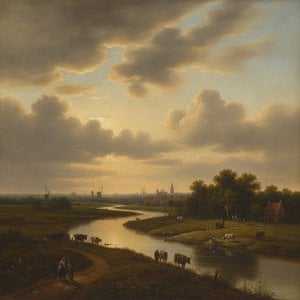
Paulus Potter's 'The Milkmaid' (1646) captures a serene Dutch countryside scene with a young woman milking cows. A masterpiece of realism, it exemplifies the Golden Age’s focus on nature and daily life.

"Ukrainian Meta Description": "Павлус Поттер – нідерландський художник-пейзажист, відомий своїми деталізованими живописними зображеннями тварин у мальовничих ландшафтах. Його роботи є важливим зразком романтизму та відображають глибокий зв'язок із природою."

Гікле / Художній принт

Музейна якість друку جيкле або на полотні з оперативним виготовленням та різноманітними варіантами фінішної обробки. ( Купити картину ручної роботи Перейти до цифрових зображень)

P118B $10
P118H $10
P118W $10
P438Z $10
P508JH $12
P508YH $12
P805H $10
P805Z $10
P919BZ $10
P919G $10
P919XJ $10
P959ZH $10
P968JZ $12
W106C $8
W218G $10
W218JH $8
W218Y $10
W307PJ $10
W316G $10
W316PJ $8
W316Y $10
W398PJ $8
W4111J $10
W500HY $15
W500JH $15
W692G $12
W849H $8
W940BG $15
W953PJ $8

Стандартний розмір
на замовлення
CM
INCH

Обирайте з наших стандартних розмірів, що відповідають оригінальним пропорціям твору мистецтва.

ширина
висота

Ви можете вказати власні розміри, щоб репродукція ідеально підійшла до конкретної рами або інтер'єру. Якщо обраний вами розмір не відповідає пропорціям оригіналу, ми або обріжемо полотно, або розширимо зображення за допомогою дзеркального відображення чи суцільної заливки країв. Перед початком виробництва вам буде надіслано цифровий макет для затвердження.
Будь ласка, зверніть увагу, що попередній перегляд на екрані не відображає фактичне обрізання або розширення. Тільки макет точно покаже фінальну композицію.
Хоча можливість замовлення індивідуальних розмірів доступна, ми рекомендуємо обирати формат із попередньо визначеного списку, щоб зберегти оригінальні пропорції.

Доставка по всьому світу () за 2 тижні замість стандартних 4/5 тижнів. (25 Вересень)

why_choose_icon
Безкоштовна експрес-доставка по всьому світу
why_choose_icon
Високоякісне лляне полотно
why_choose_icon
Повне страхове покриття доставки
why_choose_icon
Гарантія повернення митних зборів
why_choose_icon
Гарантія точного відтворення кольорів
why_choose_icon
Політика повернення протягом 100 днів (лише у разі виявлення дефектів)
why_choose_icon
Гарантія повернення 100% коштів
why_choose_icon
Знижка на оптові замовлення

Загальна вартість

$ 68

reproduction

The Milkmaid

Гікле / Художній принт

Розмір репродукції

-

Загальна вартість

$ 68

Короткі факти

  • Title: The Milkmaid
  • Influences: Bartsius
  • Location: Mauritshuis, The Hague
  • Notable elements: Low vantage point
  • Year: 1646
  • Dimensions: 38 x 50 cm
  • Artist: Paulus Potter

Тест на знання мистецтва

У кожному запитанні лише одна правильна відповідь.

Запитання 1:
What is the primary subject matter of Paulus Potter’s ‘The Milkmaid’?
Запитання 2:
In what century was ‘The Milkmaid’ painted?
Запитання 3:
What artistic movement is ‘The Milkmaid’ often associated with?
Запитання 4:
Which of the following best describes the painting's style?
Запитання 5:
What is the significance of the cows in ‘The Milkmaid’?

A Pastoral Moment Frozen in Time: Paulus Potter’s “The Milkmaid”

Paulus Potter's "The Milkmaid," painted in 1646, isn’t merely a depiction of rural life; it’s a profound meditation on simplicity, domesticity, and the quiet dignity of everyday labor. This remarkable work, now housed within the Wallace Collection in London, offers a rare glimpse into the burgeoning world of Dutch Golden Age painting – a period defined by its meticulous realism, deep appreciation for nature, and a subtle yet powerful exploration of human emotion. The scene unfolds with an almost startling immediacy, drawing the viewer directly into the heart of a tranquil afternoon on a farmstead.

At first glance, the composition appears straightforward: a young milkmaid stands bathed in soft light, her posture relaxed yet purposeful as she attends to her task – emptying a large pail. However, Potter’s genius lies not just in his technical skill but in his ability to imbue this simple act with an extraordinary sense of life and serenity. The figures of the cows, both brown and white, are rendered with astonishing detail, their coats gleaming with a subtle sheen that speaks volumes about Potter's mastery of light and texture. The inclusion of the bare tree branch in the background subtly hints at the approaching winter, adding a layer of poignant beauty to the scene – a reminder of the cyclical nature of life and the passage of time.

A Masterclass in Dutch Realism

Potter’s style is firmly rooted in the tenets of Dutch realism, yet he transcends mere imitation. He doesn't simply record what he sees; he transforms it into a deeply felt experience. The painting’s palette is restrained and earthy – predominantly browns, creams, and muted greens – reflecting the natural world that dominates the composition. Potter employs a low vantage point, placing the viewer almost at eye level with the milkmaid, fostering a sense of intimacy and connection. This technique was revolutionary for its time, moving away from the more formal, elevated perspectives favored by earlier generations of artists.

Technically, “The Milkmaid” is a testament to Potter’s meticulous attention to detail. The artist's use of oil paint allows him to capture the subtle nuances of texture – the rough bark of the tree, the dampness of the pail, the soft fur of the cows. He masterfully utilizes chiaroscuro—the dramatic contrast between light and shadow—to create a sense of depth and volume, bringing the scene to life with remarkable realism. The brushstrokes are deliberate and controlled, contributing to the painting’s overall sense of quiet confidence.

Symbolism and Emotional Resonance

Beyond its technical brilliance, “The Milkmaid” is rich in symbolic meaning. The milkmaid herself represents a virtuous simplicity – a figure of hardworking honesty and unassuming beauty. Her modest attire and unadorned appearance speak to her connection with the land and her dedication to her craft. The cows, symbols of prosperity and abundance, further reinforce this theme. Potter’s choice to depict a young woman engaged in such a commonplace activity elevates it to something extraordinary, suggesting that true value lies not in wealth or status but in the quiet dignity of labor.

The painting's emotional impact is profoundly calming. There’s no drama, no conflict—only a sense of peaceful contentment. The soft light, the gentle colors, and the serene expressions of the figures all contribute to this atmosphere of tranquility. “The Milkmaid” invites us to pause, to reflect on the beauty of the natural world and the simple pleasures of everyday life – a timeless message that continues to resonate with viewers today.

A Legacy of Dutch Artistic Innovation

Paulus Potter’s "The Milkmaid" stands as a pivotal work in the history of Dutch art. It exemplifies the shift towards greater realism and naturalism that characterized the Golden Age, while also foreshadowing the rise of Romanticism with its emphasis on emotion and the sublime beauty of nature. His innovative use of perspective, his masterful rendering of light and texture, and his ability to imbue a simple scene with profound emotional resonance cemented his place as one of the most important artists of his time. Reproductions of this iconic painting continue to captivate audiences worldwide, offering a window into a bygone era and reminding us of the enduring power of art to transport us to another world.


Біографія митця

A Brief Life Illuminated: The World of Paulus Potter

Paulus Potter, a name inextricably linked to the heart of the Dutch Golden Age, lived a life tragically short yet profoundly impactful on the world of art. Born in Enkhuizen on November 20, 1625, and baptized that very same day, his artistic journey began within a family already steeped in creative tradition. His father, Pieter Symonsz Potter, was a highly respected painter specializing in the intricate craft of gilded leather hangings and charming genre scenes – capturing everyday life with remarkable detail and warmth. His mother, Aaltje Paulusdr Bartsius, held a significant place in Dutch artistic history as the sister of Willem Bartsius, a renowned painter whose works graced the halls of prominent families. This familial legacy, combined with an environment that nurtured creativity, undoubtedly provided young Paulus with the foundational skills and inspiration he would later hone into his distinctive style. The family’s relocation first to Leiden in 1628, and then to the bustling metropolis of Amsterdam in 1631, proved pivotal, offering him access to a wider world of artistic influence and opportunity – a vibrant hub where new ideas and techniques constantly flowed. It was in Amsterdam that he began his formal training under his father’s guidance, though some scholars suggest potential influences from the masterful Claes Moeyaert, whose landscapes were highly sought after at the time.

From Delft Guilds to Hague Landscapes

Paulus Potter's ambition quickly propelled him towards recognition within the established artistic community. He joined the prestigious Guild of Saint Luke in Delft, a crucial step for any aspiring artist seeking legitimacy and professional standing in the Dutch Republic. However, his true artistic path began to unfold when he moved to The Hague around 1649. Establishing himself near the renowned landscape painter Jan van Goyen proved incredibly influential; Van Goyen’s mastery of atmospheric effects – the subtle shifts of light and shadow that gave depth and realism to his scenes – would subtly permeate Potter's own style, creating a harmonious blend of influences. This period also marked a significant turning point in Potter’s personal life. In July 1650, he married Adriana van Balckeneynde, a union that opened doors to influential circles thanks to her father, a prominent building contractor and respected figure within the city's elite. Through this connection, Potter found himself introduced to members of Dutch high society, including the esteemed Amalia of Solms-Braunfels, who would become a patron of his work, commissioning several paintings from him. A brief return to Amsterdam in May 1652, at the invitation of physician and art enthusiast Nicolaes Tulp – who owned a number of Potter’s paintings – offered further recognition and solidified his position within the artistic landscape. Sadly, this period of burgeoning success was tragically cut short by illness; Paulus Potter succumbed to tuberculosis on January 17, 1654, at the young age of twenty-eight, leaving behind a legacy of breathtaking beauty and profound emotional resonance.

The Pastoral Vision: Style and Major Works

Paulus Potter carved a unique niche for himself within the vibrant landscape of Dutch Golden Age painting – he became celebrated for his captivating depictions of animals – particularly cattle – seamlessly integrated into expansive, meticulously rendered landscapes. His compositions are often characterized by a strikingly low vantage point, an artistic choice that dramatically emphasizes the scale and grandeur of nature, dwarfing even the majestic beasts he portrayed. The Young Bull, created around 1647, remains his most iconic work, now housed in the Mauritshuis in The Hague – a masterpiece that captures both the physical strength and youthful vulnerability of the animal with remarkable sensitivity. Initially met with some critical reservation, it later gained widespread acclaim as a pioneering example of Romanticism’s nascent sensibility – a profound emotional connection to the natural world. Beyond this masterpiece, Potter produced other notable paintings such as Figures with Horses by a Stable (1647), depicting a group of figures interacting with horses in a rustic setting; Punishment of a Hunter (circa 1647), a dramatic scene illustrating the consequences of unchecked aggression against nature; Two Pigs in a Sty (1649), a charming and intimate portrayal of domestic animals; and Wolf-hound (approximately 1650–1652), showcasing the animal’s watchful gaze and powerful presence. He also demonstrated his versatility through numerous etchings, often focusing on the detailed portrayal of cattle and other animals – capturing their textures, movements, and expressions with astonishing precision.

Influences and Artistic Techniques

Potter's artistic development was shaped by a confluence of influences. The meticulous realism of his father, Pieter Symonsz Potter, undoubtedly instilled in him a deep appreciation for detail and observation. However, the most significant influence came from Jan van Goyen, whose mastery of atmospheric effects – the subtle shifts of light and shadow that created depth and realism – profoundly impacted Potter’s own approach to landscape painting. Potter's use of *chiaroscuro*—the dramatic contrast between light and dark—was particularly effective in conveying a sense of drama and emotion within his scenes. He skillfully employed a muted color palette dominated by earth tones, reflecting the natural hues of the Dutch countryside and creating a harmonious and understated aesthetic. Furthermore, Potter’s consistent use of low horizon lines – placing the viewer close to the ground – dramatically emphasized the scale and grandeur of the landscape, fostering a sense of awe and wonder in the face of nature's immensity.

Legacy and Lasting Influence

Despite his tragically brief life, Paulus Potter’s artistic legacy endures as a testament to his exceptional talent and unique vision. His work stands as a powerful example of the Romantic movement’s nascent influence on Dutch art – a profound emotional connection to the natural world. The influence of Jan van Goyen is readily apparent in Potter's landscapes, particularly in the subtle atmospheric effects and commitment to realistic representation. However, Potter transcended mere imitation; he infused his scenes with an emotional depth that resonated deeply with viewers then, and continues to do so today. He is now recognized as a precursor to Romanticism, anticipating its emphasis on the sublime power of nature and the emotional response it evokes. His paintings continue to inspire admiration for their beauty, realism, and profound sense of connection to the natural world – a timeless reminder of the enduring power of art to capture and convey the essence of our shared experience with the environment.
Павло Поттер

Павло Поттер

1625 - 1654 , Нідерланди

Довідкова інформація

  • Artistic Movement Or Style: Романтизм
  • Artists Or Movements Influenced By This Artist: ['Романтизм']
  • Artists Who Influenced This Artist: ['Ян ван Гойєн']
  • Date Of Birth: 20 листопада 1625
  • Date Of Death: 17 січня 1654
  • Full Name: Paulus Potter
  • Nationality: Німецький
  • Notable Artworks:
    • The Young Bull
    • Figures з конями
    • Покарання мисливця
    • Дві свинки в годівниці
    • Вовк-поні
  • Place Of Birth: Енхюйзен, Нідерланди
Досліджуйте твори мистецтва, впорядковані за темами, стилями та характеристиками.