Переглянути в інтер'єрі Перегляд в AR Замовити репродукцію ручної роботи Перейти до цифрових зображень Надіслати як листівку
Детальніше Додати до улюблених Завантажити Схожі експонати Рентгенівське дослідження Слайд-шоу Статистика

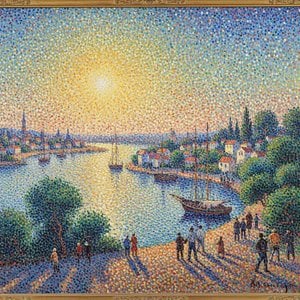
The Velodrome

Experience Paul Signac’s vibrant ‘The Velodrome,’ a captivating pointillist masterpiece from 1899 showcasing an energetic race scene through meticulous color dots. Discover this Divisionism artwork and bring its luminous beauty into your space.

Пауль Сіганк (1863-1935) – ключова постать неоімпресіонізму та майстер техніки точкистизму. Його яскраві морські пейзажі, порти та міста надихали художників століттями. Відкрийте для себе світ мистецтва Сіганка!

Гікле / Художній принт

Музейна якість друку جيкле або на полотні з оперативним виготовленням та різноманітними варіантами фінішної обробки. ( Замовити репродукцію ручної роботи Перейти до цифрових зображень)

P118B $10
P118H $10
P118W $10
P438Z $10
P508JH $12
P508YH $12
P805H $10
P805Z $10
P919BZ $10
P919G $10
P919XJ $10
P959ZH $10
P968JZ $12
W106C $8
W218G $10
W218JH $8
W218Y $10
W307PJ $10
W316G $10
W316PJ $8
W316Y $10
W398PJ $8
W4111J $10
W500HY $15
W500JH $15
W692G $12
W849H $8
W940BG $15
W953PJ $8

Стандартний розмір
індивідуальний
CM
INCH

Обирайте з наших стандартних розмірів, що відповідають оригінальним пропорціям твору мистецтва.

ширина
висота

Ви можете вказати власні розміри, щоб репродукція ідеально підійшла до конкретної рами або інтер'єру. Якщо обраний вами розмір не відповідає пропорціям оригіналу, ми або обріжемо полотно, або розширимо зображення за допомогою дзеркального відображення чи суцільної заливки країв. Перед початком виробництва вам буде надіслано цифровий макет для затвердження.
Будь ласка, зверніть увагу, що попередній перегляд на екрані не відображає фактичне обрізання або розширення. Тільки макет точно покаже фінальну композицію.
Хоча можливість замовлення індивідуальних розмірів доступна, ми рекомендуємо обирати формат із попередньо визначеного списку, щоб зберегти оригінальні пропорції.

Доставка по всьому світу () за 2 тижні замість стандартних 4/5 тижнів. (18 Вересень)

why_choose_icon
Безкоштовна експрес-доставка по всьому світу
why_choose_icon
Високоякісне лляне полотно
why_choose_icon
Повне страхове покриття доставки
why_choose_icon
Гарантія відшкодування митних зборів
why_choose_icon
Гарантія точного відтворення кольорів
why_choose_icon
Політика повернення протягом 100 днів (тільки у разі виявлення дефектів)
why_choose_icon
Гарантія повернення 100% коштів
why_choose_icon
Пропозиція на оптові замовлення

Загальна вартість

$ 68

reproduction

The Velodrome

Гікле / Художній принт

Розмір репродукції

-

Підсумкова вартість

$ 68

Основна інформація

  • Year: 1899
  • Artistic style: Pointillism
  • Medium: Oil on canvas
  • Subject or theme: Race track scene
  • Influences:
    • Monet
    • Seurat
  • Dimensions: 46 x 55 cm
  • Artist: Paul Signac

The Velodrome: A Symphony of Light and Movement by Paul Signac

Paul Signac’s “The Velodrome,” painted in 1899, is more than just a depiction of an outdoor race; it's a vibrant embodiment of the burgeoning modernist movement. This oil on canvas, measuring 46 x 55 cm, pulsates with energy and captures a fleeting moment of exhilaration – the collective gaze of spectators absorbed in the spectacle of a horse race. The painting’s immediate impact stems from Signac’s masterful deployment of Pointillism, a technique he pioneered alongside Georges Seurat, that fundamentally altered the way artists approached color and light.

  • The Technique: At its core, Pointillism involves applying tiny, distinct dots of pure color – predominantly blues, greens, yellows, and reds – to the canvas. These individual strokes are meticulously arranged to create an illusion of blended color when viewed from a distance. The viewer’s eye then performs the optical mixing, resulting in a luminosity and vibrancy unmatched by traditional blending methods.
  • Capturing Movement: Signac brilliantly utilizes this technique to convey the dynamism of the race. The blurred figures, the racing horses, and the undulating lines of the track are all rendered through a controlled chaos of dots, creating a sense of speed and movement that draws the viewer into the scene.
  • A Window into Divisionism: “The Velodrome” is a quintessential example of Divisionism, the name given to Pointillism by Signac himself. It represents a deliberate effort to analyze and reconstruct visual perception based on scientific principles, challenging the prevailing Impressionistic focus on capturing fleeting moments of light.

Historical Context: The Rise of Neo-Impressionism

“The Velodrome” was created during a period of intense artistic experimentation in France. Following the innovations of Impressionism, artists sought new ways to represent reality, moving beyond simply recording visual sensations. Paul Signac, along with Seurat and others, embraced scientific theories of color perception – particularly those championed by Eugène Chevreul – to develop Pointillism. This movement was a reaction against the subjective interpretations of Impressionism, aiming for a more objective and systematic approach to painting. The late 19th century witnessed a growing fascination with science and technology, which undoubtedly influenced this artistic pursuit of quantifiable visual principles.

The subject matter itself – a velodrome, a relatively new sporting venue at the time – reflects the broader cultural shifts occurring in France during the Belle Époque. The rise of spectator sports and mass entertainment provided fertile ground for artists like Signac to explore themes of modernity, progress, and the collective experience.

Symbolism and Emotional Impact

Beyond its technical brilliance, “The Velodrome” resonates with a powerful emotional charge. The painting isn’t merely a record of an event; it's an evocation of excitement, anticipation, and shared human experience. The tightly packed crowd, the focused attention on the horses, and the vibrant colors all contribute to this sense of energy. Signac skillfully uses color not just for representation but also to evoke feeling – the cool blues and greens suggesting both the vastness of the sky and the intensity of the race, while bursts of yellow and red capture the heat and passion of the moment.

The inclusion of the horse itself is significant. Horses were central to French culture and sport, representing power, speed, and nobility. Their presence elevates “The Velodrome” beyond a simple depiction of a sporting event, transforming it into a symbol of human ambition and our enduring fascination with nature’s forces.

A Masterpiece of Divisionism – A Reproduction for Your Collection

This meticulously crafted reproduction of Paul Signac's "The Velodrome" offers an unparalleled opportunity to experience the brilliance of this pivotal work firsthand. Each hand-painted reproduction faithfully captures the nuances of Signac’s Pointillist technique, allowing you to appreciate the depth and luminosity that only this method can achieve. Whether adorning a gallery wall or enhancing your interior design scheme, this artwork is guaranteed to be a captivating focal point, bringing a touch of modernist elegance and artistic innovation to any space.


Біографія митця

The Harmonious Vision of Paul Signac

Paul Victor Jules Signac, born in the heart of Paris in 1863, wasn’t merely a painter; he was an architect’s initial aspiration transformed into a passionate exploration of light, color, and the very science underpinning visual perception. His early life, steeped in the artistic atmosphere of Montmartre – a vibrant hub for creativity at the time – ignited within him a lifelong fascination with capturing the world's beauty through paint. Initially drawn to architecture, a chance encounter with Claude Monet’s groundbreaking exhibition served as a pivotal catalyst, setting his artistic trajectory on an entirely new course. Signac wasn’t content with simply observing; he yearned to understand *how* light danced across surfaces and how color could evoke emotion – a quest that would ultimately define his revolutionary approach to painting.

A Partnership Forged in Scientific Inquiry

The meeting between Signac and Georges Seurat in 1884 proved to be the genesis of Neo-Impressionism, a movement that sought to reconcile artistic expression with scientific principles. Both artists were deeply influenced by Eugène Delacroix’s writings on color theory, particularly his exploration of complementary contrasts and their ability to create vibrant visual effects. Together, they embarked on a rigorous investigation into these concepts, meticulously translating them into a revolutionary painting technique – Pointillism. This wasn't simply about applying dots; it was an attempt to systematize the entire process of painting, grounding it in scientific observation and challenging the established norms of Impressionism’s fleeting brushstrokes. Signac wholeheartedly embraced Seurat’s vision, abandoning the spontaneous approach for a deliberate, calculated application of tiny, distinct points of pure color intended to blend optically within the viewer's eye. This meticulous process demanded an extraordinary level of precision and control, transforming painting from an act of intuition into one of scientific analysis.

Coastal Reveries and the Birth of a Style

Following Seurat’s tragic death in 1891, Signac inherited the mantle of Neo-Impressionism, continuing to refine and expand upon their shared principles. He found renewed inspiration in his travels, particularly along the French Riviera, where he established a home in Saint-Tropez – a place that would become synonymous with his artistic output. The shimmering waters, sun-drenched harbors, and picturesque coastal landscapes provided an endless source of visual stimulation, fueling his exploration of color and light. *The Red Buoy, Saint-Tropez* (1895) stands as a testament to this period, showcasing Signac’s mastery of Pointillism in capturing the vibrant hues and dynamic energy of the Mediterranean coast. He began to experiment with larger brushstrokes and a broader palette, moving beyond strict adherence to Seurat's precise dotting method, injecting a sense of personal expression into his work while retaining its underlying scientific foundation.

A Patron of the Avant-Garde and Lasting Legacy

Beyond his own prolific output, Paul Signac played a crucial role in fostering the development of modern art through his leadership within the Société des Artistes Indépendants. From 1908 until his death in 1935, he served as president, providing a vital platform for emerging talents and championing artistic freedom – often pushing boundaries with works that challenged conventional aesthetic norms. He recognized and supported artists like Henri Matisse, André Derain, and others who were pioneering new approaches to painting, demonstrating a remarkable foresight and commitment to the future of art. Signac’s theoretical writings, notably *From Eugène Delacroix to Neo-Impressionism* (1899), further solidified his position as a leading intellectual figure in the art world, offering a systematic exploration of color theory and its application to painting. Paul Signac's legacy extends far beyond his captivating paintings; he was a visionary artist, a dedicated theorist, and a generous patron who profoundly influenced the course of modern art, leaving an indelible mark on generations of artists to come.

Key Dates & Achievements

  • 1863: Born in Paris, France.
  • 1884: Co-founded the Société des Artistes Indépendants with Georges Seurat.
  • 1886: Painted *Boulevard de Clichy*, a key example of early Pointillism.
  • 1895: Created *The Red Buoy, Saint-Tropez*, showcasing his mastery of coastal scenes.
  • 1899: Published *From Eugène Delacroix to Neo-Impressionism*, a seminal work on color theory.
  • 1908 – 1935: Served as President of the Société des Artistes Indépendants, championing avant-garde artists.
  • 1935: Passed away in Paris at the age of 72, leaving behind a rich artistic legacy.

Пол Сінак

Пол Сінак

1863 - 1935 , Франція

Короткі факти

  • Artistic Movement Or Style: Неоімпресіонізм, Точілізм
  • Artists Or Movements Influenced By This Artist:
    • Генрі Матісс
    • Фавризми
  • Artists Who Influenced This Artist:
    • Клод Моне
    • Жорж Сур
  • Date Of Birth: 11 листопада 1863
  • Date Of Death: 15 серпня 1935
  • Full Name: Paul Victor Jules Signac
  • Nationality: Француз
  • Notable Artworks:
    • Бульвар де Кліші
    • Червоний буях
    • Ла Валюз
    • Velodrome
    • Міський пляж, Коліюр
  • Place Of Birth: Париж, Франція
Досліджуйте твори мистецтва, впорядковані за темами, стилями та характеристиками.