Переглянути в інтер'єріПереглянути в інтер'єрі Перегляд в ARПерегляд в AR Перейти до друку Перейти до друкуЗамовити репродукцію ручної роботи Замовити репродукцію ручної роботи Надіслати як листівкуНадіслати як листівку
ДетальнішеДетальніше Додати до улюблених Додати до улюблених ЗавантажитиЗавантажити Схожі експонатиСхожі експонати Рентгенівське дослідженняРентгенівське дослідження Слайд-шоуСлайд-шоу СтатистикаСтатистика

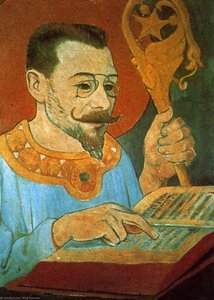
Snake-Eaters

Explore Paul Sérusier's groundbreaking Synthetism style and influence on Les Nabis with 'Snake-Eaters,' a Breton legend captured in evocative browns, reds & blacks by Gabriela Zapolska.

Павло Серузіє - французький художник-постімпресіоніст, піонер абстрактного мистецтва та впливовий член групи «Наві». Його роботи, зокрема картина "Талісман", вирізняються використанням кольору та форми, що стали основою для розвитку сучасного мистецтва.

Придбайте цифрову копію високої роздільної здатності з покращеною якістю, що значно перевершує онлайн-перегляд.

Кожен файл ретельно підготовлений нашими фахівцями за допомогою сучасних інструментів та професійної ручної ретуші. Ми гарантуємо виняткову чіткість, точну передачу кольору та високу деталізацію кожного зображення.

Фінальний файл надсилається електронною поштою протягом 72 годин і оптимізований для негайного використання у професійних виданнях та друкованих матеріалах. Таку якість обирають провідні дизайнерські студії, видавництва та галереї.

Цифрове зображення

Завантажте файл високої роздільної здатності для особистого використання, друку та творчих проєктів. (Перейти до друку Перейти до друкуЗамовити репродукцію ручної роботи Замовити репродукцію ручної роботи)

Підсумкова вартість

$ 24,90

Переваги кожного замовлення цифрових зображень

Експертна цифрова доставка з гарантією якості

Обираючи WahooArt.com, ви отримуєте не просто зображення — ви отримуєте професійно вдосконалений цифровий витвір мистецтва, створений з надзвичайною точністю та підкріплений гарантією задоволення. Ось усе, що автоматично додається до вашого замовлення:

shipping_icon
Швидка доставка на email

Ваш цифровий файл із зображенням високої роздільної здатності буде надісланий вам електронною поштою протягом 72 годин після оформлення замовлення — він буде готовий до негайного використання.

canvas_icon
Цифровий файл із покращенням ШІ

Ваш витвір мистецтва професійно оптимізовано за допомогою передових інструментів штучного інтелекту та ручної корекції, що забезпечує максимальну деталізацію, чіткість і точність передачі кольорів.

insurance_icon
Безкоштовне повторне завантаження назавжди

Випадково видалили або втратили файл? Не хвилюйтеся — ми надішлемо його вам повторно в будь-який час безкоштовно.

tax_icon
Без митних зборів — ніколи

Насолоджуйтесь вашим витвором мистецтва миттєво без жодних мит, зборів або плати за доставку — цифрові завантаження завжди не оподатковуються.

color_icon
Гарантія точності кольорів

Ми гарантуємо максимально точне відтворення оригінальних кольорів на вашому цифровому зображенні завдяки використанню професійних інструментів та систем управління кольором.

return_icon
100-денна гарантія задоволення

Якщо ви не задоволені придбаним цифровим зображенням, ми внесемо правки або повернемо 100% вартості протягом 100 днів — без зайвих запитань.

guarantee_icon
Гарантія повернення 100% коштів

Незадоволені покупкою? Отримайте повне повернення коштів протягом 100 днів після отримання цифрового файлу — без зайвих запитань.

discount_icon
Знижки на оптові замовлення

Купуйте 3 зображення — заощаджуйте 10% — Купуйте 5 — заощаджуйте 15% — Купуйте 10+ — заощаджуйте 20%. Чудово підходить для творчих проєктів, галерей та агентств.

Основна інформація

  • Title: Snake-Eaters
  • Dimensions: 161 x 127 cm
  • Location: Collection of Gabriela Zapolska
  • Subject or theme: Mythology, Breton Legend
  • Notable elements or techniques: Cloisonnism, Color palette (browns, reds & blacks)
  • Medium: Oil on canvas
  • Artist: Paul Sérusier

A Mystical Encounter in the Breton Woods

In the heart of the dense, dappled forests of Brittany, Paul Sérusier’s “Snake-Eaters” unfolds as a profound invocation of ancient folklore and spiritual mystery. Painted in 1896, this masterpiece transcends mere landscape painting to become a window into the soul of Breton mysticism. The canvas captures four figures caught in the midst of a ritualistic dance, their forms emerging from the shadows of a primordial woodland. There is an undeniable sense of communal connection present in the scene, yet it is draped in an aura of the unknown. As sunlight filters through the thick canopy, it illuminates not just the physical space, but the spiritual weight of the ceremony taking place. For the discerning collector or interior designer, this work offers more than visual beauty; it provides a gateway into a world where the boundaries between the human and the divine are beautifully blurred.

The technique employed by Sérusier is a masterclass in Cloisonnism, a style that would later become a cornerstone of modern abstraction. Rather than relying on the fleeting optical realism of the Impressionists, Sérus and his contemporaries sought a deeper, more permanent truth. He utilizes flat planes of color, bounded by thin, dark contours that resemble the stained glass of a cathedral. This method strips away unnecessary naturalistic detail, allowing the viewer to focus on the rhythmic harmony of the composition. The texture of the foliage and the deliberate arrangement of the figures create a sense of depth that does not rely on traditional perspective, but rather on the emotional weight of color and shape. It is a technique that demands attention, making it a striking focal point for any sophisticated gallery or curated living space.

Symbolism and the Spirit of the Nabis

To understand “Snake-Eaters,” one must look toward the historical currents of the late 19th century. Emerging from the influential Pont-Aven colony under the mentorship of Paul Gauguin, Sérusier was a pioneer of the Nabis movement. This group of artists sought to express inner emotions and spiritual truths through symbolic imagery, rejecting the objective observation of the world in favor of subjective experience. The painting’s palette—a somber yet mesmerizing arrangement of deep browns, earthy reds, and heavy blacks—is meticulously chosen to evoke feelings of reverence, apprehension, and mystery. Every element, from the posture of the dancing figures to the subtle presence of nature around them, serves as a symbol for the unseen forces that shape human existence.

For those looking to integrate art into a refined interior, “Snake-Eaters” offers an unparalleled emotional resonance. It is a piece that invites contemplation and conversation, bringing a sense of historical gravity and avant-garde intellect to a room. Whether displayed as a high-quality reproduction in a study or as a centerpiece in a contemporary lounge, the painting’s ability to evoke the "aura of the unknown" remains potent. It stands as a testament to a period of intense artistic experimentation, offering a timeless connection to the legends and shadows of the past.


Біографія митця

Early Life and Artistic Beginnings

Paul Sérusier, a pivotal figure in the evolution of modern art, was born on November 9th, 1864, in the heart of Paris. His early life, steeped in the cultural richness of the capital, laid the foundation for his unique artistic vision. He hailed from a family of considerable means, affording him access to a privileged education that included studies at the Lycée Condorcet, a renowned institution known for its emphasis on philosophy and classical learning. This academic grounding, combined with a keen observation of the world around him, would profoundly shape his approach to art. Sérusier’s father, a successful businessman involved in the perfume industry, initially envisioned a career for his son within commerce, but Paul's passionate desire to pursue painting quickly led him to enroll at the Académie Julian in 1885. This institution, offering an alternative to the more rigid structure of the École des Beaux-Arts, proved instrumental in nurturing his talent and introducing him to a vibrant community of artists. It was during this period that he encountered figures like Maurice Denis, who would become a lifelong friend and influential mentor, shaping Sérusier’s understanding of artistic principles and inspiring his experimentation with color and form.

The Pont-Aven Years: Cloisonnism and the Nabis

The summer of 1888 marked a transformative period in Sérusier's artistic development – his sojourn to Pont-Aven, a picturesque village nestled in Brittany. This location became a hub for artists seeking inspiration amidst the rugged beauty of the landscape and the close-knit community fostered by Paul Gauguin. Under Gauguin’s guidance, Sérusier embarked on a groundbreaking exploration of cloisonnism, a technique characterized by bold, flat forms delineated by dark outlines – essentially painting within compartments or “cloisons.” This approach, radically different from the prevailing Impressionist style, allowed him to distill his observations into their most essential elements. His seminal work, *Bois d’Amour* (1888), exemplifies this innovative technique, capturing the essence of the Breton landscape through simplified shapes and vibrant, unmodulated colors. Crucially, it was during this time that Sérusier encountered Émile Bernard, with whom he engaged in intense discussions about art theory and practice. Together, they formed a core group within the nascent Nabis movement – “The Prophets” – alongside figures like Pierre Bonnard and Maurice Denis. The Nabis sought to move beyond mere representation, aiming instead to express emotions and spiritual truths through color, form, and symbolism.

Developing Abstract Vision: Synthetism and Beyond

Building upon the principles of cloisonnism and influenced by Bernard’s explorations of Symbolist ideas, Sérusier continued to refine his artistic language throughout the 1890s. He began experimenting with synthetism, a style that prioritized the use of color as an independent expressive element, often divorced from realistic depiction. This shift towards abstraction was not merely a stylistic choice but reflected a deeper philosophical inquiry into the nature of perception and experience. Sérusier’s paintings during this period—works like *L'Averse* (1893) and *Melancholy* (1890)—demonstrate his increasing willingness to challenge traditional artistic conventions, employing flattened forms, bold color palettes, and a deliberate simplification of subject matter. His later works, such as *The Snake Eaters* (1894), further solidified his position as a pioneer of abstract art, pushing the boundaries of representation and exploring the expressive potential of pure form and color.

Legacy and Influence

Paul Sérusier’s impact on the development of modern art is undeniable. His innovative techniques—particularly cloisonnism and synthetism—served as crucial stepping stones for subsequent generations of artists. He played a pivotal role in shaping the Nabis movement, fostering a spirit of experimentation and challenging established artistic norms. Beyond his direct contributions to painting, Sérusier’s influence extended to the realm of art theory, as evidenced by his publication of *ABC de la peinture* (1921), a seminal work that explored fundamental principles of color and composition. He also served as an instructor at the École Ranson, further disseminating his ideas and inspiring a new cohort of artists. Paul Sérusier’s legacy endures not only through his remarkable body of paintings but also through his pioneering spirit and his unwavering commitment to artistic innovation. His work continues to resonate with viewers today, offering a glimpse into the transformative power of abstraction and the enduring quest for expressive truth in art.

Пол Серусьєр

Пол Серусьєр

1864 - 1927 , Франція

Основна інформація

  • Artistic Movement Or Style: Пост-імпресіонізм
  • Artists Or Movements Influenced By This Artist: ['Набиси']
  • Artists Who Influenced This Artist:
    • Пабло Пікассо
    • Вінсент ван Гог
  • Date Of Birth: 9 листопада 1864
  • Date Of Death: 7 жовтня 1927
  • Full Name: Louis-Paul-Henri Sérusier
  • Nationality: Француз
  • Notable Artworks:
    • Л’Аверс (1893)
    • Портрет Паула Рансона (1890)
    • Меланхолія (1890)
    • Змії їдять (1894)
  • Place Of Birth: Париж, Франція