Біографія митця
Early Life and Artistic Beginnings
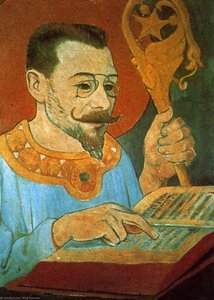
Paul Sérusier, a pivotal figure in the evolution of modern art, was born on November 9th, 1864, in the heart of Paris. His early life, steeped in the cultural richness of the capital, laid the foundation for his unique artistic vision. He hailed from a family of considerable means, affording him access to a privileged education that included studies at the Lycée Condorcet, a renowned institution known for its emphasis on philosophy and classical learning. This academic grounding, combined with a keen observation of the world around him, would profoundly shape his approach to art. Sérusier’s father, a successful businessman involved in the perfume industry, initially envisioned a career for his son within commerce, but Paul's passionate desire to pursue painting quickly led him to enroll at the Académie Julian in 1885. This institution, offering an alternative to the more rigid structure of the École des Beaux-Arts, proved instrumental in nurturing his talent and introducing him to a vibrant community of artists. It was during this period that he encountered figures like Maurice Denis, who would become a lifelong friend and influential mentor, shaping Sérusier’s understanding of artistic principles and inspiring his experimentation with color and form.
The Pont-Aven Years: Cloisonnism and the Nabis
The summer of 1888 marked a transformative period in Sérusier's artistic development – his sojourn to Pont-Aven, a picturesque village nestled in Brittany. This location became a hub for artists seeking inspiration amidst the rugged beauty of the landscape and the close-knit community fostered by Paul Gauguin. Under Gauguin’s guidance, Sérusier embarked on a groundbreaking exploration of cloisonnism, a technique characterized by bold, flat forms delineated by dark outlines – essentially painting within compartments or “cloisons.” This approach, radically different from the prevailing Impressionist style, allowed him to distill his observations into their most essential elements. His seminal work, *Bois d’Amour* (1888), exemplifies this innovative technique, capturing the essence of the Breton landscape through simplified shapes and vibrant, unmodulated colors. Crucially, it was during this time that Sérusier encountered Émile Bernard, with whom he engaged in intense discussions about art theory and practice. Together, they formed a core group within the nascent Nabis movement – “The Prophets” – alongside figures like Pierre Bonnard and Maurice Denis. The Nabis sought to move beyond mere representation, aiming instead to express emotions and spiritual truths through color, form, and symbolism.
Developing Abstract Vision: Synthetism and Beyond
Building upon the principles of cloisonnism and influenced by Bernard’s explorations of Symbolist ideas, Sérusier continued to refine his artistic language throughout the 1890s. He began experimenting with synthetism, a style that prioritized the use of color as an independent expressive element, often divorced from realistic depiction. This shift towards abstraction was not merely a stylistic choice but reflected a deeper philosophical inquiry into the nature of perception and experience. Sérusier’s paintings during this period—works like *L'Averse* (1893) and *Melancholy* (1890)—demonstrate his increasing willingness to challenge traditional artistic conventions, employing flattened forms, bold color palettes, and a deliberate simplification of subject matter. His later works, such as *The Snake Eaters* (1894), further solidified his position as a pioneer of abstract art, pushing the boundaries of representation and exploring the expressive potential of pure form and color.
Legacy and Influence
Paul Sérusier’s impact on the development of modern art is undeniable. His innovative techniques—particularly cloisonnism and synthetism—served as crucial stepping stones for subsequent generations of artists. He played a pivotal role in shaping the Nabis movement, fostering a spirit of experimentation and challenging established artistic norms. Beyond his direct contributions to painting, Sérusier’s influence extended to the realm of art theory, as evidenced by his publication of *ABC de la peinture* (1921), a seminal work that explored fundamental principles of color and composition. He also served as an instructor at the École Ranson, further disseminating his ideas and inspiring a new cohort of artists. Paul Sérusier’s legacy endures not only through his remarkable body of paintings but also through his pioneering spirit and his unwavering commitment to artistic innovation. His work continues to resonate with viewers today, offering a glimpse into the transformative power of abstraction and the enduring quest for expressive truth in art.



 Переглянути в інтер'єрі
 Купити картину ручної роботи
 Надіслати
 Поділитися
 Деталі
 Посібник

 Завантажити
 Схожі предмети колекціонування
 Рентгенівське дослідження
 Слайд-шоу
 Статистика переглядів


 Читати далі






































 Скляний варіант доступний лише для розмірів до 110 см