Переглянути в інтер'єріПереглянути в інтер'єрі Перегляд в ARПерегляд в AR Замовити репродукцію ручної роботи Замовити репродукцію ручної роботиПерейти до цифрових зображень Перейти до цифрових зображень Надіслати як листівкуНадіслати як листівку
ДетальнішеДетальніше Додати до улюблених Додати до улюблених ЗавантажитиЗавантажити Схожі експонатиСхожі експонати Рентгенівське дослідженняРентгенівське дослідження Слайд-шоуСлайд-шоу СтатистикаСтатистика

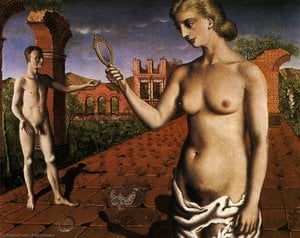
Pygmallion

Paul Delvaux’s surrealist masterpiece, Pygmallion, presents a captivating scene of a woman interacting with nude statues, embodying the dreamlike atmosphere characteristic of the 1930s. Explore this iconic artwork and bring its enigmatic beauty into your space.

Пауло Девальва – бельгійський сюрреаліст, відомий своїми загадковими сценами, класичними фігурами та моторошними пейзажами. Відкрийте для себе його унікальне мистецтво та світ мрій!

Гікле / Художній принт

Музейна якість друку جيкле або на полотні з оперативним виготовленням та різноманітними варіантами фінішної обробки. (Замовити репродукцію ручної роботи Замовити репродукцію ручної роботиПерейти до цифрових зображень Перейти до цифрових зображень)

P118B $10
P118H $10
P118W $10
P438Z $10
P508JH $12
P508YH $12
P805H $10
P805Z $10
P919BZ $10
P919G $10
P919XJ $10
P959ZH $10
P968JZ $12
W106C $8
W218G $10
W218JH $8
W218Y $10
W307PJ $10
W316G $10
W316PJ $8
W316Y $10
W398PJ $8
W4111J $10
W500HY $15
W500JH $15
W692G $12
W849H $8
W940BG $15
W953PJ $8

Стандартний розмір
індивідуальний
CM
INCH

Обирайте з наших стандартних розмірів, що відповідають оригінальним пропорціям твору мистецтва.

ширина
висота

Ви можете вказати власні розміри, щоб репродукція ідеально підійшла до конкретної рами або інтер'єру. Якщо обраний вами розмір не відповідає пропорціям оригіналу, ми або обріжемо полотно, або розширимо зображення за допомогою дзеркального відображення чи суцільної заливки країв. Перед початком виробництва вам буде надіслано цифровий макет для затвердження.
Будь ласка, зверніть увагу, що попередній перегляд на екрані не відображає фактичне обрізання або розширення. Тільки макет точно покаже фінальну композицію.
Хоча можливість замовлення індивідуальних розмірів доступна, ми рекомендуємо обирати формат із попередньо визначеного списку, щоб зберегти оригінальні пропорції.

Доставка по всьому світу () за 2 тижні замість стандартних 4/5 тижнів. (11 Вересень)

why_choose_icon
Безкоштовна експрес-доставка по всьому світу
why_choose_icon
Високоякісне лляне полотно
why_choose_icon
Повне страхове покриття доставки
why_choose_icon
Гарантія відшкодування митних зборів
why_choose_icon
Гарантія точного відтворення кольорів
why_choose_icon
Політика повернення протягом 100 днів (тільки у разі виявлення дефектів)
why_choose_icon
Гарантія повернення 100% коштів
why_choose_icon
Пропозиція на оптові замовлення

Загальна вартість

$ 68

reproduction

Pygmallion

Гікле / Художній принт

Розмір репродукції

-

Підсумкова вартість

$ 68

Основна інформація

  • Title: Pygmallion
  • Dimensions: 117 x 147 cm
  • Subject or theme: Nudity, fantasy
  • Year: 1939
  • Influences:
    • Greek art
    • Verne
  • Artistic style: Dreamscape realism
  • Artist: Paul Delvaux

Paul Delvaux's "Pygmalion": A Surrealist Echo of Desire and Sculpture

Paul Delvaux’s 1939 painting, “Pygmalion,” is more than just a depiction of a woman interacting with statues; it’s a meticulously crafted exploration of desire, the unsettling beauty of the uncanny, and the enduring power of classical myth. Measuring 117 x 147 cm, this surrealist masterpiece immediately draws the viewer into its enigmatic world, populated by figures rendered in Delvaux's signature style – a precise, almost photographic realism that simultaneously elevates and distorts reality. The scene unfolds within a dimly lit interior, suggesting a studio or perhaps a private chamber, where the woman’s presence is both alluring and profoundly unsettling. Her posture, ambiguous between invitation and restraint, invites speculation about her intentions and the nature of her relationship with the two imposing nude statues flanking her.

  • Subject Matter: The painting directly references the Greek myth of Pygmalion, a sculptor who fell in love with one of his own creations – Galatea. Delvaux’s interpretation subverts this narrative, presenting a contemporary woman engaging with sculpted male figures, blurring the lines between creator and creation, desire and objectification.
  • Style & Technique: Delvaux was a master of meticulous detail, employing a technique that anticipates photorealism while firmly rooted in Surrealist principles. The smooth surfaces, sharp edges, and precise rendering of textures – from the woman’s skin to the cold stone of the statues – create an intensely realistic effect that is deliberately destabilizing.

The Weight of Symbolism: Classical Allusions and Modern Anxiety

“Pygmalion” resonates with a complex layering of symbolism, drawing heavily from classical mythology while simultaneously reflecting the anxieties and uncertainties of the interwar period. The statues themselves represent idealized masculinity – powerful, imposing, and ultimately unattainable. Their nudity is not merely anatomical; it’s symbolic of vulnerability and exposure, mirroring the woman's own potential fragility within this charged scene. The presence of other figures in the background—a man on the left and another on the right—adds to the sense of unease and suggests a voyeuristic element, further complicating the narrative. Delvaux expertly utilizes these elements to evoke a feeling of psychological tension, prompting viewers to confront their own desires and anxieties about beauty, power, and representation.

Historical Context: Surrealism in the 1930s

Created in 1939, “Pygmalion” emerged during a pivotal moment in art history – the height of Surrealism. Following the devastation of World War I and the rise of totalitarian regimes, artists sought to challenge conventional notions of reality and explore the subconscious mind. Delvaux, though often resistant to rigid categorization, embraced the core tenets of Surrealism: dream imagery, irrational juxtapositions, and a fascination with the uncanny. His work reflects this broader movement’s interest in exploring the darker aspects of human psychology and questioning established social norms. The painting's stark realism within a surreal context is particularly characteristic of Delvaux's approach.

Emotional Impact & Artistic Value

“Pygmalion” possesses a haunting beauty that transcends its narrative complexity. It’s a work that lingers in the mind long after viewing, prompting contemplation about the nature of desire, identity, and the relationship between art and reality. This meticulously crafted reproduction captures not only the visual details of Delvaux's original but also the emotional depth and psychological intensity that make it such a significant piece of Surrealist art. Its enduring appeal makes it an ideal addition to any discerning collection or a captivating focal point for interior design, offering a glimpse into the visionary world of Paul Delvaux.


Біографія митця

A Dream Weaver: The Life and Art of Paul Delvaux

Paul Delvaux, a name synonymous with haunting beauty and unsettling mystery, was born in 1897 in the small Belgian village of Wanze – a place that would forever hold a profound influence on his artistic vision. His early life wasn’t one of grand ambition or privileged circumstance; instead, it was steeped in the contrasting realities of rigorous academic training alongside the fantastical worlds conjured by the literature of Jules Verne and Homer's *Odyssey*. This inherent duality – between order and imagination, discipline and dream – became the very foundation upon which his unique artistic style would be built. Initially steered towards a practical career in architecture by his parents, Delvaux found himself irresistibly drawn to painting, ultimately enrolling at the Académie Royale des Beaux-Arts in Brussels. While he struggled with the demanding mathematical aspects of architecture, the training instilled within him a remarkable mastery of perspective and form – skills that would later serve as the bedrock for the unsettling realism of his surrealist dreamscapes. His early works reflected this academic grounding, primarily landscapes painted in a post-impressionist style, yet even then, subtle hints of the peculiar atmosphere that would define his mature work began to emerge, foreshadowing the extraordinary visions he was destined to create.

The Seeds of Surrealism: De Chirico and Early Influences

The pivotal moment in Delvaux’s artistic journey arrived with his encounter with the paintings of Giorgio de Chirico. De Chirico's metaphysical works – stark, enigmatic scenes populated by shadows, classical architecture, and a pervasive sense of loneliness – resonated deeply within Delvaux’s soul, unlocking a new realm of possibilities. These images, imbued with an unsettling blend of beauty and melancholy, seemed to capture the hidden anxieties and desires lurking beneath the surface of reality. He began to populate his canvases with nude figures, often positioned against imposing architectural structures or set within vast, desolate landscapes – a deliberate departure from the traditional depictions of the human form. The influence of Flemish Expressionists like Constant Permeke and Gustave De Smet is also visible in this period, lending a certain somber intensity to his palette and brushwork, creating a mood that was both captivating and unnerving. However, Delvaux quickly moved beyond these influences, forging a style uniquely his own – a masterful synthesis of classical precision and dreamlike irrationality. His paintings began to evoke a sense of unease, a feeling that something unseen and perhaps unsettling lay just beneath the surface of perception.

Recurring Motifs and Symbolic Language

Delvaux’s artistic language is rich in symbolism, yet he consistently resisted attempts at straightforward psychoanalytic interpretation. The female nude, a recurring motif throughout his oeuvre, often appears passive or melancholic, embodying both desire and vulnerability – a poignant reflection of the complexities of human emotion. Trains and railway stations frequently appear as symbols of transition, displacement, and the anxieties associated with modernity—a visual representation of journeys both literal and metaphorical. Skeletons, far from being morbid emblems of death, represent a haunting presence, a subtle reminder of mortality that permeates even the most idyllic scenes. Classical architecture provides a backdrop of order and permanence, yet it is often rendered strangely distorted or incomplete, suggesting a fragility beneath its imposing facade. These elements are not merely decorative; they are integral to the emotional and psychological impact of his work, contributing to the overall sense of mystery and unease that characterizes his art. The artist himself explained that his imagery stemmed from deeply personal memories and impressions, particularly those from his youth, rather than conscious attempts to decode the subconscious—a testament to the power of lived experience in shaping artistic vision.

A Youthful Palette: Influences and Early Works

Delvaux’s childhood experiences played a crucial role in shaping his artistic style and thematic concerns. His early summers spent at the house shared by his four aunts, each adorned with elaborate lace collars and corsets, provided a rich source of visual inspiration—a world of delicate beauty juxtaposed against the underlying anxieties of societal expectations. The encounter with a grinning skeleton at school, a seemingly insignificant event, became a potent symbol in his later work, representing mortality and the fragility of human existence. Furthermore, his fascination with Homer’s *Odyssey* instilled within him a love for epic narratives and timeless themes—a desire to explore universal human experiences through the lens of myth and legend. These youthful impressions, fixed once and for all in the mind, profoundly influenced his artistic trajectory, shaping his recurring motifs and contributing to the distinctive atmosphere of his paintings.

Legacy and Recognition

Throughout his long and distinguished career, Paul Delvaux remained a singular figure in the art world—a master of his own unique style and vision. While briefly associated with the Surrealist movement, he maintained a degree of independence, resisting strict adherence to its tenets. His paintings continue to captivate audiences with their haunting beauty and enigmatic atmosphere, attracting collectors and scholars alike. Major works such as *Night Train*, *Sleeping Venus*, and *Grise City* are held in prominent museums around the world—testaments to his enduring artistic legacy. Delvaux’s influence can be seen in the work of numerous contemporary artists who explore themes of memory, desire, and the subconscious—a testament to the timelessness of his vision. The Paul Delvaux Museum in Saint-Idesbald, Belgium, stands as a poignant reminder of his lasting impact, housing the world's largest collection of his work and offering visitors a unique opportunity to immerse themselves in the captivating realm of his imagination. His art continues to provoke thought, inspire emotion, and remind us of the enduring power of dreams and nightmares.

Павло Девальв

Павло Девальв

1897 - 1994 , Бельгія

Короткі факти

  • Artistic Movement Or Style: Сюрреалізм
  • Artists Or Movements Influenced By This Artist: ['Нові сюрреалісти']
  • Artists Who Influenced This Artist:
    • Джордж де Чиріко
    • Рене Магритт
  • Date Of Birth: 23 вересня 1897
  • Date Of Death: 20 липня 1994
  • Full Name: Paul Delvaux
  • Nationality: Бельгієць
  • Notable Artworks:
    • Ніч потягу
    • Спляча Венера
    • Літо
    • Сіра місто
  • Place Of Birth: Ванзе, Бельгія
Досліджуйте твори мистецтва, впорядковані за темами, стилями та характеристиками.