Біографія митця
Early Life and the Shadow of War
Wilhelm Heinrich Otto Dix, born in 1891 in Untermhaus, Germany, emerged from a world steeped in industrial labor and quiet artistic yearning. His father, Franz Dix, was an iron foundry worker – a life of physical toil, while his mother, Louise, possessed a poetic spirit, creating a domestic landscape that subtly nurtured young Otto’s creative inclinations. Crucially, it was the influence of his cousin, Fritz Amann, the painter, that truly ignited Dix's ambition. Hours spent in Amann’s studio weren’t merely lessons in technique; they were an immersion into a world where artistic expression held tangible power – a realm far removed from the clang and grime of the foundry. This early exposure led to an apprenticeship with Carl Senff, a respected local painter, followed by studies at the Kunstgewerbeschule (School of Applied Arts) in Dresden. Initially focused on applied arts—decorative design and craftsmanship—Dix’s artistic inclinations soon steered him towards fine painting, though he found himself initially somewhat constrained by the school's emphasis on practical skills rather than purely aesthetic pursuits. However, it was the cataclysm of World War I that irrevocably shaped Dix’s artistic trajectory. Driven by a youthful idealism and a desire to serve his country, he volunteered for military service in 1914, experiencing the brutal realities of trench warfare firsthand – a trauma that would haunt his work for decades to come. The horrors witnessed during battles like the Somme and in Flanders left an indelible mark on his soul, transforming him from a promising landscape painter into a chronicler of human suffering and societal decay. He documented not heroic victories, but the mud, the blood, and the shattered lives of young men caught in a senseless conflict.
The Weimar Republic and Neue Sachlichkeit
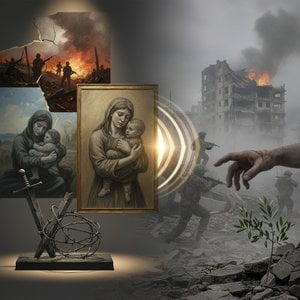
Returning from the war profoundly changed Otto Dix. The romanticized notions of heroism and glory were shattered, replaced by a stark realism that reflected the devastation he had witnessed. He channeled his experiences into unflinching depictions of the aftermath – not just the physical wounds of soldiers, but also the psychological scars and the moral bankruptcy of a society struggling to rebuild itself after years of conflict. His early post-war work initially leaned towards Expressionist tendencies—characterized by distorted forms, intense colors, and emotional intensity—but he soon gravitated toward a new aesthetic: *Neue Sachlichkeit* (New Objectivity). This movement, emerging in the 1920s, rejected emotional abstraction in favor of stark realism, precise observation, and critical social commentary. Dix became one of its leading figures alongside George Grosz and Max Beckmann – artists who shared his desire to confront viewers with uncomfortable truths about German society. Paintings like *The Trench* (1923) caused public outrage; the graphic portrayal of dismembered bodies, rendered with unsettling detail, forced museums to hide the work from view for extended periods. This wasn’t merely shock value; it was a deliberate attempt to strip away any romanticized notions of war and expose the brutal reality of its consequences. Dix didn't shy away from depicting the physical and psychological wounds inflicted upon soldiers – the missing limbs, the vacant stares, the lingering trauma. He also turned his gaze toward the excesses and moral decay of Weimar Germany—a society grappling with economic instability, political extremism, and rampant consumerism. *Metropolis* (1928), a monumental painting depicting a chaotic urban landscape filled with prostitutes, gamblers, and corrupt officials, is a scathing indictment of this era. His portraits from this period are equally unflinching, capturing the cynicism and decadence of the elite – often portraying them as grotesque caricatures of wealth and privilege.
Political Turmoil and Artistic Evolution
As the political climate in Germany deteriorated throughout the 1930s—marked by rising extremism and increasing persecution—Otto Dix found himself increasingly targeted by the Nazi regime. His art, with its critical social commentary and unflinching realism, was deemed “degenerate” – a term used to label works considered racially or culturally inferior. In 1933, he was dismissed from his teaching position at the Dresden Academy of Fine Arts, effectively ending his career as an educator. Facing censorship and persecution, Dix made a strategic decision to shift away from overtly political themes, focusing instead on landscapes and religious subjects – a move designed to protect himself and his work from further scrutiny. However, even these later works retained a sense of underlying tension and unease—a reflection of the turbulent times he had endured. During World War II, Dix was conscripted into the German army once more, an experience that deepened his anti-war sentiments and reinforced his disillusionment with humanity. Despite the hardships he faced, Dix continued to create art throughout his life, producing a prolific body of work that spanned various styles and subject matter.
Legacy and Artistic Significance
Otto Dix’s artistic legacy is profound and enduring. He remains one of the most important German painters of the 20th century—renowned for his uncompromising realism, searing social critique, and unflinching portrayal of human suffering. His influence can be seen in the work of subsequent generations of artists who have sought to confront difficult truths and challenge societal norms. Dix’s ability to blend technical skill with emotional intensity is particularly noteworthy; he wasn't simply documenting reality—he was interpreting it through a lens of profound empathy and moral outrage. His exploration of themes such as war, trauma, social injustice, and the human condition continues to resonate with audiences today. He demonstrated that art could be both aesthetically powerful and politically engaged – a potent force for social change. Dix’s work is featured in major museums worldwide—including the Museum of Modern Art in New York and the Suermondt-Ludwig-Museum in Germany—and his etchings, particularly *The War*, are considered masterpieces of graphic art. He remains a pivotal figure in understanding the artistic and social landscape of Weimar Germany – a period marked by both unprecedented creativity and profound instability. His legacy serves as a stark reminder of the horrors of war and the fragility of human existence – a testament to his courage, vision, and unwavering commitment to truth.



 Переглянути в інтер'єрі
 Купити картину ручної роботи
 Надіслати
 Поділитися
 Деталі
 Посібник

 Завантажити
 Схожі предмети колекціонування
 Рентгенівське дослідження
 Слайд-шоу
 Статистика переглядів
 Читати далі






































 Скляний варіант доступний лише для розмірів до 110 см