


Музейна якість друку جيкле або на полотні з оперативним виготовленням та різноманітними варіантами фінішної обробки. ( Замовити репродукцію ручної роботи Купити цифрове зображення)





























Обирайте з наших стандартних розмірів, що відповідають оригінальним пропорціям твору мистецтва.

Ви можете вказати власні розміри, щоб репродукція ідеально підійшла до конкретної рами або інтер'єру. Якщо обраний вами розмір не відповідає пропорціям оригіналу, ми або обріжемо полотно, або розширимо зображення за допомогою дзеркального відображення чи суцільної заливки країв. Перед початком виробництва вам буде надіслано цифровий макет для затвердження.
Будь ласка, зверніть увагу, що попередній перегляд на екрані не відображає фактичне обрізання або розширення. Тільки макет точно покаже фінальну композицію.
Хоча можливість замовлення індивідуальних розмірів доступна, ми рекомендуємо обирати формат із попередньо визначеного списку, щоб зберегти оригінальні пропорції.
Доставка по всьому світу () за 2 тижні замість стандартних 4/5 тижнів. (7 Вересень)


Two Silver Birches, the Front One Fallen, c. 1629
Розмір репродукції
Nicolas Poussin's “Two Silver Birches, the Front One Fallen,” painted circa 1629, isn’t merely a depiction of trees; it’s a carefully constructed meditation on mortality, harmony, and the enduring power of classical ideals. Emerging from his formative years in France and culminating in his profound immersion within the Roman artistic landscape, Poussin sought to synthesize the sensual richness of Venetian painting with the rigorous order and intellectual depth of antiquity. This work, created during a pivotal period of his career, exemplifies this ambition – a quiet yet profoundly resonant scene that speaks volumes about the artist’s evolving philosophy.
The painting immediately draws the eye with its stark simplicity. Two birch trees dominate the composition, their silvery bark rendered with an almost luminous quality. The tree on the right stands tall and proud, branches reaching skyward as if in defiant grace, while its counterpart lies prone at the base of the canvas, a fallen sentinel marking the passage of time. The absence of leaves is deliberate; it strips away the seasonal distractions, focusing instead on the skeletal beauty of the trees themselves – a motif frequently associated with death and remembrance within classical art. This reduction to essential form allows Poussin to explore the underlying structure of nature, mirroring his broader interest in geometric principles and mathematical harmony.
Poussin’s technique is characterized by an exquisite control of line and light. He employs a meticulous layering of thin washes of paint – a hallmark of his style – to build up the forms with remarkable precision. The branches, particularly those of the upright birch, are delineated with delicate, almost hesitant strokes, creating a sense of movement and vulnerability. The fallen tree is rendered with a slightly heavier touch, suggesting its weight and the inevitability of decay. Light plays a crucial role in shaping the scene; it seems to emanate from an unseen source, bathing the trees in a soft, diffused glow that enhances their silvery sheen. This masterful manipulation of light not only creates visual beauty but also imbues the painting with a sense of spiritual depth.
Noticeably, Poussin includes a human figure – a small, dark silhouette standing near the base of the fallen tree. The identity and purpose of this figure remain deliberately ambiguous, adding another layer of complexity to the work. Some scholars interpret it as representing contemplation or perhaps even mourning, while others see it as a symbol of humanity’s relationship with nature—a witness to its cycles of growth and decline. The figure's presence subtly anchors the scene in the realm of human experience, reminding us that even within the grandeur of the natural world, we are confronted by our own mortality.
The birch tree itself carries a rich symbolic weight throughout Western art history. Often associated with purity, resilience, and the afterlife, it frequently appears in funerary monuments and depictions of mourning. Its slender form and delicate branches evoke images of fragility and vulnerability, while its ability to withstand harsh winters speaks to an enduring spirit. Poussin’s choice of birch trees aligns perfectly with his engagement with classical themes – particularly those found in Roman mythology and literature, where the tree frequently served as a symbol of transition and renewal.
Furthermore, the fallen tree can be interpreted as a representation of *memento mori*—a reminder of death. This concept was central to Renaissance art, serving as a powerful tool for prompting reflection on the transience of earthly life. Poussin’s painting, therefore, transcends mere botanical observation; it becomes a poignant meditation on the cyclical nature of existence and the inevitability of loss. The composition invites us to contemplate our own place within this grand scheme, fostering a sense of both melancholy and acceptance.
WahooArt offers meticulously crafted hand-painted reproductions of “Two Silver Birches, the Front One Fallen,” allowing you to bring this iconic work into your home or office. Our artists replicate Poussin’s delicate brushwork and masterful use of light with unparalleled precision, ensuring that every detail is faithfully reproduced. Whether you are an art enthusiast, a collector seeking to expand your collection, or an interior designer searching for a touch of classical elegance, our reproductions provide a beautiful and authentic representation of this timeless masterpiece. Experience the profound beauty and intellectual depth of Poussin’s vision – a moment frozen in time, brought vividly back to life.


1594 - 1665 , Франція

Explore the rich history of trees in painting! Discover symbolism, Romantic masterpieces by Caspar David Friedrich & beyond. A curated journey for art enthusiasts.
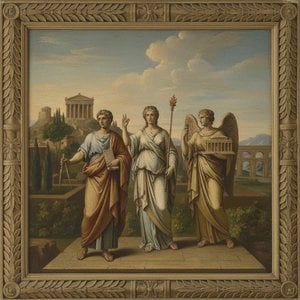
Explore the life & work of Nicolas Poussin, a master of French Classicism. Discover his allegorical paintings, Roman influences, and enduring impact on art history. Expert analysis & insights.

Відкрийте для себе 10 шедеврів романтичного пейзажу! Каспар Давид Фрідріх, Тернер та інші майстри. Історія мистецтва, емоційні кольори природи та ідеї декору з WahooArt.com. Дослідіть колекцію онлайн!

Відкрийте для себе 25 найкращих шедеврів Джона Констебла! Англійські пейзажі, романтизм та емоційне світло в живописі. Репродукції картин високої якості для вашого дому від WahooArt.com. Дослідіть повну колекцію онлайн!

Explore the rich history of landscape art with WahooArt. Discover renowned artists, movements like Impressionism & Romanticism, and expert guidance for collecting timeless pieces. Find your perfect serene escape today!

 Переглянути в інтер'єрі
 Надіслати як листівку
 Поділитися
 Детальніше

 Завантажити
 Схожі експонати
 Рентгенівське дослідження
 Слайд-шоу


 Читати далі







 Скляний варіант доступний лише для розмірів до 110 см


