БЕЗКОШТОВНА КОНСУЛЬТАЦІЯ З МИСТЕЦТВА

x
Замовити друк Замовити друкКупити цифрове зображення Купити цифрове зображення НадіслатиНадіслати
DetailsDetails Додати до улюблених Додати до улюблених ЗавантажитиЗавантажити Схожі виробиСхожі вироби X-RayX-Ray Слайд-шоуСлайд-шоу

Confirmation

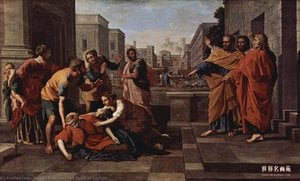
Experience Nicolas Poussin’s masterful Baroque depiction of Confirmation—a serene tableau echoing the Last Supper—infused with classical elegance and profound spiritual symbolism. Explore this iconic artwork and bring timeless beauty into your home.

Нікола Пуссін | Національний музей мистецтва України

Олійная репродукція ручної роботи

Написана вручну олією на полотні у вашому розмірі та рамі, виготовлена на замовлення нашими художниками.

P118B $10
P118H $10
P118W $10
P438Z $10
P508JH $12
P508YH $12
P805H $10
P805Z $10
P919BZ $10
P919G $10
P919XJ $10
P959ZH $10
P968JZ $12
W106C $8
W218G $10
W218JH $8
W218Y $10
W307PJ $10
W316G $10
W316PJ $8
W316Y $10
W398PJ $8
W4111J $10
W500HY $15
W500JH $15
W692G $12
W849H $8
W940BG $15
W953PJ $8

Standard
custom
CM
INCH

Обирайте з наших стандартних розмірів, що відповідають оригінальним пропорціям твору мистецтва.

ширина
висота

Ви можете вказати власні розміри, щоб репродукція підійшла до конкретної рами або інтер'єру. Якщо вибраний вами розмір не відповідає пропорціям оригіналу, ми або обріжемо полотно, або доповнимо картину додатковими елементами, промальованими вручну. Цифровий макет буде надіслано вам на затвердження перед початком виробництва.
Зверніть увагу, що попередній перегляд на екрані не відображає фактичне обрізання або розширення зображення. Тільки макет точно покаже остаточну композицію.
Хоча ми можемо виготовити виріб у нестандартному розмірі, для збереження оригінальних пропорцій рекомендуємо обирати варіанти зі встановленого списку.

Приклади можливих змін: замінити обличчя на фото клієнта; додати домашню тварину (наприклад, замінити кота на собаку); додати приховане повідомлення на фоні; змінити ландшафт або елементи фону.
Після оформлення замовлення команда WahooArt.com зв'яжеться з клієнтом електронною поштою для отримання інструкцій та надасть попередній макет

Доставка по всьому світу () за 3–4 тижні замість стандартних 5 тижнів. (1 Липень). Без жодних компромісів у якості.

why_choose_icon
Безкоштовна експрес-доставка по всьому світу
why_choose_icon
Високоякісне лляне полотно
why_choose_icon
Повне страхове покриття доставки
why_choose_icon
Гарантія відшкодування митних зборів
why_choose_icon
Гарантія точного відтворення кольорів
why_choose_icon
Політика повернення протягом 60 днів (лише у разі виявлення дефектів)
why_choose_icon
Гарантія повернення 100% коштів
why_choose_icon
Знижка на багатоелементні замовлення

Загальна вартість

-

reproduction

Confirmation

Матеріал репродукції

Розмір репродукції

-

Підсумкова ціна

-

Основні факти

  • Artistic style: Classical restraint
  • Subject or theme: Sacrament of Confirmation
  • Dimensions: 117 x 178 cm
  • Movement: Baroque
  • Influences: Italian Renaissance
  • Medium: Oil on canvas
  • Year: 1645

Опис твору

Confirmation by Nicolas Poussin: A Testament to Faith and Classical Idealism

Nicolas Poussin’s “Confirmation,” completed in 1645, stands as an emblem of the High Baroque period's pursuit of sublime beauty—a masterful distillation of classical principles infused with profound religious contemplation. This monumental canvas, housed alongside its companions at the National Gallery in London, transcends mere depiction; it strives to convey a spiritual experience, capturing the solemnity and grace inherent in this sacrament.

Historical Context: Cassiano del Pozzo’s Vision

The genesis of “Confirmation” lies within the ambitious project undertaken by Cassiano del Pozzo, an Italian humanist scholar and influential patron of the arts. Recognizing the power of visual representation to communicate theological concepts, Del Pozzo commissioned Poussin to create a series of seven paintings illustrating the sacraments of the Catholic Church—a bold undertaking designed to elevate spiritual understanding amongst his aristocratic circle. This commission reflects the broader intellectual climate of the time, where humanist ideals wrestled with religious dogma, resulting in artworks that sought to harmonize both disciplines. The subsequent sale of the series to the Dukes of Rutland solidified its legacy as a cornerstone of Baroque art history.

Artistic Significance: Echoes of the Last Supper

Poussin’s genius resides in his ability to reinterpret biblical narratives through the lens of classical aesthetics—specifically, the iconography of the Last Supper. Like Michelangelo's fresco in St Peter's Basilica, “Confirmation” employs a pyramidal composition, anchoring Jesus Christ at its apex and radiating outwards towards the disciples gathered around the altar table. This deliberate structuring mirrors the architectural grandeur of Roman temples, emphasizing stability and divine authority. The meticulous attention to detail—the drapery folds, the expressions on the faces of the figures, the subtle interplay of light and shadow—demonstrates Poussin’s unparalleled mastery of technique.

Technique: Oil Paint on Canvas – A Symphony of Color and Texture

Poussin employed a traditional oil painting method characterized by painstaking layering and blending of pigments. He achieved remarkable luminosity through glazing techniques, allowing colors to subtly shimmer beneath translucent washes—a hallmark of Baroque artistry. The smooth texture of the canvas surface contributes to the overall impression of serenity and refinement, reflecting Poussin’s unwavering commitment to classical ideals of beauty. Careful observation reveals subtle nuances in color palette – earthy browns and ochres dominate, punctuated by creamy whites and muted reds – creating a harmonious visual experience that evokes the grandeur of antiquity.

Symbolism: Faith Illuminated

Beyond its formal brilliance, “Confirmation” is laden with symbolic significance. The altar table represents God’s presence and divine grace, while the kneeling figures embody humility and devotion. Jesus Christ's central position underscores his role as mediator between humanity and divinity—a core tenet of Christian faith. Furthermore, the scene encapsulates the transformative power of sacraments, symbolizing spiritual renewal and enlightenment.

Emotional Impact: A Moment Frozen in Time

“Confirmation” transcends mere representation; it aspires to evoke a feeling of profound reverence and contemplation. The dramatic chiaroscuro lighting casts shadows that heighten the emotional intensity of the scene, focusing attention on Jesus’ face—a gesture of compassion and reassurance. Viewing this artwork inspires awe and invites reflection upon themes of faith, piety, and the enduring beauty of classical art. It serves as a powerful reminder of Poussin's ability to capture not just what he saw but also what he felt – a testament to his artistic vision and its lasting impact on generations of artists.

Схожі витвори мистецтва

Нікола Пуссен - Свято Крещения
Нікола Пуссен
Свято Крещения
Нікола Пуссен - Підтвердження
Нікола Пуссен
Підтвердження
Нікола Пуссен - The Seven Sacraments, Marriage
Нікола Пуссен
The Seven Sacraments, Marriage
Нікола Пуссен - The Seven Sacraments, Confirmation
Нікола Пуссен
The Seven Sacraments, Confirmation

Біографія митця

Nicolas Poussin: A Life Steeped in Classical Reverie

Nicolas Poussin, a name synonymous with the grandeur of French Baroque painting, was nonetheless a soul deeply rooted in Italian soil for much of his artistic life. Born in Le Havre, Normandy, in June 1594, his early years remain somewhat veiled in mystery, yet they undoubtedly laid the foundation for a career that would become pivotal in shaping the classical tradition within French art. Though he briefly studied in Paris during the early 1610s, absorbing influences from lesser-known artists of the time, it was his journey to Rome in 1624 that truly ignited his artistic destiny. This wasn’t merely a geographical relocation; it was an immersion into the heart of antiquity, a pilgrimage to the very source of inspiration that would define his aesthetic vision. Poussin's initial forays into painting were marked by a sensuous quality reminiscent of Venetian masters like Titian, yet even in these early works, a nascent sense of order and intellectual rigor began to emerge—a foreshadowing of the style he would so masterfully refine.

Early Artistic Development & Parisian Influences

Nicolas Poussin’s formative years were spent honing his craft in Le Havre, where he studied with Quentin Varin, a respected artist who instilled in him an appreciation for meticulous observation and skillful execution. His early paintings demonstrated a fascination with Venetian color palettes and techniques—a stylistic echo of the artistic fervor that characterized Venice at the time. However, even amidst this initial exuberance, Poussin’s burgeoning intellect recognized the limitations of purely decorative pursuits. He sought to elevate his art beyond mere visual spectacle, striving for a deeper engagement with philosophical concepts and historical narratives. His Parisian studies provided exposure to emerging trends in artistic thought, fostering connections with fellow artists who championed humanist ideals—a crucial step toward shaping his distinctive worldview.

The Roman Years: Forging a Classical Ideal

Rome proved to be more than just a studio for Poussin; it became his intellectual crucible. He found himself amidst a vibrant circle of scholars, archaeologists, and fellow artists, notably Cassiano dal Pozzo, whose profound understanding of classical antiquity profoundly influenced the artist’s approach. Dal Pozzo's dedication to meticulously documenting ancient remains instilled in Poussin a deep respect for historical accuracy and a desire to imbue his paintings with a sense of timelessness. This period saw Poussin move away from the flamboyant exuberance of some of his contemporaries, instead embracing a style characterized by clarity, balance, and a deliberate emphasis on linear composition. He meticulously studied Raphael’s works, absorbing their harmonious arrangements and graceful forms—a formative experience that would shape his artistic sensibilities for decades to come. Simultaneously, he drew inspiration from ancient sculptures and literary sources like Ovid's *Metamorphoses*, recognizing the power of myth and allegory to convey profound truths about human existence.

A Style Defined by Order & Harmony

Poussin’s distinctive style—a hallmark of French Classicism—was characterized by a remarkable restraint and precision. He eschewed dramatic gestures and emotional displays, favoring instead carefully constructed landscapes populated with idealized figures rendered in luminous colors. His compositions were governed by strict geometric principles—often employing pyramidal structures to convey stability and grandeur—reflecting the influence of Renaissance humanist thought. Unlike many Baroque painters who prioritized spectacle, Poussin sought to capture not merely what he saw but what he believed—a testament to his unwavering commitment to intellectual rigor and artistic integrity. His meticulous attention to detail—particularly in depicting drapery folds and architectural elements—demonstrated an unparalleled mastery of technique.

Legacy & Influence: Shaping French Art

Despite spending the majority of his career abroad, Nicolas Poussin’s impact on French art was undeniable. He briefly returned to Paris in 1640 at the behest of Cardinal Richelieu, appointed as First Painter to the King—a position that afforded him considerable prestige and patronage but also imposed constraints upon his creative freedom. However, he soon retreated to Rome, where he continued to paint until his death in 1665—a final pilgrimage to the birthplace of Western art. His dedication to classical ideals served as a beacon for subsequent generations of French artists—influencing figures like Jacques-Louis David and Paul Cézanne who championed a similar aesthetic vision. Artists recognized Poussin’s profound understanding of humanist philosophy and his unwavering commitment to artistic excellence, securing his place as one of the most revered masters of French Baroque painting and establishing him as an enduring symbol of classical beauty and intellectual contemplation.

Нікола Пуссен

Нікола Пуссен

1594 - 1665 , Франція

Короткі факти

  • Artistic Movement Or Style: Бароко, Класицизм
  • Artists Or Movements Influenced By This Artist:
    • Жак-Луї Давид
    • П’єр Сезан
  • Artists Who Influenced This Artist:
    • Рафаель
    • Тіціан
  • Date Of Birth: 1594
  • Date Of Death: 1665
  • Full Name: Nicolas Poussin
  • Nationality: Француз
  • Notable Artworks:
    • Зруйновання Єрусалимського Храму
    • Веніс подає зброю Енейсу
    • Хрещення Ісуса Христа
  • Place Of Birth: Ле Havre, Франція
Досліджуйте твори мистецтва, відсортовані за темами, стилями та характеристиками.