Mattia Preti: A Calabrian Knight of the Baroque
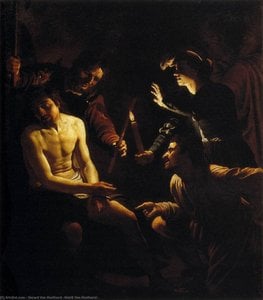
Mattia Preti, known as *Il Cavalier Calabrese* – the Calabrian Knight – stands as a pivotal figure in 17th-century Italian Baroque painting. Born in Taverna, Calabria, on February 24, 1613, his artistic journey was one of dynamic evolution, absorbing diverse influences and culminating in a uniquely expressive style that left an indelible mark on the art world, particularly in Malta where he would spend much of his later life. Preti’s early training began under Giovanni Battista Caracciolo, a painter deeply rooted in the Caravaggist movement. This foundational exposure instilled within him a profound understanding of dramatic chiaroscuro – the intense interplay of light and shadow – and a commitment to realistic depiction that would remain hallmarks of his work throughout his career. Before 1630, he joined his brother Gregorio in Rome, immersing himself in the artistic ferment of the city and studying the masters who defined the era: Caravaggio, Guercino, Rubens, Guido Reni, and Giovanni Lanfranco. This period was crucial, shaping not only his technical skills but also his aesthetic sensibilities.
Early Influences and Roman Development
Preti’s early artistic development wasn't merely imitation; it was a synthesis of influences, skillfully woven into a style distinctly his own. While initially steeped in Caravaggism – particularly the dramatic use of tenebrism and dynamic figures – he gradually moved beyond its strict confines, embracing the dynamism and emotional intensity that characterized the High Baroque. His time in Rome allowed him to study not only Caravaggio’s techniques but also those of other masters who shaped the artistic landscape of the era. He absorbed elements from Guercino's expressive brushwork, Rubens’ opulent color palettes, and Reni’s graceful compositions. This period was marked by a growing confidence and experimentation, as Preti began to develop his own unique visual language. He wasn’t simply copying his predecessors; he was learning from them, adapting their techniques to suit his own artistic vision. His early works in Rome, such as frescoes in the churches of Sant’Andrea della Valle and San Carlo ai Catinari, demonstrated an aptitude for large-scale decorative painting and a willingness to push the boundaries of traditional Baroque style.
A Style Forged in Naples
Forging a Dynamic Style
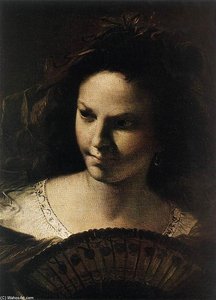
Preti’s artistic development wasn't merely imitation; it was a synthesis of influences, skillfully woven into a style distinctly his own. While initially steeped in Caravaggism, he gradually moved beyond its strict confines, embracing the dynamism and emotional intensity that characterized the High Baroque. His time in Naples further refined this evolution, exposing him to the vibrant work of Luca Giordano. This period saw Preti’s canvases swell with energetic movement, complex compositions, and a heightened sense of drama. He masterfully employed dramatic contrasts of light and shadow, inherited from Caravaggio, not simply as a technical device but as a means of intensifying emotional impact and guiding the viewer's eye. His figures are imbued with palpable emotion, conveyed through expressive faces and dynamic body language. This ability to evoke powerful feelings – piety, anguish, ecstasy – became a defining characteristic of his oeuvre. He wasn’t content merely to depict scenes; he sought to *animate* them, breathing life into biblical narratives and religious iconography.
Major Works and Commissions
Throughout his career, Preti received numerous commissions that showcased his versatility and artistic skill. He created impressive fresco cycles for Roman churches, demonstrating an aptitude for large-scale decorative painting. Some of his most ambitious – though sadly lost – works were the frescoes he painted on seven city gates in Naples depicting the Virgin or saints delivering people from the plague. Though only sketches remain today, they testify to the scale and impact of these monumental creations. These commissions weren’t simply about fulfilling a patron's request; they were opportunities for Preti to engage with the religious and cultural life of the communities he served, imbuing his art with meaning and purpose. His work at St. John’s Co-Cathedral in Valletta, however, stands as his most significant achievement – a testament to his artistic genius and unwavering dedication to the Baroque aesthetic.
The Maltese Zenith: St. John’s Co-Cathedral
It was in Malta, however, that Mattia Preti reached the pinnacle of his artistic achievement. Appointed a Knight of the Order of Saint John in 1660, he embarked on a transformative project: the complete redecoration of the interior of St. John’s Co-Cathedral in Valletta. This undertaking – arguably his most significant legacy – involved an astonishing series of paintings depicting the life and martyrdom of Saint John the Baptist. The sheer scale of the project is breathtaking; Preti essentially created a visual narrative that enveloped the viewer, immersing them in the story of the saint. The opulent Baroque setting provided the perfect canvas for his dramatic style, and the resulting artwork cemented his reputation as one of Europe’s leading painters. His work at St. John's wasn't merely decorative; it was an act of devotion, a testament to his faith, and a powerful expression of the Order’s religious identity.
A Lasting Legacy
Mattia Preti continued to receive commissions from across Europe following his success in Malta, solidifying his position as a leading figure in Italian Baroque art. He died in 1699, leaving behind a rich artistic legacy that continues to inspire and captivate audiences today. His masterful use of light and shadow, dynamic compositions, and ability to convey intense emotion remain hallmarks of his style. His contributions are preserved in museums such as the Capodimonte Museum in Naples, and through reproductions made available by platforms like WahooArt.com, ensuring that his art continues to reach new generations. The enduring impact of Preti’s work is perhaps most vividly felt within the walls of St. John's Co-Cathedral, a breathtaking testament to his artistic genius and unwavering dedication to the Baroque aesthetic. *Il Cavalier Calabrese* truly earned his title, not only as a knight but as a master painter who illuminated the world with his vision.
Useful Links
Useful Content
- Mattia Preti - Wikipedia: (See link above)



 Переглянути в інтер'єрі
 Купити картину ручної роботи
 Надіслати
 Поділитися
 Деталі
 Посібник

 Завантажити
 Схожі предмети колекціонування
 Рентгенівське дослідження
 Слайд-шоу
 Статистика переглядів


 Читати далі






































 Скляний варіант доступний лише для розмірів до 110 см