БЕЗКОШТОВНА КОНСУЛЬТАЦІЯ З МИСТЕЦТВА

x
Замовити репродукцію Замовити репродукціюКупити цифрове зображення Купити цифрове зображення НадіслатиНадіслати
ДеталіДеталі Додати до улюблених Додати до улюблених ЗавантажитиЗавантажити Схожі виробиСхожі вироби Рентгенівське дослідженняРентгенівське дослідження Слайд-шоуСлайд-шоу

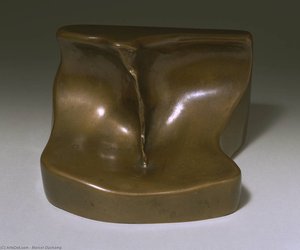
Sink Stopper

The artwork’s monochromatic gray hue emphasizes its textural qualities—the rough surface of aged metal—contrasting with the geometric simplicity of its form. Its inclusion in the Marcel Duchamp catalogue raisonné underscores its importance as a cornerstone of modern art.

Експериментальна картина Марселя Дюшана «Перехід Діви у Клітку» (1912) – новаторський приклад кубізму, що досліджує трансформацію та людську ідентичність через розірвані форми. Відкрийте для себе мистецьку революцію!

Гікле / Художній принт

Музейна якість друку جيкле або на полотні з оперативним виготовленням та різноманітними варіантами фінішної обробки.

P118B $10
P118H $10
P118W $10
P438Z $10
P508JH $12
P508YH $12
P805H $10
P805Z $10
P919BZ $10
P919G $10
P919XJ $10
P959ZH $10
P968JZ $12
W106C $8
W218G $10
W218JH $8
W218Y $10
W307PJ $10
W316G $10
W316PJ $8
W316Y $10
W398PJ $8
W4111J $10
W500HY $15
W500JH $15
W692G $12
W849H $8
W940BG $15
W953PJ $8

Standard
custom
CM
INCH

Обирайте з наших стандартних розмірів, що відповідають оригінальним пропорціям твору мистецтва.

ширина
висота

Ви можете вказати власні розміри, щоб репродукція ідеально підійшла до конкретної рами або інтер'єру. Якщо обраний вами розмір не відповідає пропорціям оригіналу, ми або обріжемо полотно, або розширимо зображення за допомогою дзеркального відображення чи суцільної заливки країв. Перед початком виробництва вам буде надіслано цифровий макет для затвердження.
Будь ласка, зверніть увагу, що попередній перегляд на екрані не відображає фактичне обрізання або розширення. Тільки макет точно покаже фінальну композицію.
Хоча можливість замовлення індивідуальних розмірів доступна, ми рекомендуємо обирати формат із попередньо визначеного списку, щоб зберегти оригінальні пропорції.

Доставка по всьому світу () за 2 тижні замість стандартних 4/5 тижнів. (3 Липень)

why_choose_icon
Безкоштовна експрес-доставка по всьому світу
why_choose_icon
Високоякісне лляне полотно
why_choose_icon
Повне страхове покриття доставки
why_choose_icon
Гарантія відшкодування митних зборів
why_choose_icon
Гарантія точного відтворення кольорів
why_choose_icon
Політика повернення протягом 60 днів (лише у разі виявлення дефектів)
why_choose_icon
Гарантія повернення 100% коштів
why_choose_icon
Знижка на багатоелементні замовлення

Загальна вартість

-

reproduction

Sink Stopper

Гікле / Художній принт

Розмір репродукції

-

Підсумкова ціна

-

Основні факти

  • Medium: Cast bronze
  • Artistic style: Documentary
  • Movement: Dada
  • Artist: Marcel Duchamp
  • Influences: Cubism
  • Title: Sink Stopper
  • Subject or theme: Utilitarian object

Вікторина з мистецтва

Для кожного питання є лише одна правильна відповідь.

Запитання 1:
What artistic movement is Marcel Duchamp primarily associated with?
Запитання 2:
The photograph depicts the sink stopper against what background color?
Запитання 3:
What is Duchamp's approach to art described as in the text?
Запитання 4:
The photograph highlights which aspect of the sink stopper's appearance?
Запитання 5:
Why was Fountain initially rejected by the Society of Independent Artists?

Опис експоната

Sink Stopper: A Reflection on Functionality and Artistic Provocation

Marcel Duchamp’s “Sink Stopper,” formally known as Bouche-Evier, stands as a deceptively simple yet profoundly influential artwork—a testament to the Dada movement's radical questioning of artistic conventions. Created in 1964, this unassuming porcelain urinal signed “R. Mutt” transcends its mundane origins to become an emblem of conceptual art and a cornerstone of twentieth-century intellectual history.

  • The Object Elevated: Duchamp’s genius lay not in crafting aesthetically pleasing visuals but in elevating the commonplace—a functional item from everyday life—to the realm of artistic consideration. As he famously declared, “The idea precedes the form,” encapsulating the core principle of Dada and challenging the traditional hierarchy between concept and execution.
  • Dada’s Critique of Tradition: The artwork emerged during a period of intense disillusionment with established artistic institutions following World War I. Dada artists rejected bourgeois values and embraced absurdity, aiming to dismantle accepted notions of beauty and originality. “Sink Stopper” embodies this spirit of rebellion by deliberately undermining the expectations surrounding sculpture.
  • Materiality and Technique: Crafted from porcelain—a material typically associated with decorative arts—the sink stopper’s smooth surface contrasts sharply with its utilitarian purpose. Duchamp meticulously positioned it on a plain white background, minimizing distractions and focusing attention on its form and texture. The photograph itself utilizes a straightforward technique, prioritizing clarity of image and capturing the object's inherent qualities without embellishment.

Historical Context: Dada’s Challenge to Artistic Boundaries

Duchamp’s decision to submit “Sink Stopper” anonymously to the Society of Independent Artists—a pivotal event in Dada history—was a deliberate act of defiance. The committee's rejection stemmed from their adherence to conventional aesthetic standards, highlighting the broader tensions between artistic innovation and societal conservatism. Duchamp’s subsequent resignation from the society underscored his unwavering commitment to challenging established norms.

  • The Significance of “R. Mutt”: The pseudonym “R. Mutt” served as a symbolic gesture—a rejection of personal identity and an assertion that art could exist independently of its creator’s ego. It mirrored the Dada ethos of anonymity and questioned the role of authorship in artistic production.
  • Influence on Conceptual Art: "Sink Stopper" is widely recognized as a seminal work in conceptual art, paving the way for artists to prioritize ideas over visual representation. Its impact resonates throughout contemporary art practice, prompting ongoing debates about what constitutes art and its relationship to culture.

Symbolism Beyond Functionality

While ostensibly a simple plumbing fixture, “Sink Stopper” carries deeper symbolic resonances. Duchamp’s repositioning of the urinal—turning it upside down—represents an inversion of traditional sculptural conventions and disrupts established hierarchies. The inclusion of the signature "R. Mutt" reinforces this subversive impulse, questioning notions of originality and celebrating the democratization of artistic expression.

  • The Role of Chance: Duchamp’s embrace of chance—evident in his selection of the urinal and its positioning—reflects Dada's fascination with spontaneity and rejecting rational control. It underscores the artwork’s rejection of artistic dogma and its affirmation of alternative modes of creative engagement.

Emotional Impact: A Quiet Assertion of Artistic Vision

Despite its understated appearance, “Sink Stopper” commands attention through its intellectual provocation. Duchamp's work compels viewers to reconsider their assumptions about art and beauty—to confront the possibility that artistic value resides not in visual splendor but in conceptual rigor. It remains a powerful reminder that art can challenge societal norms and inspire profound reflection on the nature of creativity itself.

Схожі витвори мистецтва


Біографія митця

Marcel Duchamp: A Revolutionary Spirit

Marcel Duchamp, born Henri-Robert-Marcel Duchamp in 1887 in Blainville-Crevon, Normandy, was more than an artist; he was a philosophical provocateur who fundamentally altered the course of modern art. His early life, though seemingly conventional – nurtured within a family that appreciated artistic expression with both brothers pursuing successful careers as artists – hinted at the iconoclasm to come. Duchamp initially pursued formal training, mastering traditional techniques and experimenting with post-impressionist styles. However, this academic foundation served not as an end in itself, but as a springboard for questioning the very nature of art, its purpose, and its definition. He wasn’t content merely to depict the world; he sought to challenge how we perceive it, and what constitutes artistic value. This restless intellectual curiosity would become the defining characteristic of his prolific career.

Early Artistic Explorations: Cubism and Impressionism

Duchamp's initial foray into art began with a fascination for Cubism, spearheaded by Pablo Picasso and Georges Braque. Influenced by Cézanne’s exploration of geometric forms and spatial relationships, Duchamp produced works like *Portrait of Chess Players* (1911), demonstrating an early grasp of fragmented perspectives and multiple viewpoints—a decisive departure from the single-point perspective dominant in traditional painting. Yet, he swiftly recognized that simply rearranging visual elements wasn't sufficient to address the deeper philosophical concerns animating him. He diligently honed his skills in watercolor and gouache, mastering techniques that allowed for nuanced tonal gradations and subtle textural variations – skills that would prove invaluable throughout his artistic journey. These formative experiences instilled in him a profound appreciation for craftsmanship while simultaneously fueling his desire to transcend mere representation.

The Dadaist Rebellion: Challenging Artistic Conventions

The horrors of World War I profoundly impacted Duchamp’s worldview, shattering his faith in reason and prompting him to embrace Dadaism—a movement born out of utter disillusionment and vehement rejection of logic, rationality, and the established artistic conventions of the time. Dadaists like Tristan Tzara and Hugo Ball sought to dismantle bourgeois values and satirize societal hypocrisy through absurdist poetry, performance art, and collage. Duchamp wholeheartedly embraced this rebellious spirit, producing provocative pieces that deliberately defied aesthetic standards and questioned the role of the artist in society. His Dadaist output included collages incorporating found objects—such as newspaper clippings and photographs—that juxtaposed disparate images to create jarring visual effects. This period solidified his conviction that art should provoke thought and confront uncomfortable truths.

The Birth of Conceptual Art: The Readymade Revolution

Duchamp’s most enduring contribution to the history of art arrived in 1917 with the introduction of the ‘readymade.’ Recognizing that artistic creativity didn't necessarily reside in skillful execution but rather in conceptual innovation—the idea behind the artwork—he selected an ordinary manufactured object – Marcel Duchamp famously chose a urinal (*Fountain*) – signed “R. Mutt,” and submitted it to an exhibition organized by Guy Debord and Tristan Tzara. This audacious act challenged the very definition of art, arguing that it was the artist’s intention, not its physical form, that conferred artistic significance. The resulting uproar solidified Duchamp's position as a pioneer of Conceptual Art—a movement that prioritized intellectual discourse over visual aesthetics.

Later Works and Legacy: Exploring Symbolism and Complexity

Throughout his subsequent career, Duchamp continued to explore complex themes and intricate visual puzzles. His monumental *The Large Glass* (1915–1923), a labyrinthine assemblage of glass panels adorned with enamel paint and miniature sculptures, represents an ambitious attempt to synthesize Cubist fragmentation with Surrealist dreamlike imagery—a testament to his unwavering commitment to artistic experimentation. He meticulously crafted intricate geometric patterns and explored the interplay between light and shadow, demonstrating a mastery of technique that belied his philosophical stance. Duchamp’s influence extended far beyond the confines of Conceptual Art, inspiring artists across disciplines to question established norms and embrace unconventional approaches. His legacy endures as a symbol of artistic freedom and intellectual courage—a reminder that art can challenge conventions and provoke profound contemplation. He died in Paris in 1968, leaving behind an unparalleled body of work that continues to fascinate and inspire audiences worldwide.
Марсель Дюшан

Марсель Дюшан

1887 - 1968 , Франція

Короткі факти

  • Artistic Movement Or Style:
    • Кубізм
    • Дадаїзм
    • Концептуальне мистецтво
  • Artists Or Movements Influenced By This Artist:
    • Концептуальне мистецтво
    • Поп арт
    • Мінімалізм
  • Date Of Birth: 28 липня 1887 р.
  • Date Of Death: 2 жовтня 1968 р.
  • Full Name: Marcel Duchamp
  • Nationality: Французький
  • Notable Artworks:
    • Фонтан
    • Л.Х.О.О.К.
    • Велике скло
    • Боîte-en-valise
  • Place Of Birth: Блейнвіль-сюр-Мер, Франція
Досліджуйте твори мистецтва, відсортовані за темами, стилями та характеристиками.