x
Переглянути в інтер'єріПереглянути в інтер'єрі Перегляд в ARПерегляд в AR Замовити принт Замовити принтКупити цифрове зображення Купити цифрове зображення Надіслати як листівкуНадіслати як листівку
ДетальнішеДетальніше Додати до улюблених Додати до улюблених ЗавантажитиЗавантажити Схожі експонатиСхожі експонати Рентгенівське дослідженняРентгенівське дослідження Слайд-шоуСлайд-шоу

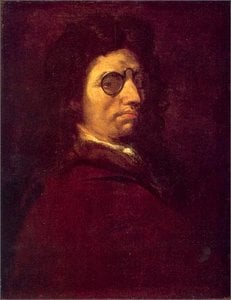
The surveyor

Luca Giordano's 'The Surveyor,' a captivating 17th-century painting depicting a philosopher offering his works, showcasing Ribera’s influence & Naples’ artistic spirit.

Лука Ґіадо́рні (1634-1705): Неаполітанський живописець, відомий як «Luca fa presto». Його барвисті фрески та картини вражають динамізмом та емоційною насиченістю. Відкрийте для себе світ пізнього бароко!

Олійная репродукція ручної роботи

Написана вручну олією на полотні у вашому розмірі та рамі, виготовлена на замовлення нашими художниками. (Замовити принт Замовити принтКупити цифрове зображення Купити цифрове зображення)

P118B $10
P118H $10
P118W $10
P438Z $10
P508JH $12
P508YH $12
P805H $10
P805Z $10
P919BZ $10
P919G $10
P919XJ $10
P959ZH $10
P968JZ $12
W106C $8
W218G $10
W218JH $8
W218Y $10
W307PJ $10
W316G $10
W316PJ $8
W316Y $10
W398PJ $8
W4111J $10
W500HY $15
W500JH $15
W692G $12
W849H $8
W940BG $15
W953PJ $8

Стандартний розмір
індивідуальний
CM
INCH

Обирайте з наших стандартних розмірів, що відповідають оригінальним пропорціям твору мистецтва.

ширина
висота

Ви можете вказати власні розміри, щоб репродукція ідеально підійшла до конкретної рами або інтер'єру. Якщо вибраний вами розмір не відповідає пропорціям оригіналу, ми або обріжемо полотно, або доповнимо картину додатковими елементами, промальованими вручну. Цифровий макет буде надіслано вам на затвердження перед початком виробництва.
Зверніть увагу, що попередній перегляд на екрані не відображає фактичне обрізання або розширення зображення. Тільки макет точно покаже остаточну композицію.
Хоча ми можемо виготовити виріб у нестандартному розмірі, для збереження оригінальних пропорцій рекомендуємо обирати варіанти зі встановленого списку.

Приклади можливих змін: замінити обличчя на фото клієнта; додати домашню тварину (наприклад, замінити кота на собаку); додати приховане повідомлення на фоні; змінити ландшафт або елементи фону.
Після оформлення замовлення команда WahooArt.com зв'яжеться з клієнтом електронною поштою для отримання інструкцій та надасть попередній макет

Доставка по всьому світу () за 3–4 тижні замість стандартних 5 тижнів. (29 Серпень). Без жодних компромісів у якості.

why_choose_icon
Безкоштовна експрес-доставка по всьому світу
why_choose_icon
Високоякісне лляне полотно
why_choose_icon
Повне страхове покриття доставки
why_choose_icon
Гарантія відшкодування митних зборів
why_choose_icon
Гарантія точного відтворення кольорів
why_choose_icon
Політика повернення протягом 60 днів (лише у разі виявлення дефектів)
why_choose_icon
Гарантія повернення 100% коштів
why_choose_icon
Пропозиція на оптові замовлення

Загальна вартість

$ 272

reproduction

The surveyor

Матеріал репродукції

Розмір репродукції

-

Підсумкова вартість

$ 272

Основна інформація

  • Medium: Oil on canvas
  • Location: Villandry, France
  • Influences:
    • Ribera
    • Euclid
  • Notable elements or techniques: Ribera influence
  • Movement: Baroque
  • Dimensions: 112 x 93 cm
  • Artist: Luca Giordano

Квіз про мистецтво

У кожному запитанні лише одна правильна відповідь.

Запитання 1:
What artistic movement is Luca Giordano associated with?
Запитання 2:
The description mentions that the painting might depict which figure?
Запитання 3:
What is a notable characteristic of Luca Giordano's style, as mentioned in the description?
Запитання 4:
The painting’s background is described as:
Запитання 5:
According to the description, what does the man in the painting appear to be doing?

A Portrait of Persuasion: Luca Giordano’s ‘The Surveyor’

Luca Giordano's “The Surveyor,” a captivating work emerging from the vibrant heart of 17th-century Naples, transcends mere portraiture. It’s an arresting tableau of human vulnerability and determined resolve, steeped in the dramatic intensity characteristic of Ribera’s influence yet imbued with Giordano’s signature luminosity. The painting immediately draws the eye to its central figure – a man cloaked in shadow, his posture suggesting both weariness and unwavering conviction. He holds aloft a sheet of paper, not a document of legal decree or scholarly treatise, but rather an invitation, a plea for understanding, rendered with a palpable urgency.

The artist masterfully employs chiaroscuro – the dramatic interplay of light and dark – to sculpt the figure’s form. The strong contrasts emphasize his weathered face, etched with lines that speak of hardship and perhaps even drink, while simultaneously highlighting the resolute set of his jaw and the intensity in his eyes. This technique, deeply rooted in the Neapolitan Baroque tradition, was perfected by Giordano himself, allowing him to convey a profound sense of psychological depth within a relatively confined space. The dark background serves not as mere emptiness, but rather as a stage upon which this solitary figure commands attention, amplifying his presence and projecting an aura of quiet authority.

Echoes of Ribera & the Naples School

“The Surveyor” is inextricably linked to the artistic lineage of Luca Giordano. He spent formative years under the tutelage of Jusepe de Ribera in Naples, absorbing the master’s dramatic realism and penchant for intense emotion. However, Giordano swiftly developed his own distinct style – one characterized by a remarkable speed of execution and an unparalleled ability to capture fleeting moments of human expression. This painting exemplifies this evolution; while retaining elements of Ribera's starkness, it possesses a softer, more nuanced quality, reflecting the prevailing artistic sensibilities of Naples at the time.

The figure’s attire – a simple robe or coat adorned with a vibrant red sash – speaks to his status as a philosopher or perhaps even a beggar. The inclusion of the wine bottle on his belt is a subtle yet significant detail, hinting at a life lived on the margins, grappling with hardship and seeking solace in the fleeting pleasures of the moment. This juxtaposition of dignity and vulnerability creates a compelling narrative tension, inviting viewers to contemplate the complexities of human existence.

Symbolism & The Pursuit of Understanding

The act of presenting the paper is central to interpreting the painting’s meaning. It's not simply an offering; it’s a deliberate gesture – a final attempt at persuasion, a last stand against indifference. The very title, “The Surveyor,” suggests a man who observes, analyzes, and seeks to understand the world around him. He isn’t merely presenting information; he is attempting to impart wisdom, to share his perspective with an unseen audience.

Furthermore, the composition itself can be read as symbolic. The figure's outstretched hand mirrors the gesture of Euclid, the ancient Greek mathematician famed for his rigorous approach to geometry and logic. This allusion elevates the painting beyond a simple portrait, transforming it into a meditation on reason, knowledge, and the enduring human quest for understanding. The overall effect is one of poignant beauty and quiet contemplation – a timeless reminder of the power of observation and the importance of seeking connection in a world often characterized by isolation.

A Legacy Preserved: Research & Context

Luca Giordano (1634-1705) remains a pivotal figure in Neapolitan Baroque art. His prolific output, encompassing vast fresco cycles and numerous paintings, cemented his reputation as “Luca fa presto” – Luca the quick one – a testament to his extraordinary artistic speed and talent. Further research reveals that this work was created during a period of significant artistic experimentation within Naples, influenced by both Ribera’s dramatic realism and the evolving tastes of European patrons.

Several resources offer deeper insights into Giordano's life and oeuvre: The WahooArt website provides detailed information on “The Surveyor,” alongside related artworks and artist biographies. Academic studies, such as Andrés Úbeda de los Cobos’ comprehensive catalogue raisonné, delve into the intricacies of his artistic practice and the historical context surrounding his work. Exploring these resources allows for a richer appreciation of this remarkable painting and its place within the broader narrative of Neapolitan Baroque art.


Біографія митця

A Neapolitan Dynamo: The Life and Art of Luca Giordano

Luca Giordano, born in Naples in 1634, was a name that quickly became synonymous with the exuberant spirit of the late Baroque. He wasn’t merely an artist; he was a force of nature, a whirlwind of creativity whose prolific output transformed both canvases and architectural spaces across Italy and Spain. His father, Antonio Giordano, laid the initial foundations of his artistic training, but it was under the stern yet masterful guidance of Jusepe de Ribera that the young Luca truly began to forge his distinctive path. This early apprenticeship left an indelible mark, evident in the dramatic intensity and realistic portrayal of figures characteristic of Giordano’s initial works. However, unlike Ribera's often somber palette, Giordano possessed a natural inclination towards luminosity and movement—qualities that would ultimately define his unique style. Even then, he earned the nickname “Luca fa presto”—Luca the quick one—a testament to his remarkable speed and seemingly boundless energy. He wasn’t simply skilled; he was capable of capturing profound emotion and dazzling spectacle with an ease that astonished contemporaries.

From Naples to Spain: A Career in Constant Motion

Giordano's artistic journey was far from static. It was a dynamic progression fueled by commissions and travels, taking him across the Italian peninsula and beyond. After establishing himself as a rising star in Naples, he sought opportunities in Rome, Florence, and Venice, absorbing the diverse influences of each city like a sponge. In Venice, he studied the works of Titian and Veronese, embracing their vibrant color palettes and dynamic compositions—a stark contrast to the tenebrism of his early training. Florence saw him undertake significant fresco cycles, most notably in the dome of the Corsini Chapel at the Chiesa del Carmine, showcasing his burgeoning mastery of illusionistic space and narrative storytelling. The intricate details and dramatic lighting within this chapel demonstrate a clear evolution from Ribera’s influence towards a more Italianate style. But it was his decade-long sojourn in Spain (1682-1692) that cemented his international reputation. Appointed as court painter to Charles II, Giordano transformed Spanish interiors with lavish frescoes, injecting a much-needed dose of Italian exuberance into the more restrained Spanish artistic tradition. He wasn’t simply replicating existing styles; he was adapting and innovating, creating works that resonated deeply with the Spanish court and its patrons. The Biblioteca Riccardiana in Florence, adorned with allegorical frescoes celebrating divine wisdom, stands as a testament to this period, showcasing his ability to blend intellectual depth with visual splendor. These grand schemes were not merely decorative; they aimed to elevate the viewer’s experience of space and reinforce the power and prestige of the monarchy.

A Synthesis of Styles: Giordano’s Artistic Signature

Giordano's genius lay not in inventing entirely new techniques but in synthesizing existing ones into a remarkably fluid and decorative style. He masterfully combined the dramatic realism inherited from Ribera, the luminous colorism inspired by Venetian painters, and the dynamic compositions reminiscent of Pietro da Cortona. His brushwork was characterized by its freedom and spontaneity, creating an impression of effortless grace. He wasn’t afraid to embrace ornamentation, filling his canvases with intricate details and swirling draperies—a hallmark of his mature style. This approach allowed him to tackle a wide range of subjects – from religious scenes and mythological narratives to portraits and decorative schemes – with equal aplomb. The Judgment of Paris, housed in the Berlin Museum, exemplifies this synthesis; it’s a vibrant display of classical mythology rendered with a distinctly Baroque flair. The painting captures the moment of deliberation as the goddesses Eos, Hera, and Athena compete for the golden apple, showcasing Giordano's ability to convey both dramatic tension and exquisite beauty. His frescoes, particularly those found in Naples Cathedral and various Neapolitan palaces, are monumental achievements, transforming architectural spaces into immersive visual experiences that enveloped viewers in a world of color and drama. The sheer scale and complexity of these works demonstrate his mastery of perspective and illusionistic space—qualities he honed through years of meticulous study and practice.

Key Works & Artistic Connections

Here are some notable works and artistic connections:
  • The Judgment of Paris (Berlin Museum): A prime example of Giordano’s mythological paintings, showcasing his vibrant color palette and dynamic composition.
  • Christ with the Doctors in the Temple (Corsini Gallery, Rome): Demonstrates his skill in religious narrative and mastery of light and shadow.
  • Frescoes in Florence & Naples: Monumental works that transformed architectural spaces into immersive visual experiences.
  • Influences: Jusepe de Ribera, Titian, Veronese, Pietro da Cortona
  • Influenced Artists: Paolo de Matteis, and a generation of Neapolitan painters.

Legacy and Influence: The Enduring Impact of a Master

Luca Giordano’s influence extended far beyond his own lifetime. He trained numerous pupils, including Paolo de Matteis, who went on to become successful artists in their own right, spreading his stylistic innovations throughout Italy and beyond. His work served as a bridge between the High Baroque and the Rococo style, paving the way for the lighter, more playful aesthetic that would characterize 18th-century art. His prolific output – estimated at over six hundred paintings and numerous fresco cycles – continues to captivate audiences today. The Palace of Capodimonte in Naples remains a treasure trove of his works, offering a comprehensive overview of his artistic evolution. Giordano’s ability to seamlessly blend technical virtuosity with emotional depth ensures his place as one of the most important and beloved figures of the Italian Baroque. He died in his native Naples in 1705, leaving behind a legacy that continues to inspire artists and art lovers alike.

Короткі факти

  • Artistic Movement Or Style: Пізній бароко
  • Artists Or Movements Influenced By This Artist: ['Паоло де Матейзі']
  • Artists Who Influenced This Artist:
    • Йосепе ді Рібера
    • Тіціан
  • Date Of Birth: 1634
  • Date Of Death: 1705
  • Full Name: Luca Giordano
  • Nationality: Італійський
  • Notable Artworks:
    • Суд над Парісом
    • Христос з лікарями
  • Place Of Birth: Неаполь, Італія
Досліджуйте твори мистецтва, впорядковані за темами, стилями та характеристиками.