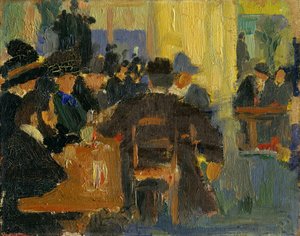
1888
1888 73.0 x 92.0 cm
Придбайте цифрову копію високої роздільної здатності з покращеною якістю, що значно перевершує онлайн-перегляд.
Кожен файл ретельно підготовлений нашими фахівцями за допомогою сучасних інструментів та професійної ручної ретуші. Ми гарантуємо виняткову чіткість, точну передачу кольору та високу деталізацію кожного зображення.
Фінальний файл надсилається електронною поштою протягом 72 годин і оптимізований для негайного використання у професійних виданнях та друкованих матеріалах. Таку якість обирають провідні дизайнерські студії, видавництва та галереї.
Завантажте файл високої роздільної здатності для особистого використання, друку та творчих проєктів. ( Замовити принт Замовити репродукцію ручної роботи)
Обираючи WahooArt.com, ви отримуєте не просто зображення — ви отримуєте професійно вдосконалений цифровий витвір мистецтва, створений з надзвичайною точністю та підкріплений гарантією задоволення. Ось усе, що автоматично додається до вашого замовлення:

Ваш цифровий файл із зображенням високої роздільної здатності буде надісланий вам електронною поштою протягом 72 годин після оформлення замовлення — він буде готовий до негайного використання.

Ваш витвір мистецтва професійно оптимізовано за допомогою передових інструментів штучного інтелекту та ручної корекції, що забезпечує максимальну деталізацію, чіткість і точність передачі кольорів.

Випадково видалили або втратили файл? Не хвилюйтеся — ми надішлемо його вам повторно в будь-який час безкоштовно.

Насолоджуйтесь вашим витвором мистецтва миттєво без жодних мит, зборів або плати за доставку — цифрові завантаження завжди не оподатковуються.

Ми гарантуємо максимально точне відтворення оригінальних кольорів на вашому цифровому зображенні завдяки використанню професійних інструментів та систем управління кольором.

Якщо ви не задоволені придбаним цифровим зображенням, ми відкоригуємо його або повернемо 100% вартості протягом 100 днів — без жодних запитань.

Не задоволені покупкою? Отримайте повне повернення коштів протягом 100 днів після отримання цифрового файлу — без жодних запитань.

Купуйте 3 зображення — заощаджуйте 10% — Купуйте 5 — заощаджуйте 15% — Купуйте 10+ — заощаджуйте 20%. Чудово підходить для творчих проєктів, галерей та агентств.

Born in Pontoise, a suburb just northwest of Paris, in 1864, Louis Hayet’s artistic journey was one shaped by both humble beginnings and an evolving engagement with the vibrant currents of late 19th-century art. His early life, marked by financial hardship and a quiet disposition, provided little indication of the distinctive visual language he would eventually develop. Yet, from his youth—as early as 1876—Hayet demonstrated a remarkable talent for drawing, a seed that blossomed through self-directed study and, crucially, a connection with the landscape painter Camille Pissarro and his son Lucien.
Initially apprenticed to his father, who worked as a travelling salesman, Hayet’s artistic pursuits were often relegated to stolen moments spent painting in the surrounding countryside. These early works—primarily watercolors—established a foundation of observation and an appreciation for the subtle shifts of light and color that would become hallmarks of his mature style. Crucially, he was introduced to the burgeoning world of Impressionism through Pissarro’s circle, absorbing influences from artists like Signac and Seurat, though ultimately forging his own unique path within this evolving artistic landscape.
Around 1887, Hayet transitioned to the techniques of Neo-Impressionism, embracing the scientific approach championed by Paul Signac and Georges Seurat. This involved meticulously applying tiny dots or strokes of pure color – a process known as pointillism – to create an image through optical mixing in the viewer’s eye. His early pointillist works, such as “Market in Pontoise,” demonstrate this technique with remarkable precision and a delicate handling of light. These paintings capture the bustling atmosphere of everyday Parisian life—market scenes, café interiors, and glimpses into the city's vibrant entertainment venues – offering a unique perspective on urban modernity.
However, Hayet’s engagement with pointillism was not purely academic. He quickly moved beyond its rigid constraints, incorporating elements of his earlier training and developing a more expressive style. He experimented with color theory, influenced by Eugène Chevreul's research into the psychology of color, creating elaborate color wheels to predict how hues would interact. This scientific approach informed his palette and technique, resulting in paintings that shimmered with subtle luminosity and an almost ethereal quality.
A significant aspect of Hayet’s career involved his work as a decorative painter, particularly for the renowned stage designer Lugné-Poe. His skills were highly sought after, and he spent decades creating elaborate sets for theatrical productions, demonstrating an understanding of color and composition that extended beyond the canvas. This experience undoubtedly influenced his approach to painting, sharpening his eye for detail and his ability to capture fleeting moments of light and atmosphere.
Furthermore, Hayet’s association with Pissarro introduced him to Paul Cézanne, a pivotal figure in modern art. While direct influence is difficult to pinpoint, the emphasis on observation, structure, and the exploration of form evident in Cézanne's work likely resonated with Hayet’s evolving artistic sensibilities.
Despite exhibiting at prominent salons like the Salon des Indépendants and Le Barc de Boutteville, Hayet largely remained a relatively obscure figure during his lifetime. His output was often sporadic, dictated by commercial demands and periods of relative inactivity. He was notably overlooked by Bénézit’s comprehensive dictionary of artists, published in 1923, reflecting the lack of recognition he received for his contributions to Neo-Impressionism.
It wasn't until the mid-20th century that Hayet’s work began to attract serious attention. Today, his paintings are recognized as a significant contribution to both Neo-Impressionism and the broader landscape of French art at the turn of the 20th century. His delicate color palettes, meticulous brushwork, and evocative depictions of Parisian life continue to captivate viewers, offering a unique window into a world of subtle beauty and quiet observation. Works like “Market in Pontoise” are now held in prestigious collections, including the Cleveland Museum of Art, ensuring that this once-forgotten painter’s legacy endures.

1864 - 1940

 Переглянути в інтер'єрі
 Надіслати як листівку
 Поділитися
 Детальніше

 Завантажити
 Схожі експонати
 Рентгенівське дослідження
 Слайд-шоу
 Читати далі