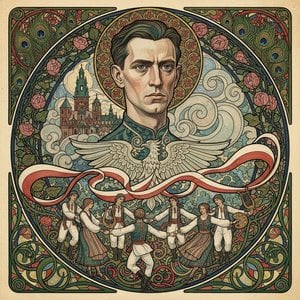
A Glimpse into a Polish Past: The Evocative World of Konstanty Zmigrodzki
Konstanty Zmigrodzki (born Warsaw, Poland in 1860 and died 1917) remains a somewhat enigmatic figure in the landscape of late 19th and early 20th-century Polish art. While not widely celebrated during his lifetime, his legacy has experienced a resurgence through the rediscovery of his captivating postcards – delicate windows into a bygone era. Zmigrodzki’s work offers more than just picturesque scenes; they are subtle chronicles of a Poland grappling with political upheaval and cultural identity, rendered with a meticulous detail that speaks to both artistic skill and a deep affection for his homeland. Information regarding his life is scarce, adding an air of mystery to the charm of his art. What we do know suggests a dedication to capturing the essence of Polish life, particularly through scenes of everyday existence and architectural landmarks.
Early Life and Artistic Development
Born into a Poland partitioned between Russia, Prussia, and Austria, Zmigrodzki’s formative years were undoubtedly shaped by a national consciousness striving for independence. Though details about his formal training are limited, the precision of his linework and the atmospheric quality of his compositions suggest a solid grounding in academic artistic principles. A document from the Biblioteka indicates he was associated with prominent figures like Zygmunt Gloger, a renowned ethnographer and folklorist, hinting at an interest in preserving Polish heritage. This connection likely influenced his subject matter, steering him towards scenes that celebrated Polish culture and history. The portrait of Edward Żmigrodzki, a participant in the 1863 January Uprising, attributed to an unknown artist but potentially linked through family connections, further underscores this patriotic leaning within his circle. It’s plausible he initially worked as a portraitist before turning his attention to landscape and architectural subjects, perhaps recognizing the power of imagery to evoke national sentiment.
The Postcard Era: A Unique Artistic Medium
Zmigrodzki's most recognizable work exists in the form of postcards produced during the height of their popularity – a period coinciding with advancements in printing technology and a growing desire for accessible art. This medium allowed him to reach a wider audience than traditional painting might have, disseminating his vision of Poland across geographical boundaries. His postcards weren’t merely reproductions of existing views; they were carefully constructed compositions, often featuring detailed scenes of towns, cities, and rural landscapes. The level of detail is remarkable, capturing the nuances of architecture, the textures of foliage, and even the atmosphere of a particular place. He wasn't simply documenting reality but interpreting it through his artistic lens, imbuing each scene with a sense of nostalgia and quiet beauty.
Themes and Symbolism in Zmigrodzki’s Work
While seemingly straightforward depictions of Polish life, Zmigrodzki’s postcards often carry subtle layers of symbolism. The frequent portrayal of historical buildings and monuments can be interpreted as an assertion of Polish identity in the face of foreign domination. Scenes of everyday life – bustling marketplaces, farmers working their land – celebrate the resilience and enduring spirit of the Polish people.
The artist's choice of subject matter wasn’t accidental; it was a deliberate attempt to preserve and promote a sense of national pride during a time when Poland existed primarily as a memory and an aspiration. The delicate rendering of light and shadow, often evoking a melancholic mood, may reflect the bittersweet realities of life under partition.
His work is not overtly political but subtly imbued with a longing for a unified and independent Poland.
Historical Significance and Legacy
Konstanty Zmigrodzki’s historical significance lies in his ability to capture a specific moment in Polish history – the period of national struggle and cultural preservation. His postcards serve as valuable visual documents, offering insights into the architecture, landscapes, and daily life of Poland during the late 19th and early 20th centuries. While he may not have achieved widespread fame during his lifetime, his work has found a renewed audience in recent years, thanks to the growing interest in Polish art and history.
- His postcards provide a unique perspective on Polish life under foreign rule.
- The meticulous detail of his compositions reflects both artistic skill and a deep affection for his homeland.
- Zmigrodzki’s work serves as a testament to the power of art to preserve cultural identity and evoke national sentiment.
Today, Konstanty Zmigrodzki is remembered not as a grand master but as a sensitive observer, a chronicler of a Poland that existed in both reality and memory. His evocative postcards continue to resonate with viewers, offering a glimpse into a past filled with beauty, resilience, and an enduring hope for the future.



 Переглянути в інтер'єрі
 Купити картину ручної роботи
 Надіслати
 Поділитися
 Деталі
 Посібник

 Завантажити
 Схожі предмети колекціонування
 Рентгенівське дослідження
 Слайд-шоу
 Статистика переглядів


 Читати далі






































 Скляний варіант доступний лише для розмірів до 110 см