x
Переглянути в інтер'єріПереглянути в інтер'єрі Перегляд в ARПерегляд в AR Замовити репродукцію ручної роботи Замовити репродукцію ручної роботиКупити цифрове зображення Купити цифрове зображення Надіслати як листівкуНадіслати як листівку
ДетальнішеДетальніше Додати до улюблених Додати до улюблених ЗавантажитиЗавантажити Схожі експонатиСхожі експонати Рентгенівське дослідженняРентгенівське дослідження Слайд-шоуСлайд-шоу

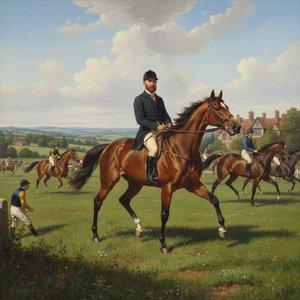
Classical Landscape with Gypsies

Explore John Wootton's masterpiece – ‘Classical Landscape with Gypsies’ (1748), commissioned by Sir James Dashwood for Kirtlington Park. Admire the vibrant depiction of aristocratic life and equestrian artistry.

Мета опис: Джона Вуттона вважають піонером британського спортивного мистецтва завдяки витонченим портретам коней та пейзажам, які були улюбленими серед аристократії Георгія II. Його творчість вплинула на таких художників як Томас Гейнсборо і Джордж Стюбс, формуючи естетику XVIII століття.

Гікле / Художній принт

Музейна якість друку جيкле або на полотні з оперативним виготовленням та різноманітними варіантами фінішної обробки. (Замовити репродукцію ручної роботи Замовити репродукцію ручної роботиКупити цифрове зображення Купити цифрове зображення)

P118B $10
P118H $10
P118W $10
P438Z $10
P508JH $12
P508YH $12
P805H $10
P805Z $10
P919BZ $10
P919G $10
P919XJ $10
P959ZH $10
P968JZ $12
W106C $8
W218G $10
W218JH $8
W218Y $10
W307PJ $10
W316G $10
W316PJ $8
W316Y $10
W398PJ $8
W4111J $10
W500HY $15
W500JH $15
W692G $12
W849H $8
W940BG $15
W953PJ $8

Стандартний розмір
індивідуальний
CM
INCH

Обирайте з наших стандартних розмірів, що відповідають оригінальним пропорціям твору мистецтва.

ширина
висота

Ви можете вказати власні розміри, щоб репродукція ідеально підійшла до конкретної рами або інтер'єру. Якщо обраний вами розмір не відповідає пропорціям оригіналу, ми або обріжемо полотно, або розширимо зображення за допомогою дзеркального відображення чи суцільної заливки країв. Перед початком виробництва вам буде надіслано цифровий макет для затвердження.
Будь ласка, зверніть увагу, що попередній перегляд на екрані не відображає фактичне обрізання або розширення. Тільки макет точно покаже фінальну композицію.
Хоча можливість замовлення індивідуальних розмірів доступна, ми рекомендуємо обирати формат із попередньо визначеного списку, щоб зберегти оригінальні пропорції.

Доставка по всьому світу () за 2 тижні замість стандартних 4/5 тижнів. (4 Вересень)

why_choose_icon
Безкоштовна експрес-доставка по всьому світу
why_choose_icon
Високоякісне лляне полотно
why_choose_icon
Повне страхове покриття доставки
why_choose_icon
Гарантія відшкодування митних зборів
why_choose_icon
Гарантія точного відтворення кольорів
why_choose_icon
Політика повернення протягом 60 днів (лише у разі виявлення дефектів)
why_choose_icon
Гарантія повернення 100% коштів
why_choose_icon
Пропозиція на оптові замовлення

Загальна вартість

$ 68

reproduction

Classical Landscape with Gypsies

Гікле / Художній принт

Розмір репродукції

-

Підсумкова вартість

$ 68

Основна інформація

  • Influences: Landscape Painting
  • Title: Classical Landscape with Gypsies
  • Notable elements or techniques: Detailed depiction of horses and figures
  • Year: 1748
  • Subject or theme: Rural Scene
  • Artistic style: Classical Landscape
  • Medium: Oil on canvas

A Pastoral Symphony: The Enchantment of Wootton’s Landscape

In the grand tapestry of eighteenth-century British art, few works capture the harmonious tension between aristocratic refinement and the untamed spirit of nature as gracefully as John Wootton’s "Classical Landscape with Gypsies." Executed in 1748, this monumental canvas serves as a breathtaking window into the Regency era's profound fascination with pastoral beauty. The scene unfolds not merely as a static depiction of countryside, but as a meticulously choreographed tableau where the rolling hills and muted greens of the English landscape provide a stage for a lively human narrative. As one gazes upon the composition, there is an immediate sense of entering a world where time slows down, inviting the viewer to wander through the atmospheric perspective and tonal gradations that Wootton mastered so exquisitely under the tutelage of Jan Wyck.

The painting’s subject matter strikes a delicate balance between the idyllic and the itinerant. At its heart, a gathering of gypsies moves through the landscape, their presence introducing a layer of nomadic vitality to the otherwise serene setting. This juxtaposition—the transient life of the travelers set against the permanent, stately backdrop of the countryside—was a hallmark of the era's artistic curiosity. The inclusion of horses, rendered with Wootton’s signature precision, further elevates the narrative; these noble creatures are not merely animals within the frame but symbols of status, freedom, and the deep-seated connection between the landed gentry and the natural world. For the discerning collector or interior designer, this piece offers a profound sense of movement and life, making it an ideal centerpiece for spaces that require a touch of historical grandeur and organic warmth.

Mastery of Brush and Light: The Technical Brilliance

To appreciate "Classical Landscape with Gypsies" is to witness the technical prowess of a pioneer of sporting art. Wootton’s technique eschews the rigid, clinical precision often found in academic painting of his time, opting instead for loose, expressive brushstrokes that imbue the canvas with palpable emotion and dynamism. One can almost feel the breeze moving through the scattered trees and sense the heat radiating from the sun-drenched hills. His ability to manipulate light and shadow creates a sense of depth that draws the eye inward, leading the viewer from the detailed interactions in the foreground—where figures converse and tend to their mounts—toward the hazy, distant horizons.

The color palette is a masterclass in subtlety, utilizing earthy browns, soft ochres, and deep forest greens to evoke a sense of timelessness. This restrained use of color ensures that the painting does not overwhelm a room but rather complements it, providing a sophisticated foundation for luxury decor. For those seeking to integrate fine art into a contemporary or classical interior, a high-quality reproduction of this work offers more than just decoration; it provides an infusion of historical soul. The way Wootton captures the texture of animal coats, the softness of the foliage, and the very atmosphere of the English afternoon makes this painting an enduring masterpiece that continues to inspire awe and tranquility in all who behold it.


Біографія митця

A Pioneer of Sporting Art: The Life and Legacy of John Wootton

John Wootton, born around 1686 in the picturesque Warwickshire village of Snitterfield, near the renowned town of Stratford-upon-Avon, emerged as a truly pivotal figure in the evolution of British sporting art. While precise details surrounding his early life remain somewhat shrouded in the mists of time, it’s widely believed he entered the service of the esteemed Beaufort family at a young age – an experience that undoubtedly fostered a deep and abiding connection to equestrian pursuits and the sophisticated world of the aristocracy that surrounded them. His artistic journey commenced with formal training under Jan Wyck during the 1690s, a period where he honed fundamental skills in draftsmanship and painting techniques—a solid foundation upon which he would subsequently build an exceptionally successful career. Even in these formative years, Wootton demonstrated an innate talent for capturing the very essence of horses, as evidenced by his earliest known work, “Bonny Black” (1711), a piece that served as a tantalizing preview of his future mastery of equine portraiture.

Establishing a Reputation and Artistic Innovation

By 1706, Wootton had firmly established himself in London, swiftly gaining recognition for his depictions of horses, particularly those gracing the vibrant racing scene at Newmarket – a hub of excitement and social activity. He wasn’t merely documenting these magnificent animals; he was meticulously capturing their spirit, their power, and their unique individual character with an unprecedented level of detail and sensitivity. This specialization brought him into close contact with Britain's elite—a patronage that included figures as prominent as George II and Frederick, Prince of Wales. Wootton actively engaged within the artistic community, subscribing to the first English Academy of Painting and Drawing in 1711 and later serving as a steward of the Virtuosi Club of St Luke’s by 1717—demonstrating his unwavering commitment to fostering artistic discourse and collaboration. However, Wootton's contribution extended far beyond simply painting horses. He played a key role in introducing what became known as the “ideal landscape” to British art – a style characterized by a classical sensibility and an emphasis on harmonious composition, heavily influenced by artists like Gaspard Dughet (also known as Gaspar van Wittel). By incorporating elements of classical design into his landscapes, he offered a refreshing alternative to the prevailing Dutch and Flemish styles that had previously dominated the British artistic landscape, laying the groundwork for future generations of British landscape painters.

Mastering the Canvas: Style and Major Works

Wootton’s artistic style is immediately recognizable by its meticulous detail, a remarkably realistic rendering of animals, and a harmonious blend of figure and landscape painting. He possessed an exceptional ability to observe and then idealize—creating works that were both aesthetically pleasing and deeply reflective of the sporting culture of his time. His equine portraits are arguably his most celebrated achievement – paintings like “The Bloody-Shouldered Arabian” showcase not only technical skill but also a profound understanding of anatomy, musculature, and individual character. These aren’t simply representations of horses; they're imbued with life, conveying their power, grace, and even their temperament. Beyond individual horse portraits, Wootton excelled at depicting lively hunting scenes and equestrian activities—often incorporating “conversation pieces” that featured riders, hounds, and picturesque settings. These works weren’t merely records of events; they were carefully constructed narratives designed to capture the social dynamics and leisurely pursuits of the British aristocracy. His landscapes, while sometimes overshadowed by his animal paintings, demonstrate a refined understanding of perspective, composition, and atmospheric effects—further solidifying his position as a versatile and innovative artist. Works like “Viscount Weymouth’s Hunt” exemplify this skill, portraying aristocratic leisure with classic style and rich detail.

Influences and Legacy

Wootton's artistic journey was shaped by several key influences. His early training under Jan Wyck provided him with a solid foundation in draftsmanship and painting techniques. He also drew inspiration from the works of artists like Gaspard Dughet, whose classical landscapes influenced his own approach to composition and design. Furthermore, Wootton’s engagement with the Virtuosi Club of St Luke's exposed him to a diverse range of artistic ideas and perspectives. Despite facing competition from later artists such as George Stubbs – whose anatomical precision surpassed Wootton’s in some respects—John Wootton remains an undeniably pivotal figure in British art history. He established sporting art as a legitimate genre, paving the way for subsequent generations to explore this subject matter with increasing sophistication. His introduction of the ideal landscape style had a lasting impact on British painting, influencing artists like Gainsborough and contributing significantly to the development of a distinctly British aesthetic sensibility.

A Lasting Influence and Historical Significance

Today, Wootton’s works are held in prestigious collections across the globe—including the Tate Gallery (London), the Virginia Museum of Fine Arts (Richmond), and the Yale Center for British Art—ensuring his legacy continues to be appreciated by art enthusiasts worldwide. He bridged the gap between earlier traditions and the emerging styles that would define 18th-century British art. He stands as a testament to the power of observation, innovation, and the enduring appeal of capturing the beauty and dynamism of both the natural world and the aristocratic pursuits that defined his era. His paintings offer a fascinating glimpse into the lives and customs of Britain’s elite during a period of great social and cultural change.

Джон Уильям Вотерхейн

Джон Уильям Вотерхейн

1682 - 1764 , Об’єднане Королівство

Короткі факти

  • Artistic Movement Or Style: Sporting art, Landscape
  • Artists Or Movements Influenced By This Artist:
    • Thomas Gainsborough
    • George Stubbs
  • Artists Who Influenced This Artist:
    • Jan Wyck
    • Gaspard Dughet
  • Date Of Birth: c. 1682
  • Date Of Death: 1764
  • Full Name: John Wootton
  • Nationality: British
  • Notable Artworks:
    • Bonny Black
    • Before the hunt
    • The Bloody-Shouldered Arabian
  • Place Of Birth: Snitterfield, UK
Досліджуйте твори мистецтва, впорядковані за темами, стилями та характеристиками.