Переглянути в інтер'єріПереглянути в інтер'єрі Перегляд в ARПерегляд в AR Замовити репродукцію ручної роботи Замовити репродукцію ручної роботиПерейти до цифрових зображень Перейти до цифрових зображень Надіслати як листівкуНадіслати як листівку
ДетальнішеДетальніше Додати до улюблених Додати до улюблених ЗавантажитиЗавантажити Схожі експонатиСхожі експонати Рентгенівське дослідженняРентгенівське дослідження Слайд-шоуСлайд-шоу СтатистикаСтатистика

Boreas

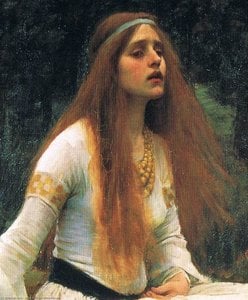
Captured in breathtaking Pre-Raphaelite style, John William Waterhouse’s ‘Boreas’ portrays a young woman battling the wind amidst lush greenery—a mesmerizing depiction of Romanticism's emotive power. Explore this iconic masterpiece and bring timeless beauty into your home.

Джона Вільяма Вотерхауса вважають одним із найвидатніших художників епохи Прерафаелітів та вікторіанського періоду. Він відомий своїми романтичними картинами, що зображують міфологічні сюжеты, артурійські легенди та емоційно складних героїнь, зокрема "Леді Шаллот" та "Офелія".

Гікле / Художній принт

Музейна якість друку جيкле або на полотні з оперативним виготовленням та різноманітними варіантами фінішної обробки. (Замовити репродукцію ручної роботи Замовити репродукцію ручної роботиПерейти до цифрових зображень Перейти до цифрових зображень)

P118B $10
P118H $10
P118W $10
P438Z $10
P508JH $12
P508YH $12
P805H $10
P805Z $10
P919BZ $10
P919G $10
P919XJ $10
P959ZH $10
P968JZ $12
W106C $8
W218G $10
W218JH $8
W218Y $10
W307PJ $10
W316G $10
W316PJ $8
W316Y $10
W398PJ $8
W4111J $10
W500HY $15
W500JH $15
W692G $12
W849H $8
W940BG $15
W953PJ $8

Стандартний розмір
індивідуальний
CM
INCH

Обирайте з наших стандартних розмірів, що відповідають оригінальним пропорціям твору мистецтва.

ширина
висота

Ви можете вказати власні розміри, щоб репродукція ідеально підійшла до конкретної рами або інтер'єру. Якщо обраний вами розмір не відповідає пропорціям оригіналу, ми або обріжемо полотно, або розширимо зображення за допомогою дзеркального відображення чи суцільної заливки країв. Перед початком виробництва вам буде надіслано цифровий макет для затвердження.
Будь ласка, зверніть увагу, що попередній перегляд на екрані не відображає фактичне обрізання або розширення. Тільки макет точно покаже фінальну композицію.
Хоча можливість замовлення індивідуальних розмірів доступна, ми рекомендуємо обирати формат із попередньо визначеного списку, щоб зберегти оригінальні пропорції.

Доставка по всьому світу () за 2 тижні замість стандартних 4/5 тижнів. (10 Вересень)

why_choose_icon
Безкоштовна експрес-доставка по всьому світу
why_choose_icon
Високоякісне лляне полотно
why_choose_icon
Повне страхове покриття доставки
why_choose_icon
Гарантія відшкодування митних зборів
why_choose_icon
Гарантія точного відтворення кольорів
why_choose_icon
Політика повернення протягом 100 днів (тільки у разі виявлення дефектів)
why_choose_icon
Гарантія повернення 100% коштів
why_choose_icon
Пропозиція на оптові замовлення

Загальна вартість

$ 68

reproduction

Boreas

Гікле / Художній принт

Розмір репродукції

-

Підсумкова вартість

$ 68

Основна інформація

  • Notable elements or techniques: Detailed brushwork
  • Artist: John William Waterhouse
  • Location: Private Collection
  • Movement: Pre-Raphaelite
  • Year: 1903
  • Title: Boreas
  • Subject or theme: Mythology

Квіз про мистецтво

У кожному запитанні лише одна правильна відповідь.

Запитання 1:
What mythological figure is depicted in Boreas?
Запитання 2:
The painting showcases a characteristic Pre-Raphaelite style. What element best exemplifies this style?
Запитання 3:
What is the primary emotion conveyed by the young woman in Boreas?
Запитання 4:
Approximately how much money did Boreas sell for at its rediscovery?
Запитання 5:
What technique is prominently used by Waterhouse to create texture and form in Boreas?

A Breath of Myth and Movement: Exploring John William Waterhouse’s Boreas

The Pre-Raphaelite Brotherhood, a collective of artists united by a fervent desire to recapture the spirit of early Renaissance art—before Raphael—established itself as one of the most influential movements in Victorian England. Among its luminaries shone John William Waterhouse (1849–1917), whose canvases consistently captivated audiences with their exquisite detail and evocative portrayal of romantic ideals. Boreas, completed in 1903, exemplifies this artistic ethos perfectly—a mesmerizing depiction of youthful vulnerability confronted by the untamed force of nature. Measuring 68 x 94 cm, this oil on canvas transcends mere representation; it’s an immersive experience into a realm where mythology intertwines with palpable emotion.

The Narrative Landscape: Subject Matter and Composition

At its core, Boreas recounts a tale drawn from Greek mythology—the tempestuous encounter between Boreas, the god of the north wind, and Chloris, a nymph transformed into Flora, the goddess of flowers. Waterhouse skillfully captures this dramatic moment, portraying Chloris standing amidst tall grasses and wildflowers, her hair billowing outwards as if caught in an invisible gale. The pyramidal composition directs the viewer’s gaze upwards towards Chloris's figure, emphasizing her centrality within the scene and conveying a sense of dynamism—a deliberate antithesis to the stillness often associated with classical art. Notably, a substantial tree trunk anchors the right side of the frame, grounding the ethereal landscape and providing visual stability amidst the swirling wind currents.

A Painter’s Palette: Style and Technique

Waterhouse's artistic style is undeniably Pre-Raphaelite—characterized by meticulous observation and an unwavering commitment to capturing beauty with uncompromising realism. He eschewed academic conventions, prioritizing emotional intensity over slavish adherence to established rules. The artist’s technique speaks volumes about his ambition; he employs layered brushstrokes to build up texture and form, creating a surface that vibrates with subtle nuances of color and light. Vibrant hues dominate the palette—primarily blues and greens reflecting the verdant surroundings—yet these tones are punctuated by warmer shades of yellow and orange emanating from the blossoms, generating a harmonious interplay of contrasts. The diffused lighting enhances the dreamlike atmosphere, casting gentle shadows that accentuate the contours of Chloris’s form and contributing to an overall impression of serene vulnerability.

Echoes of Antiquity: Historical Context and Influence

Boreas emerged during a period of artistic revival fueled by renewed interest in classical art and literature—a trend reflected in Waterhouse's broader oeuvre. Like many Pre-Raphaelites, he drew inspiration from mythology and folklore, transforming narratives into visual feasts for the senses. The painting’s rediscovery in the mid-1990s sparked considerable excitement within the art world, securing a record price at auction—a testament to Waterhouse's enduring legacy and Boreas’s profound artistic merit. Furthermore, consider his fellow Pre-Raphaelites: Dante Gabriel Rossetti, William Holman Hunt, and Edward Burne-Jones – all similarly invested in reviving artistic traditions of earlier eras.

Symbolism Beyond Sight: Emotional Resonance

Beyond its visual splendor, Boreas resonates with deeper symbolic meanings. The wind embodies change, disruption, and even destructive potential—yet Chloris confronts it with unwavering grace and composure. Her posture conveys both fear and acceptance—a poignant acknowledgment of the inescapable forces shaping human experience. Waterhouse’s masterful depiction captures not merely a scene from mythology but also an exploration of the human spirit's capacity for resilience amidst adversity. Boreas remains a captivating masterpiece, inviting contemplation on themes of beauty, vulnerability, and the enduring power of nature to inspire awe and wonder.

Біографія митця

A Roman Beginning: The Early Life and Influences of John William Waterhouse

John William Waterhouse, a name synonymous with the romantic allure of Pre-Raphaelite painting, began his artistic journey far from the fog-laden landscapes often associated with the movement. Born in Rome in 1849 to English parents, his earliest years were steeped in the classical beauty of Italy – an environment that would profoundly shape his aesthetic sensibilities. This formative period instilled within him a deep appreciation for ancient Roman art and mythology, themes that would recur throughout his prolific career. The Waterhouse family returned to England in 1854, settling in South Kensington, London, a location strategically chosen for its proximity to the burgeoning Victoria and Albert Museum. Here, young John was exposed to an unparalleled collection of classical sculpture and decorative arts, further nurturing his fascination with antiquity. His initial training was conventional, encompassing studies at the Royal Academy Schools, where he honed his technical skills in drawing and painting, but it was the atmosphere of intellectual curiosity and artistic innovation that truly ignited his passion. Even early works reveal a meticulous attention to detail and a commitment to historical accuracy, qualities that would become hallmarks of his style.

Embracing the Pre-Raphaelite Brotherhood

While Waterhouse’s initial work displayed classical leanings reminiscent of artists like Alma-Tadema and Frederic Leighton, he gradually gravitated towards the ideals of the Pre-Raphaelite Brotherhood. This artistic collective, founded in 1848, championed a return to the detailed observation of nature and the vibrant colors found in early Italian Renaissance art – before what they perceived as the stylistic decline initiated by Raphael. Waterhouse didn’t join the brotherhood itself, but he wholeheartedly embraced its principles, infusing his paintings with a lyrical beauty and emotional depth that resonated deeply with audiences. His 1874 painting, *Sleep and His Half-Brother Death*, exhibited at the Royal Academy, marked a turning point, demonstrating his growing mastery of symbolic narrative and atmospheric effects. This success paved the way for consistent inclusion in the annual exhibitions, establishing him as a rising star within the London art scene. He wasn’t merely replicating Pre-Raphaelite techniques; he was interpreting them through his own unique lens, blending classical precision with romantic sensibility.

Mythological Visions and Arthurian Echoes

Waterhouse's most celebrated works are those that draw inspiration from mythology and Arthurian legend. He possessed a remarkable ability to breathe life into ancient stories, portraying goddesses, nymphs, and tragic heroines with an exquisite blend of beauty and pathos. *The Lady of Shalott*, perhaps his most iconic painting, exists in three versions (1888, 1894, and 1916), each a testament to his enduring fascination with Tennyson’s poem. The image of the doomed lady, adrift on her river barge, became emblematic of Victorian romanticism and the plight of artistic isolation. Similarly, his depictions of Ophelia, capturing the moment before her tragic demise, are imbued with a haunting melancholy. He didn't simply illustrate these tales; he explored their psychological depths, focusing on the emotional states of his subjects. *Hylas and the Nymphs*, *Ariadne*, and *Penelope and the Suitors* are further examples of his ability to transform classical narratives into visually stunning and emotionally resonant works of art. His paintings weren’t just beautiful; they were imbued with a sense of narrative power, inviting viewers to contemplate the complexities of human experience.

Technique and Style

Waterhouse's artistic style evolved significantly throughout his career. Initially influenced by the academic tradition, he gradually adopted the Pre-Raphaelite emphasis on meticulous detail, rich color palettes, and symbolic imagery. His early works often featured classical figures in opulent settings, reflecting a fascination with antiquity. However, as he matured, his style became more fluid and expressive, incorporating elements of Impressionism and Symbolism. He was particularly adept at capturing the fleeting effects of light and atmosphere, creating paintings that shimmered with an ethereal quality. Waterhouse’s brushwork evolved from precise and controlled to looser and more suggestive, reflecting a growing interest in capturing the essence of his subjects rather than merely replicating their appearance. His use of color was equally transformative, moving beyond the muted tones of academic painting towards vibrant hues and dramatic contrasts.

Legacy and Lasting Influence

John William Waterhouse continued to paint prolifically until his death in 1917, achieving widespread recognition and acclaim during his lifetime. He was elected a full Academician in 1895 and dedicated time to teaching at the St. John’s Wood Art School, nurturing the next generation of artists. While his popularity waned somewhat after World War I, there has been a significant resurgence of interest in his work in recent decades. Today, Waterhouse is celebrated as one of the most important figures of the Pre-Raphaelite movement and a master of Victorian painting. His paintings continue to captivate audiences with their exquisite beauty, emotional depth, and timeless appeal. He left behind a legacy of romantic visions, mythological interpretations, and tragic heroines that continue to inspire artists and art lovers alike. The enduring power of his work lies in its ability to transport viewers to another world – a realm of myth, legend, and profound human emotion.

Джон Вільям Вотерхаус

Джон Вільям Вотерхаус

1849 - 1917 , Італія

Короткі факти

  • Artistic Movement Or Style: Прерафаелізм, Вікторіанство
  • Artists Or Movements Influenced By This Artist: ['Імпресіонізм']
  • Artists Who Influenced This Artist:
    • Альма-Тадема
    • Фредерик Літон
  • Date Of Birth: 1849
  • Date Of Death: 1917
  • Full Name: John William Waterhouse
  • Nationality: Англійський
  • Notable Artworks:
    • Леді Шаллот
    • Офелія
    • Гілас і німф
  • Place Of Birth: Рим, Італія
Досліджуйте твори мистецтва, впорядковані за темами, стилями та характеристиками.