Переглянути в інтер'єрі Примірка в AR Перейти до друку Перейти до цифрових зображень Надіслати
Деталі Посібник Додати до улюблених Завантажити Схожі предмети колекціонування Рентгенівське дослідження Слайд-шоу Статистика переглядів

A Hamadryad

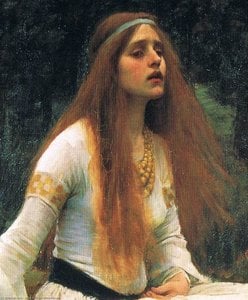
Experience the romantic allure of John William Waterhouse’s ‘A Hamadryad,’ a Pre-Raphaelite masterpiece depicting two nude figures in a lush forest setting. This 1893 oil painting captures timeless beauty and mythological grace – perfect for your home.

Джона Вільяма Вотерхауса вважають одним із найвидатніших художників епохи Прерафаелітів та вікторіанського періоду. Він відомий своїми романтичними картинами, що зображують міфологічні сюжеты, артурійські легенди та емоційно складних героїнь, зокрема "Леді Шаллот" та "Офелія".

Олійная репродукція ручної роботи

Написана вручну олією на полотні у вашому розмірі та рамі, виготовлена на замовлення нашими художниками. ( Перейти до друку Перейти до цифрових зображень)

P118B $10
P118H $10
P118W $10
P438Z $10
P508JH $12
P508YH $12
P805H $10
P805Z $10
P919BZ $10
P919G $10
P919XJ $10
P959ZH $10
P968JZ $12
W106C $8
W218G $10
W218JH $8
W218Y $10
W307PJ $10
W316G $10
W316PJ $8
W316Y $10
W398PJ $8
W4111J $10
W500HY $15
W500JH $15
W692G $12
W849H $8
W940BG $15
W953PJ $8

Стандартний розмір
на замовлення
CM
INCH

Обирайте з наших стандартних розмірів, що відповідають оригінальним пропорціям твору мистецтва.

ширина
висота

Ви можете вказати власні розміри, щоб репродукція ідеально підійшла до конкретної рами або інтер'єру. Якщо вибраний вами розмір не відповідає пропорціям оригіналу, ми або обріжемо полотно, або доповнимо картину додатковими елементами, промальованими вручну. Цифровий макет буде надіслано вам на затвердження перед початком виробництва.
Зверніть увагу, що попередній перегляд на екрані не відображає фактичне обрізання або розширення зображення. Тільки макет точно покаже остаточну композицію.
Хоча ми можемо виготовити виріб у нестандартному розмірі, для збереження оригінальних пропорцій рекомендуємо обирати варіанти зі встановленого списку.

Приклади можливих змін: замінити обличчя на фото клієнта; додати домашню тварину (наприклад, замінити кота на собаку); додати приховане повідомлення на фоні; змінити ландшафт або елементи фону.
Після оформлення замовлення команда WahooArt.com зв'яжеться з клієнтом електронною поштою для отримання інструкцій та надасть попередній макет

Доставка по всьому світу () за 3–4 тижні замість стандартних 5 тижнів. (24 Вересень). Без жодних компромісів у якості.

why_choose_icon
Безкоштовна експрес-доставка по всьому світу
why_choose_icon
Високоякісне лляне полотно
why_choose_icon
Повне страхове покриття доставки
why_choose_icon
Гарантія повернення митних зборів
why_choose_icon
Гарантія точного відтворення кольорів
why_choose_icon
Політика повернення протягом 100 днів (лише у разі виявлення дефектів)
why_choose_icon
Гарантія повернення 100% коштів
why_choose_icon
Знижка на оптові замовлення

Загальна вартість

$ 272

reproduction

A Hamadryad

Техніка репродукції

Розмір репродукції

-

Загальна вартість

$ 272

Короткі факти

  • Artistic style: Romanticism
  • Dimensions: 160 x 60 cm
  • Movement: Pre-Raphaelite
  • Subject or theme: Mythological nymph
  • Location: Plymouth City Museum
  • Medium: Oil on canvas
  • Influences: Greek mythology

A Hamadryad: An Echo of Myth and Romanticism

John William Waterhouse’s “A Hamadryad,” completed in 1893, is more than just a depiction of two figures within a verdant forest; it's a carefully constructed meditation on beauty, mythology, and the enduring power of nature. This painting, currently residing at the Plymouth City Museum and Art Gallery, exemplifies Waterhouse’s mastery of the Pre-Raphaelite style, transporting viewers to a world where classical ideals intertwine with Victorian sensibilities.

  • Subject Matter: The scene unfolds with a captivating simplicity – a young boy playing a flute while a beautiful maiden observes him from a shaded spot. This pairing immediately evokes the Greek myth of the Hamadryads, tree nymphs intimately connected to their arboreal homes. Waterhouse’s interpretation leans heavily into this mythological framework, presenting a serene tableau that speaks to the harmony between humanity and the natural world.
  • Style & Technique: Executed in oil on canvas, “A Hamadryad” showcases Waterhouse's meticulous attention to detail and his ability to capture fleeting moments of emotion. The brushwork is smooth and refined, characteristic of the Pre-Raphaelite movement’s emphasis on realism and luminous color. Notice the delicate rendering of the figures’ skin tones, the dappled light filtering through the trees, and the rich textures of the foliage – all contributing to a profoundly atmospheric effect.
  • Historical Context: Created during the late Victorian era, “A Hamadryad” reflects the period's fascination with classical antiquity and its romanticized vision of nature. Waterhouse drew inspiration from literary sources such as Ovid and Keats, imbuing the scene with a sense of timeless beauty and melancholy. The painting’s scale – measuring over one and a half meters tall – further emphasizes its grandeur and intended impact.

Symbolism and Narrative Depth

Beyond the immediate visual appeal, “A Hamadryad” is rich in symbolic meaning. The flute-playing boy represents youthful innocence and connection to nature, while the observing maiden embodies a more contemplative and perhaps melancholic beauty. Their interaction suggests a delicate balance between observation and participation, a theme frequently explored within Pre-Raphaelite art. The forest itself serves as a potent symbol – representing both sanctuary and mystery, life and death. The apple, subtly placed in the lower portion of the painting, adds another layer of complexity, referencing classical tales of temptation and desire.

  • Color Palette: Waterhouse employs a predominantly cool color palette dominated by greens, blues, and browns, evoking a sense of tranquility and seclusion. The subtle use of warmer tones – particularly in the figures’ skin – creates a visual contrast that draws attention to their forms and enhances their emotional impact.
  • Composition: The composition is carefully balanced, with the figures positioned within a shallow depth of field that encourages the viewer's eye to wander through the scene. This technique further immerses the audience in the painting’s atmosphere and reinforces its sense of timelessness.

Bringing “A Hamadryad” Home: High-Quality Reproductions Available

Waterhouse's "A Hamadryad" is a captivating artwork that continues to resonate with audiences today. WahooArt.com offers meticulously crafted, hand-painted oil reproduction of this iconic piece, allowing you to experience its beauty and emotional depth in your own space. These reproductions are created using the same techniques as the original painting, ensuring exceptional detail and color accuracy. Each reproduction is a testament to Waterhouse’s artistic legacy and provides an accessible way for art lovers to appreciate his work.

A size of 160 x 60 cm makes this piece suitable for a variety of interior design settings. Don't miss the opportunity to own a stunning replica of this Pre-Raphaelite masterpiece – visit /en/art/show/art-8bwtfj-en/ to learn more and explore other works by John William Waterhouse.


Біографія митця

A Roman Beginning: The Early Life and Influences of John William Waterhouse

John William Waterhouse, a name synonymous with the romantic allure of Pre-Raphaelite painting, began his artistic journey far from the fog-laden landscapes often associated with the movement. Born in Rome in 1849 to English parents, his earliest years were steeped in the classical beauty of Italy – an environment that would profoundly shape his aesthetic sensibilities. This formative period instilled within him a deep appreciation for ancient Roman art and mythology, themes that would recur throughout his prolific career. The Waterhouse family returned to England in 1854, settling in South Kensington, London, a location strategically chosen for its proximity to the burgeoning Victoria and Albert Museum. Here, young John was exposed to an unparalleled collection of classical sculpture and decorative arts, further nurturing his fascination with antiquity. His initial training was conventional, encompassing studies at the Royal Academy Schools, where he honed his technical skills in drawing and painting, but it was the atmosphere of intellectual curiosity and artistic innovation that truly ignited his passion. Even early works reveal a meticulous attention to detail and a commitment to historical accuracy, qualities that would become hallmarks of his style.

Embracing the Pre-Raphaelite Brotherhood

While Waterhouse’s initial work displayed classical leanings reminiscent of artists like Alma-Tadema and Frederic Leighton, he gradually gravitated towards the ideals of the Pre-Raphaelite Brotherhood. This artistic collective, founded in 1848, championed a return to the detailed observation of nature and the vibrant colors found in early Italian Renaissance art – before what they perceived as the stylistic decline initiated by Raphael. Waterhouse didn’t join the brotherhood itself, but he wholeheartedly embraced its principles, infusing his paintings with a lyrical beauty and emotional depth that resonated deeply with audiences. His 1874 painting, *Sleep and His Half-Brother Death*, exhibited at the Royal Academy, marked a turning point, demonstrating his growing mastery of symbolic narrative and atmospheric effects. This success paved the way for consistent inclusion in the annual exhibitions, establishing him as a rising star within the London art scene. He wasn’t merely replicating Pre-Raphaelite techniques; he was interpreting them through his own unique lens, blending classical precision with romantic sensibility.

Mythological Visions and Arthurian Echoes

Waterhouse's most celebrated works are those that draw inspiration from mythology and Arthurian legend. He possessed a remarkable ability to breathe life into ancient stories, portraying goddesses, nymphs, and tragic heroines with an exquisite blend of beauty and pathos. *The Lady of Shalott*, perhaps his most iconic painting, exists in three versions (1888, 1894, and 1916), each a testament to his enduring fascination with Tennyson’s poem. The image of the doomed lady, adrift on her river barge, became emblematic of Victorian romanticism and the plight of artistic isolation. Similarly, his depictions of Ophelia, capturing the moment before her tragic demise, are imbued with a haunting melancholy. He didn't simply illustrate these tales; he explored their psychological depths, focusing on the emotional states of his subjects. *Hylas and the Nymphs*, *Ariadne*, and *Penelope and the Suitors* are further examples of his ability to transform classical narratives into visually stunning and emotionally resonant works of art. His paintings weren’t just beautiful; they were imbued with a sense of narrative power, inviting viewers to contemplate the complexities of human experience.

Technique and Style

Waterhouse's artistic style evolved significantly throughout his career. Initially influenced by the academic tradition, he gradually adopted the Pre-Raphaelite emphasis on meticulous detail, rich color palettes, and symbolic imagery. His early works often featured classical figures in opulent settings, reflecting a fascination with antiquity. However, as he matured, his style became more fluid and expressive, incorporating elements of Impressionism and Symbolism. He was particularly adept at capturing the fleeting effects of light and atmosphere, creating paintings that shimmered with an ethereal quality. Waterhouse’s brushwork evolved from precise and controlled to looser and more suggestive, reflecting a growing interest in capturing the essence of his subjects rather than merely replicating their appearance. His use of color was equally transformative, moving beyond the muted tones of academic painting towards vibrant hues and dramatic contrasts.

Legacy and Lasting Influence

John William Waterhouse continued to paint prolifically until his death in 1917, achieving widespread recognition and acclaim during his lifetime. He was elected a full Academician in 1895 and dedicated time to teaching at the St. John’s Wood Art School, nurturing the next generation of artists. While his popularity waned somewhat after World War I, there has been a significant resurgence of interest in his work in recent decades. Today, Waterhouse is celebrated as one of the most important figures of the Pre-Raphaelite movement and a master of Victorian painting. His paintings continue to captivate audiences with their exquisite beauty, emotional depth, and timeless appeal. He left behind a legacy of romantic visions, mythological interpretations, and tragic heroines that continue to inspire artists and art lovers alike. The enduring power of his work lies in its ability to transport viewers to another world – a realm of myth, legend, and profound human emotion.

Джон Вільям Вотерхаус

Джон Вільям Вотерхаус

1849 - 1917 , Італія

Довідкова інформація

  • Artistic Movement Or Style: Прерафаелізм, Вікторіанство
  • Artists Or Movements Influenced By This Artist: ['Імпресіонізм']
  • Artists Who Influenced This Artist:
    • Альма-Тадема
    • Фредерик Літон
  • Date Of Birth: 1849
  • Date Of Death: 1917
  • Full Name: John William Waterhouse
  • Nationality: Англійський
  • Notable Artworks:
    • Леді Шаллот
    • Офелія
    • Гілас і німф
  • Place Of Birth: Рим, Італія
Досліджуйте твори мистецтва, впорядковані за темами, стилями та характеристиками.